American Saddlebred Horse Breed History
The American Saddlebred Horse is also known as the American Saddle Horse, but it was not until 1891 that it was recognized as a separate breed, when the American Saddle Horse Breeders’ Association, which is now referred to as the American Saddlebred Horse Association, Inc., was created. Today, these incredible animals are used as driving horses, pleasure horses, jumpers, hunters, and more.
In terms of its deeper history, this breed descended from the Narragansett Pacer, which is a breed that is extinct today within the United States. Narragansett mares and imported English Thoroughbreds were crossed in the early part of the 1700s. The descendents of those horses were referred to as the American Horse, and they featured the refinement and size of the Thoroughbred breed, combined with the intelligence required to easily learn the various pacing gaits that Narragansett horses were known for.
The American Saddlebred Horse are used as driving horses, pleasure horses, jumpers, hunters, and more.
American Horses became popular as riding horses because they had smooth gaits that made them comfortable to ride over longer distances. As a result, these horses also played an important part in the American Revolution. By the time the early 1800s rolled around, this breed was prized for its style, as well as its endurance, and it became extremely popular in the state of Kentucky.
To refine this breed even further, the Standardbred and the Morgan were added. By the time of the Civil War in America, the American Saddlebred had become one of the most highly sought after and beloved riding horses in the country, with many generals, including General Robert E. Lee, riding Saddlebred horses.
Breed Traits
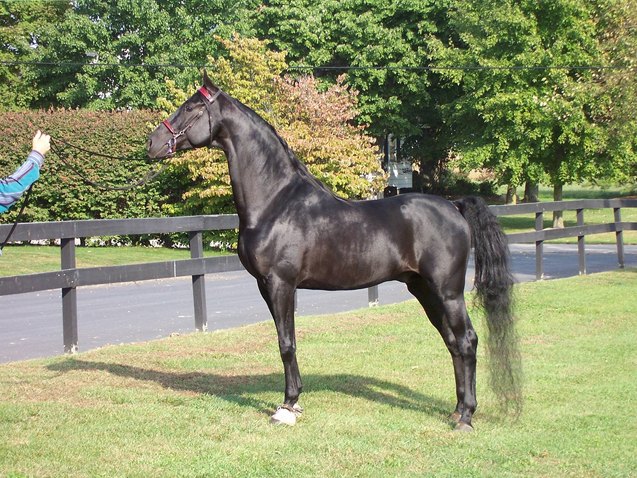
The American Saddlebred Horse makes a wonderful riding horse, and the breed is actually the prevailing breed of riding horse at shows throughout the United States. These animals are highly intelligent, and they also really enjoy being around people, so they make ideal companion horses, as well as show horses.
Thanks to the American Saddlebred’s friendly and calm temperament, it will get along with people well, and the breed also has a strong desire to be trained, as it enjoys learning new things.
These horses are ideal for leisurely riding through fields and trails, though they also have a great personality for use as reliable and strong working horses. In fact, the breed’s many uses today include endurance riding, jumping, general riding, work activities, mounted athletics, and dressage, as a few examples.
Thanks to the American Saddlebred’s friendly and calm temperament, it will get along with people well.
Overall Description
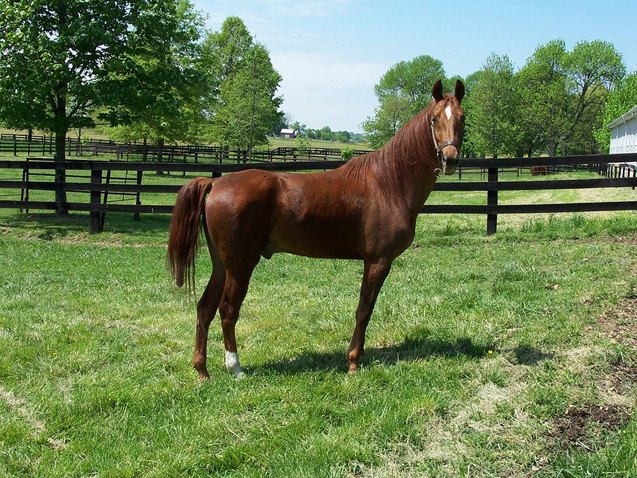
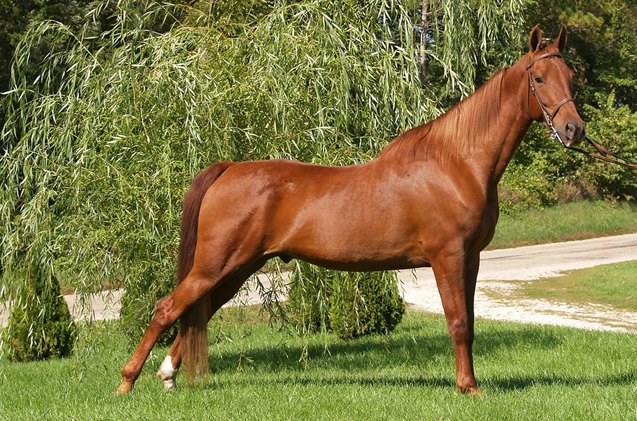
The American Saddlebred breed is known for its strong, short back. Its barrel is also rounder than in the majority of light breeds, and the horse’s neck is slender, well arched, and long, blending smoothly into the animal’s well shaped shoulder.
Another distinctive feature is the croup, which is long, as well as almost level. And this breed also has small ears on a refined head, and hips positioned below the withers, which are well defined and prominent.
What many people love most about this breed, however, is its effortless, distinctive gait. It also boasts speed and agility, thanks to its endurance and athleticism, so these horses are quite capable and functional, on top of being beautiful.
The body of the American Saddlebred is dense and muscular. The breed also features good sized hooves that are well proportioned to the rest of the body. The legs showcase straight and flat bones, and the tail is set high, fluid, and carried straight.
People often take note of this breed’s eyes as well, as they are luminous, set far apart from each other, and rather large. This is in contrast to the ears, which are close together on the head.
Yet another feature that makes the American Saddlebred a unique breed is its ability to perform five gaits. These horses are able to perform the rack and the slow gait, in addition to the trot, canter, and walk.
Colors
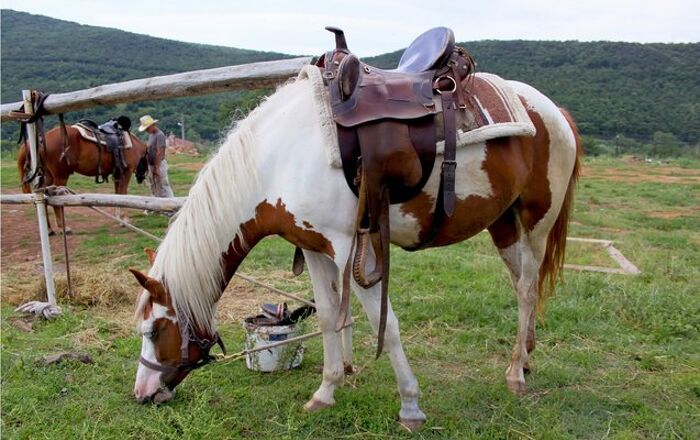
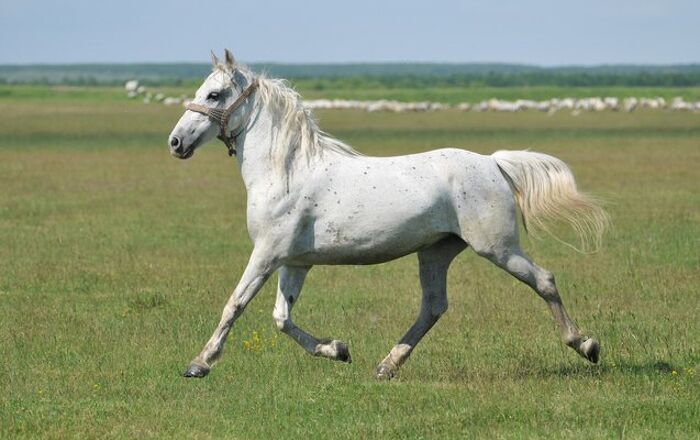
There aren’t any color restrictions within the American Saddlebred Horse breed. The most common colors, however, are black, brown, chestnut, and bay. Roan, pinto, palomino, and gray are also seen in this breed, though less commonly.
The American Saddlebred Horse is ideal for leisurely riding through fields and trails.
Grooming Requirements
Like other horse breeds, the American Saddlebred Horse should be groomed regularly. This includes using a variety of tools to keep the hooves and the coat clean and healthy. Standard tools include a body finishing brush, a curry comb, a dandy brush, a mane comb, a tail brush, a shedding blade, and a hoof pick. Because these horses are naturally beautiful, grooming them consistently will keep them looking their best. And because they are friendly, people-oriented animals, training them to be groomed will be easy, and they will look forward to the experience of being handled and cleaned.