Bardino Majorero Basics
Many dog breeds experienced a period of rapid decline surrounding the two World Wars but the Bardino Majorero is one of the few that continues to struggle. In fact, it is in real danger of extinction, even in its native land. It is unfortunate to see this breed in such danger because it is a beautiful dog and excellent family companion. Hopefully through concerted breeding efforts, this breed can be brought back from the brink of extinction.
The Bardino Majorero was traditionally used as a cattle dog and livestock guardian.
Origin
The Bardino Majorero originated on the island of Feurteventura in the Canary Islands off the coast of Morocco. Popularly known in-country as the Perro Bardino, the Bardino Majorero was traditionally used as a cattle dog and livestock guardian. The first dogs of this type arrived on the island of Ferteventura in the 1400s but the process for officially recognizing the breed wasn’t even begun until 1979. The breed was finally recognized by the Royal Canine society of Spain in 1994 but, unfortunately, no specific breeding plan was enacted to protect the breed and it continues to decline rapidly toward extinction.
Pedigree
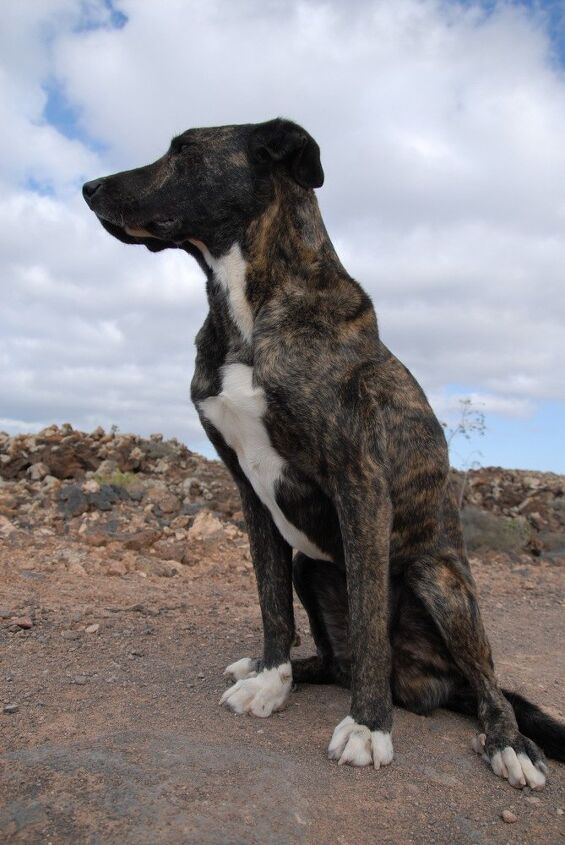
The Bardino Majorero is descended from Spanish cattle dogs that were brought to the Canary Islands during the 1400s when they were colonized by Spain.
Food/Diet
As a large-breed dog, the Bardino Majorero requires a high-quality commercial dog food diet that is formulated to meet the needs of larger dogs. It is important to feed your dog a large-breed puppy formula to keep him from growing too quickly – overgrowth can predispose the dog to musculoskeletal issues in adulthood.
This breed can sometimes be aloof or even aggressive around strangers.
Training
Because the Bardino Majorero was bred as a livestock guardian it has a tendency to be fairly independent and a little bit stubborn. This breed can respond to firm and consistent leadership, though it will always be a bit independent. The Bardino Majorero can sometimes be aloof or even aggressive around strangers, which is why early socialization and training is absolutely essential for the breed. Because this breed is large and sometimes difficult to handle, it is not recommended for inexperienced dog owners or for those who do not have the time to devote to training.
Weight
The Bardino Majorero is a large-breed dog that stands between 22 and 26 inches tall and weighs between 75 and 90 pounds at maturity.
Temperament/Behavior
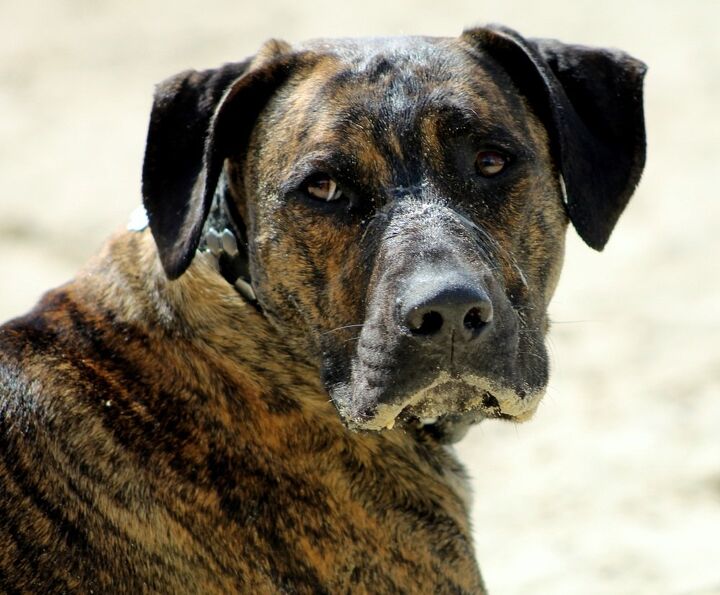
The Bardino Majorero is a noble breed that is generally fairly independent by nature – this is due to its development as a livestock guarding breed. This breed can be gentle and affectionate with family, though they tend to be pretty aloof or even aggressive around strangers. This breed requires plenty of socialization from an early age to prevent these tendencies. This breed does get along well with children, though it is best for older children due to its size and interactions should always be supervised. This dog does not do well in small condos or apartments.
Common Health Problems
Because there is limited information available about the Bardino Majorero, its predispositions to inherited conditions are largely unknown. As a large-breed dog, however, the Bardino Majorero may be at-risk for musculoskeletal conditions like patellar luxation and hip dysplasia. As a deep-chested breed, these dogs may be at risk for gastric torsion as well.
Life Expectancy
As a large-breed dog, the Bardino Majorero has a somewhat short lifespan averaging 10 to 12 years.
Exercise Requirements
The Bardino Majorero was trained for livestock guardianship so it is not an overly active breed. Due to its size, however, this breed does not do well in an apartment or condo. The breed needs only a moderate amount of exercise and it enjoys spending time outdoors.
The Bardino Majorero is a noble breed that is generally fairly independent by nature.
AKC
The Bardino Majorero was only recognized by the Royal Canine society in Spain in 1994, but it has yet to be recognized by the AKC.
Coat
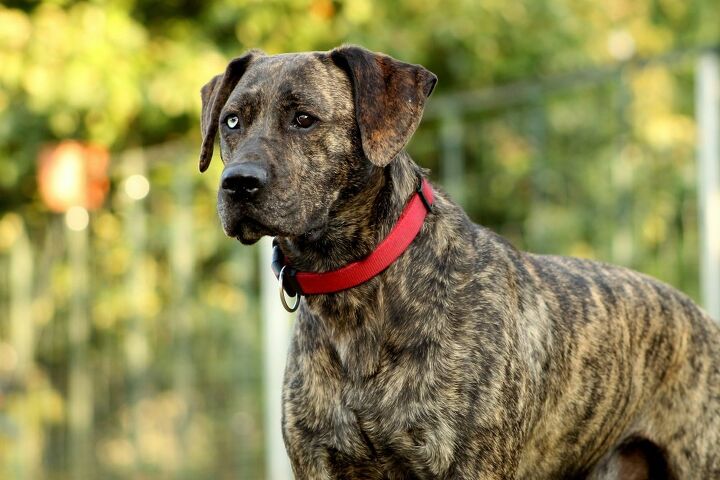
The Bardino Majorero has a wolf-like appearance in some cases with a medium-length coat of dark hair. Many dogs of this breed exhibit a brindled appearance with a base color of jet black and beige or grey for the brindle pattern. It is fairly common for Bardino Majorero dogs to exhibit white spots on the extremities as well as the belly. The hair is generally soft and the skin is thick and loose.
Puppies
The average litter size for the Bardino Majorero breed is unknown since the breed is still so rare. If you do manage to get your hands on a puppy, you will need to start him off with socialization and training as soon as possible. Because these dogs grow large (up to 90 pounds) you will also have to be careful about what you feed him. A large-breed puppy formula is recommended to make sure that your Bardino Majorero puppy doesn’t grow too quickly – overgrowth can put excess strain on his bones and joints, increasing his risk for musculoskeletal issues as an adult.
Photo credit: Asmodiel/Shutterstock; E.S.Photo/Shutterstock