Biewer Terrier Basics
If you are looking for a playful and adorable small-breed dog, look no further than the Biewer Terrier. Also known as the Biewer à la Pom Pon, Biewer Yorkie or Biewer Yorkshire, these dogs were bred from Yorkshire Terriers so they share many of the same lovable characteristics of this popular breed. Biewer Terriers make great companion pets and they generally get along well with children and other pets.
If you are looking for a playful and adorable small-breed dog, look no further than the Biewer Terrier.
Origin
The origins of the Biewer Terrier breed lie within the history of the Yorkshire Terrier. Yorkshire Terriers are typically tan with a blue saddle, but a particolor (piebald) variety began to gain popularity during the 1980s. In 1984, a piebald Yorkshire Terrier puppy was bred from two Yorkshire Terriers carrying a recessive gene for piebald coloration. This puppy was named Schneefloeckchen von Friedheck and he is recognized as the first Biewer Terrier.
Gertrud and Werner Biewer, the breeders responsible for this dog, saw a unique beauty in the piebald terrier puppy and started a selective breeding process to produce more like him. By 1989, the breed was officially recognized as the Biewer Yorkie by the Allgemeiner Club der Hundefreunde Deutschland. Today, this breed is known as the Biewer Terrier and it has its own set of standards separate from the Yorkshire Terrier, set forth by the Biewer Terrier Club of America (BTCA). The Biewer Terrier came to the United States in 2003 and it is currently part of the AKC Foundation Stock Service.
Pedigree
The Biewer Terrier was bred from the Yorkshire Terrier, accomplished by breeding two Yorkshire Terriers carrying the recessive gene for piebald coloration.
Food/Diet
As a small-breed dog, the Biewer Terrier requires a high-quality commercial dog food diet that is formulated for small-breed dogs. Small-breed dog formulas are specially designed to meet the high-energy needs of small, active dogs like the Biewer.
The Biewer Terrier is a smart little dog that generally responds well to a firm and consistent hand in training.
Training
The Biewer Terrier is a smart little dog that generally responds well to a firm and consistent hand in training. Like many toy breeds, the Biewer is prone to developing small dog syndrome if not properly trained. Biewer Terriers can be somewhat difficult to housebreak and they can be a little overprotective at times. As long as you start training early and remain consistent, you shouldn’t have any trouble training your Biewer Terrier.
Weight
The Biewer Terrier stands up to 8.5 inches tall and weighs between 4 and 8 lbs. at maturity.
Temperament/Behavior
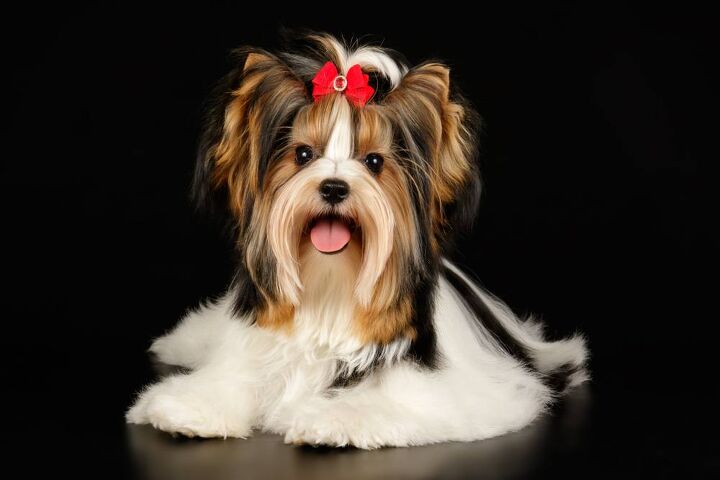
For the most part, the Biewer Terrier is a very easy dog to get along with – they do not tend to bark and they are an easygoing breed. Biewer Terriers are friendly and playful, eager to spend time with family and great around kids. Like many toy breeds, this dog has a large personality that doesn’t seem to fit in its small frame – they also love attention and enjoy being the star of the show. Though the Biewer may look small, it has a large personality and is quick to stand up for itself against larger breeds. This breed makes a great companion pet for singles and families alike.
Common Health Problems
Given the fact that Biewer Terrier was bred from the Yorkshire Terrier, they share the same sort of health problems. Some of the most common genetic disorders seen in this breed include patellar luxation, Legg-Calve-Perthes syndrome, portosystemic shunt, bladder stones, and tracheal collapse. Other conditions these dogs may develop include distichiasis and hypoglycemia.
Life Expectancy
The average life expectancy of the Biewer Terrier is between 12 and 15 years.
Exercise Requirements
The Biewer Terrier is a naturally active breed that requires regular daily exercise to work off his excess energy. If a daily walk is not possible, some active playtime will usually fulfill this dog’s needs for exercise. Without enough exercise of some form, however, this breed is likely to develop behavioral problems such as digging and chewing.
For the most part, the Biewer Terrier is a very easy dog to get along with – they do not tend to bark and they are an easygoing breed.
AKC
The Biewer Terrier is currently part of the AKC Foundation Stock Service – it has not yet been recognized as a breed separate from the Yorkshire Terrier.
Coat
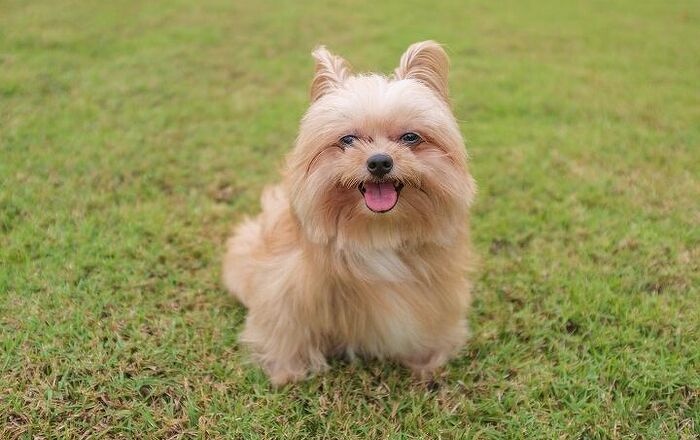
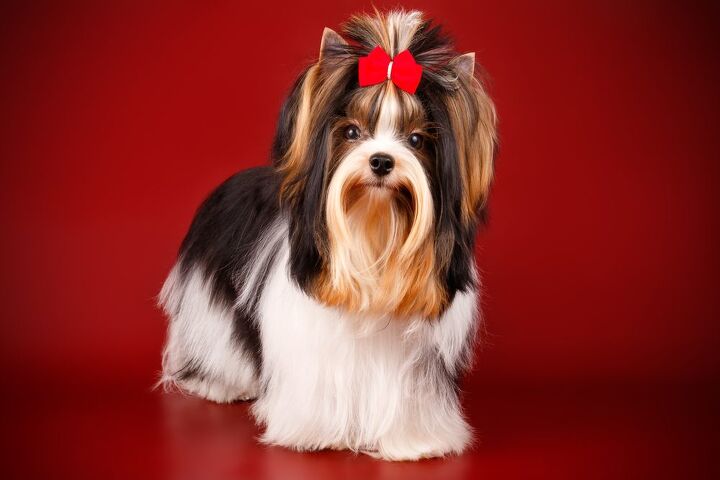
The Biewer Terrier is similar in appearance to the Yorkshire Terrier aside from its coloration. These dogs have long, flowing coats of straight, silky hair. The Biewer Terrier’s coat is shiny and smooth. Unlike Yorkshire Terriers which exhibit tan coloration with a blue saddle, the Biewer has a piebald coloration. These dogs are typically exhibit white or blueish-white broken coloring on the body with white hair on the chest, legs, and belly. The face is typically black and tan with symmetrical coloring.
Puppies
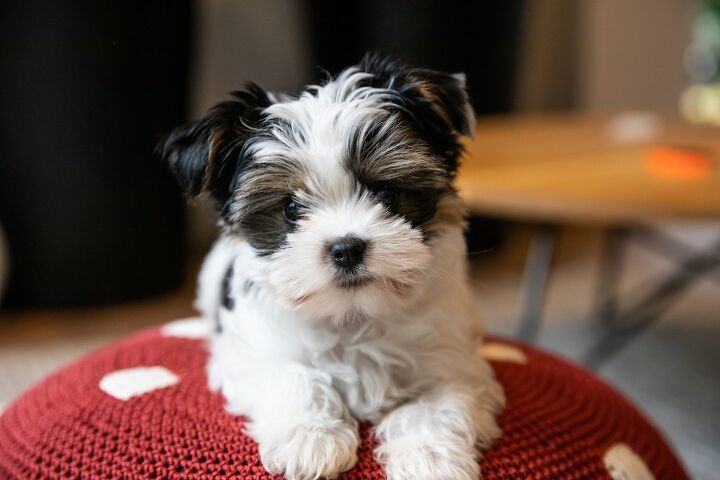
The average litter size for the Biewer Terrier is between 2 and 5 puppies. As is true for most dogs, it is recommended that you start socialization and training as early as possible with this breed. Training is essential to prevent the development of small dog syndrome and early socialization will help prevent this breed from becoming aggressive toward other dogs.
Photo credit: Oleksandr Volchanskyi/Shutterstock; Angeline Dobber/Shutterstock