Pembroke Welsh Corgi Basics
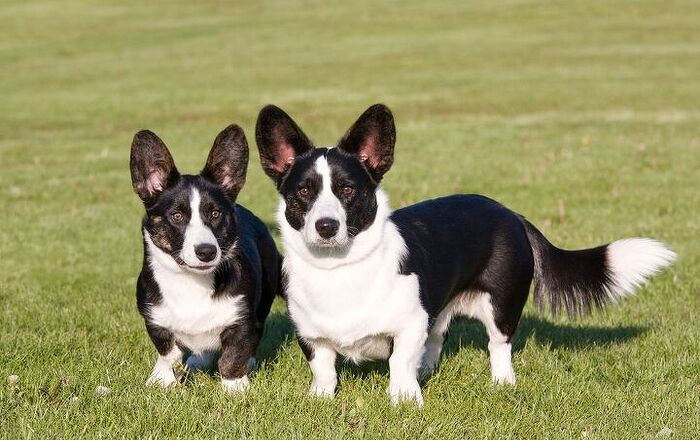
From the fields to the home, the Pembroke Welsh Corgi has come a long way since its humble origins. Outgoing, playful, loving, and companionable dogs, the Pembroke Welsh Corgi makes a great family pet, as it plays wonderfully with children, although it may be a bit reserved around strangers. As long as you provide your Pembroke Welsh Corgi with daily exercise, both mental and physical, you’ll get a lot out of your big-eared little companions.
Famous for being the preferred breed of Queen Elizabeth II, you don’t need to be royalty to own a Pembroke Welsh Corgi. Read on for more information about this adorable breed.
Outgoing, playful, loving, and companionable dogs, the Pembroke Welsh Corgi makes a great family pet, as it plays wonderfully with children.
Origin
Introduced to Wales in the ninth century, the Pembroke Welsh Corgi made its way to Pembrokeshire in the 12 century. It is believed that is said that Vikings and Flemish weavers brought the dogs with them when they decided to settle in Wales. The Pembroke Welsh Corgi was used for herding sheep, geese, ducks, horses and cattle, and is considered to be one of the oldest herding breed of dogs. Found to be excellent companions as well, this breed is a favorite of Queen Elizabeth II, who owned 16 Pembroke Welsh Corgis at one point.
Pedigree
The Pembroke Welsh Corgi originated from the Swedish Valhund. It was cross bred with Schipperke, Pomeranian, and other Spitz-type dogs. And up until the early 20th century, the Pembroke Welsh Corgi and the Cardigan Welsh Corgi were considered the same breed.
The AKC recognized the Pembroke Welsh Corgi in 1934.
Food / Diet
You should feed your Pembroke Welsh Corgi a premium quality dog kibble. As well, these Corgis do well with fish, lamb, poultry, potato, beets, carrots, and barley.
Smart and quick-witted, Pembroke Welsh Corgis learn quickly.
Training
Smart and quick-witted, Pembroke Welsh Corgis learn quickly. But even though the breed is intelligent, you’ll still need to implement firm training methods and consistent training sessions to maintain good behavior and skills. As with most dog breeds, you shouldn’t use harsh or negative training methods on your Pembroke Welsh Corgi – it just won’t work and you’ll end up frustrated. Another thing to keep in mind is that Corgis don’t respond to repetitive training because it gets bored easily. Part of the training should include not to bark at strangers – socialization and obedience training can help this problem. And although the Pembroke Welsh Corgi probably will not respond to commands from strangers, it will respond commands from all family members. Once properly trained, the Pembroke Welsh Corgi makes good obedience and show dogs once they have been properly trained. This breed is natural herders, so herding trails are a good competition to get involved in.
Weight
Male Pembroke Welsh Corgi weights 25 to 30 pounds, while the females weigh in from 24 to 28 pounds.
Temperament / Behavior
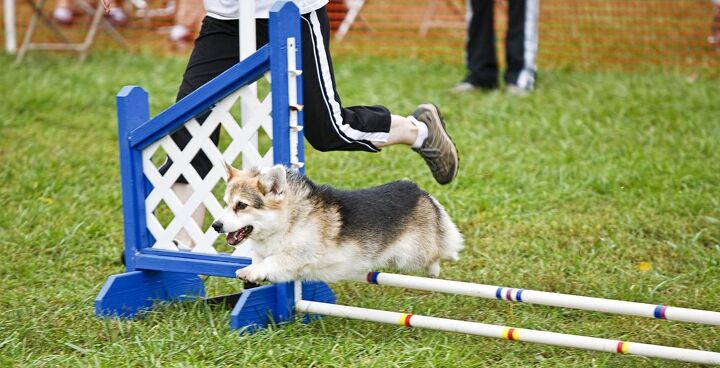
You’ll find that Pembroke Welsh Corgis have a happy personality, are loyal to its masters, and quite tough. It plays well with children, as long as it’s not pestered and can even handle some rough play. Because this breed was made to herd livestock, it can be a little domineering at times, but proper training can take care of this problem. Pembroke Welsh Corgis are good problems solvers, but your dog may also have a stubborn and independent streak. Corgis are natural watchdogs and will bark at strangers and distrust people they do not know. If you want to correct this, start training and socializing is important. As long as it is socialized early, Pembroke Welsh Corgis are good companion animals for your other family pets.
Common Health Problems
Because it is a long-bodied purebred dog, one of the major problems with the Pembroke Welsh Corgi is intervertebral disc disease, which is a back problem. Other health issues include progressive retinal atrophy, glaucoma, Von Willebrand’s Disease and epilepsy.
Life Expectancy
Pembroke Welsh Corgis have a life expectancy of 12 to 15 years.
Exercise Requirements
Exercise is important for the Pembroke Welsh Corgi, as it can develop back problems and needs to be kept at a healthy weight. If your dog is obese, its back problems will only get worse. As well, try to make sure your Corgi doesn’t jump. An active dog, the Pembroke Welsh Corgi loves to play and run. Regular exercise is mandatory, so a backyard is a great asset. To wear your dog out, kids make excellent playmates – get them to play tug of war, hide and seek, and chase games. For outdoor activities to do with your Pembroke Welsh Corgi, go for a walk, jog or hike, or take your pooch to the dog park to play with other dogs.
You’ll find that Pembroke Welsh Corgis have a happy personality, are loyal to its masters, and quite tough.
AKC
The American Kennel Club says this about the breed: “Low-set, strong and sturdily built, the Pembroke Welsh Corgi gives an impression of substance in a small space. He is one of the most agreeable small house dogs, as well as an avid competitor in many dog sports, including conformation, herding and obedience.”
Coat
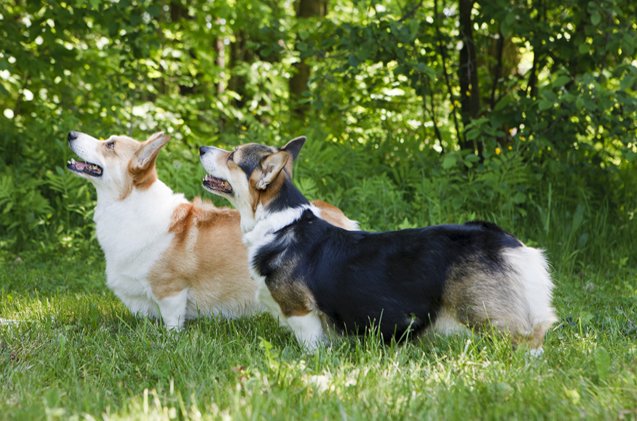
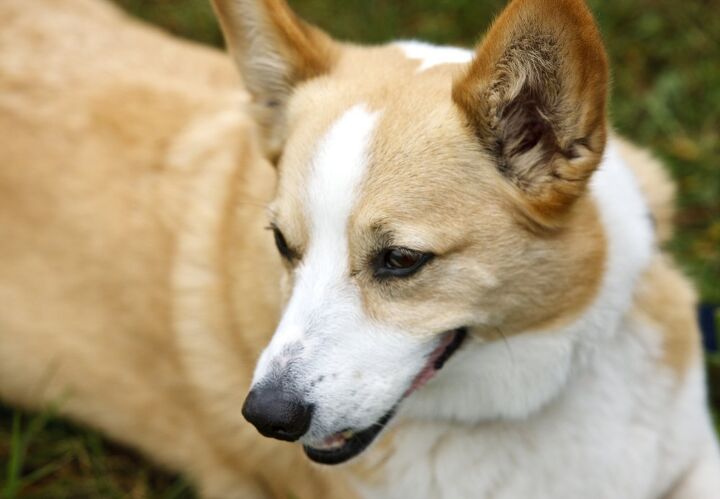
Sporting a thick coat of medium length hair, the Pembroke Welsh Corgi’s outer coat of its double coat is coarse, while the inner coat is fine and thick. Oils from its skin make its fur water resistant. The Pembroke Welsh Corgi’s coat can be black, tan, sable, red, or fawn. Some have coats with white markings.
The Pembroke Welsh Corgi medium length coat is easy to maintain. Shedding seasons take place in the spring and summer, so weekly brushing with a wire brush will help. Brush both the outer and under coat to keep tangles at a minimum. Since its coat is naturally water resistant, the Pembroke Welsh Corgi does not need to be bathed regularly. But if you must give your dog a bath, use specially formulated shampoos with the correct skin and hair pH.
Puppies
Your Pembroke Welsh Corgi will need to be socialized with other animals and people as soon as possible, otherwise it may be shy and reserved.
Photo credit: Lee319/Shutterstock