Bosnian Coarse-Haired Hound Basics
Also known as the Bosanski Ostrodlaki Gonic or the Barak, the Bosnian Coarse-Haired Hound is a hunting breed developed in Bosnia. Developed as a scent hound, the breed is used to hunt large game and is well known for his shaggy coat. If you’re looking for a unique breed and you aren’t afraid to go outside of the U.S. to find it, the Bosnian Coarse-Haired Hound might be worthy of your consideration.
Also known as the Bosanski Ostrodlaki Gonic or the Barak, the Bosnian Coarse-Haired Hound is a hunting breed developed in Bosnia.
Origin
The Bosnian Coarse-Haired Hound was originally known as the Illyrian Hound, a name given in reference to the pre-Slavic people who lived in the area in which the breed was developed. The modern breed is descended from various indigenous dog breeds crossed with Italian gundogs during the 1890s. The goal in breeding the Bosnian Coarse-Haired Hound was to produce a dog who was efficient as a scent hound but somewhat smaller than contemporary hounds. It is possible that the Istrian Shorthaired Hound played a role in its development for this reason. The Bosnian Coarse-Haired Hound was recognized by the FCI in 1965 under the name ‘Illyrian Hound’ but it is known as the Barak by the UKC. It is not currently recognized by the AKC and remains a rare breed and a unique family pet.
Pedigree
The Bosnian Coarse-Haired Hound was developed from various indigenous dog breeds crossed with Italian gundogs in the 1890s.
Food/Diet
As a medium- to large-sized breed, the Bosnian Coarse-Haired Hound should be fed a high-quality dry food formulated for adult dogs. Because the breed is primarily used as a working breed, however, he may do better on an active or working breed formula as long as you are careful about overfeeding to prevent obesity.
The Bosnian Coarse-Haired Hound was bred for hunting, so he is generally a trainable breed.
Training
The Bosnian Coarse-Haired Hound was bred exclusively for hunting, so he is generally an adaptable and trainable breed. These dogs love to do their jobs and they have high energy levels, so training and exercise should go hand-in-hand. The Bosnian Coarse-Haired Hound is capable of working long hours in tough terrain, so a short daily walk will not be sufficient to satisfy his exercise requirements. These dogs have a high risk for developing problem behaviors such as excessive barking and destructiveness when they don’t get enough exercise.
Weight
The Bosnian Coarse-Haired Hound is a medium- to large-sized dog, standing between 18 and 22 inches tall and weighing 35 to 55 at maturity.
Temperament/Behavior
The Bosnian Coarse-Haired Hound is still fairly rare outside its native land where it is most commonly used as a working breed. This being the case, little is known about the breed’s temperament in a home environment. Generally speaking, the Bosnian Coarse-Haired Hound is a friendly and good-natured breed that may get along with children and can sometimes be raised with smaller pets like cats. The breed is highly dedicated to its job and to his owner, so they require a lot of training and socialization to get along with strangers and sometimes other dogs. The breed tends to be louder and more vocal than other dogs and, while these behaviors can be reduced through training, they probably won’t be eliminated entirely.
Common Health Problems
There is not a great deal of information available about the Bosnian Coarse-Haired Hound in terms of his health, but it is generally a healthy breed. All dogs are, however, prone to certain problems. Some of the conditions known to affect this breed include hip dysplasia, elbow dysplasia, cataracts, progressive retinal atrophy, patellar luxation, and entropion.
Life Expectancy
The average lifespan for the Bosnian Coarse-Haired Hound is thought to be about 12 to 15 years which is about average for a breed of its size.
Exercise Requirements
As a hunting breed, the Bosnian Coarse-Haired Hound has high exercise requirements – a single daily walk won’t be enough for this breed. These dogs were bred to work long hours on rough terrain, so they have a strong work ethic and excellent stamina. At a minimum, this breed needs 45 minutes of vigorous activity each day, and they will appreciate having a fenced yard in which to run.
The Bosnian Coarse-Haired Hound is a friendly and good-natured breed.
AKC
The Bosnian Coarse-Haired Hound is not currently recognized by the AKC but he is recognized by the FCI and the UKC. The FCI classifies him in Group 6 as a Scenthound and the UKC as a Scenthound.
Coat
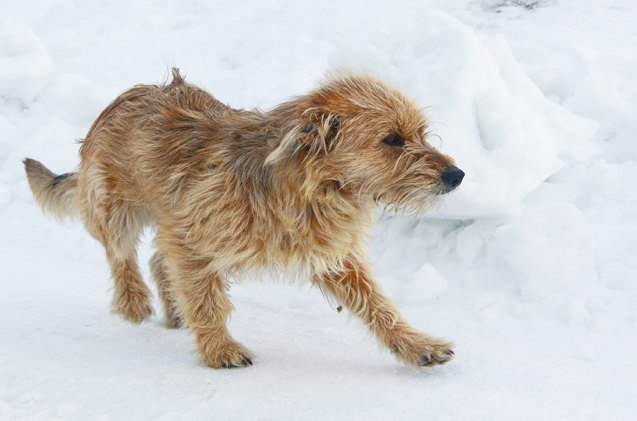
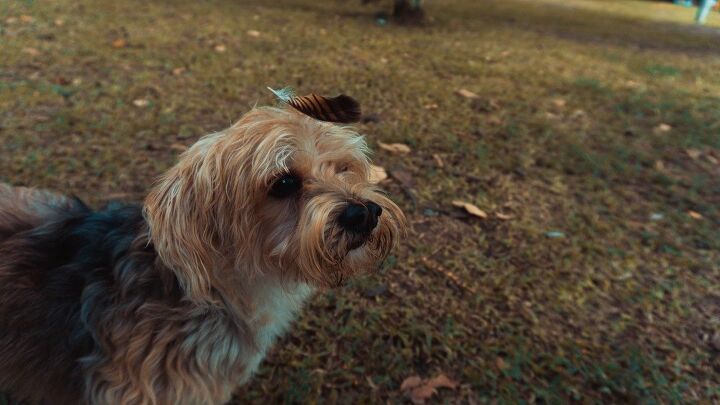
As you can probably guess from the breed name, the Bosnian Coarse-Haired Hound has a coarse coat of medium-length fur. The breed has a double coat with a short, dense undercoat and a long, shaggy outer coat that looks tousled. The hair on the face grows longer in some areas, giving him bushy eyebrows and a short but noticeable beard and mustache. The coat is typically solid colored, solid with white markings, or tri-color using various shades of wheaten yellow, earthy grey, reddish yellow, or black.
Puppies
The average litter size for the Bosnian Coarse-Haired Hound breed is 3 to 7 puppies. Because this breed grows to more than 50 pounds at maturity, puppies should be fed a large-breed puppy recipe. When they reach 80% of their expected maximum size, you can switch to a large-breed adult formula. It is also recommended that you start puppies with training and socialization as soon as possible.
Photo credit: Cavan-Images/Shutterstock; Smirnova AnnaEE/Shutterstock.com