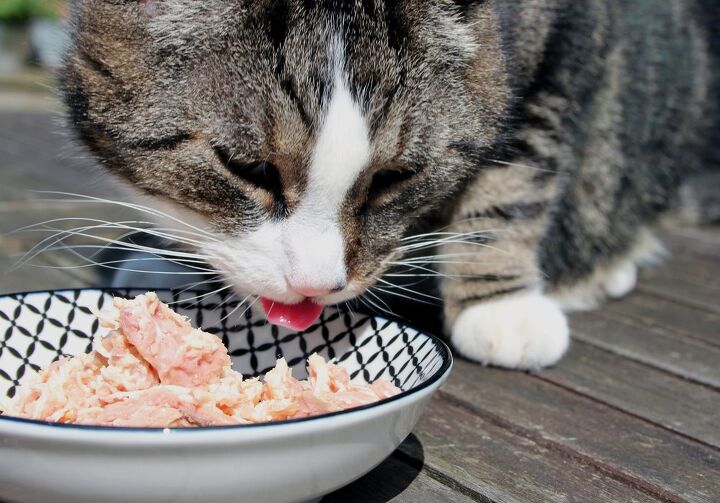
Cats love to nom on tuna. But is it good for them? Can cats eat tuna, and if so, how much is enough to satisfy your kitty?
Does your cat love digging into some tuna? Have you wondered if it’s really good for him to eat it, though? We decided to search for the answer to this common question to help you learn a bit more about what your kitty really needs to eat in order to thrive.
Let’s start off with cat food that contains tuna as an ingredient. Is it a good idea to feed your kitty this type of food on a regular basis? Yes, it could be. But, like anything else, everything is best in moderation.
Related:Discussing The Truth About Cat Food
High-quality canned food that includes tuna is rich in moisture, and it’s also nutritionally balanced for cats. If your pet likes the flavor of tuna, purchasing this food, as well as treats that contain tuna as an ingredient, is a nice way to add variety to his diet and keep him satisfied.
What about the canned tuna that you purchase for your own meals? Well, first off, if you want to share some of it with your feline friend, only do so if it’s canned in water. There shouldn’t be any salt or oil in the can along with the fish. It’s even a good idea to rinse the tuna yourself prior to feeding it to your cat. And take a minute to look over the ingredients label, too, as you don’t want to feed your cat any canned tuna that contains unwanted ingredients, such as artificial ingredients. Again, tuna in water is considered the safest and most appropriate.
Related:How to Transition Your Cat to New Food
The tuna that you eat out of a can isn’t nutritionally balanced for cats like wet food that contains tuna as an ingredient. For this reason, experts recommend giving this type of tuna only as a treat in order to avoid nutritional deficiencies.
Cooking tuna, rather than giving it to your pet in its raw state, will help make it safer for your kitty to consume. But serve it plain, so don’t add any seasonings, oil, or salt to it if you’re going to be preparing some tuna in your kitchen that you can share with your furbaby.
As with tuna that’s packaged for human consumption, it’s important to remember that cooking up tuna at home doesn’t constitute a nutritionally complete meal for your cat. Therefore, only use this as an occasional treat to keep your kitty happy.
What’s considered a safe amount of tuna to feed to your cat? According to experts, it is a good idea to vary your pet’s diet, rather than feeding him fish exclusively. And it’s also worth noting that tuna does contain high amounts of mercury, so you don’t want to give your cat too much of it. Instead, you can offer tuna to your cat as a treat, or you can satisfy your pet’s cravings for fish by giving him wet food that’s made using other types of fish, such as salmon.
Note: Some cats may be sensitive or allergic to fish. So, when feeding your kitty tuna, or any other fish, watch for symptoms that would indicate that he’s sensitive or allergic to this ingredient.
Overall, tuna can be a nice treat for your cat to enjoy, but it’s best to stick with nutritionally complete cat food that includes tuna as an ingredient. That way, you can be sure that your pet is getting all of the vitamins and minerals that he needs to stay healthy. And if you have any questions or concerns about what you should be feeding your kitty, your vet can point you in the right direction based on your unique pet’s health and needs.