
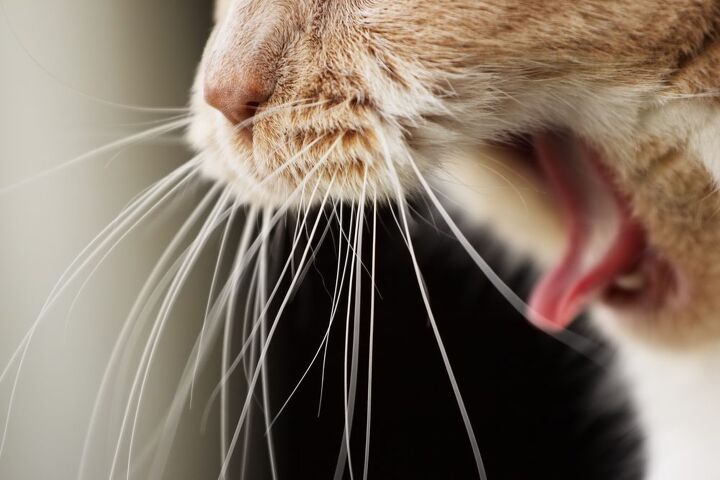
What causes cat gagging? Is there anything you can do to prevent or help it? Let’s talk all about cat gagging and shy it happens.
Gagging is something that cats do from time to time, and when you’ve seen it happen, you might’ve wondered what caused it. Is gagging a symptom that you need to worry about, or is it normal for cats?
Check out the info below to learn more, but just keep in mind that every cat is an individual, and you know your pet best, so if you think something is wrong, or if you’re just curious about whether or not your cat’s gagging is normal, it’s always best to contact your veterinarian for guidance.
What Can Cause a Cat to Gag?
Gagging is a reflex that can help remove an irritant from the larynx, so it might happen if something tickles your kitty’s throat. It might also happen if your cat swallowed something that she shouldn’t have, or if she has a hairball. And sometimes, even just sniffing something that’s irritating to your kitty might make her extend her neck, open her mouth wide, and gag.
Basically, it’s her body’s way of ejecting whatever shouldn’t be there. In the case of something merely tickling the throat, there likely won’t be any vomit; other times, your cat will gag before throwing up.
When Gagging Might Be a Concern
Occasional gagging might be normal for a cat, and hairballs are often to blame. In the event that your cat is throwing up hairballs a lot, there are some steps you can take to prevent the hairballs, such as brushing your pet more often, giving your kitty food that can help reduce the occurrence of hairballs, or using hairball products designed to help your cat pass the hair through the intestinal tract.
However, if you notice that your cat is gagging and/or vomiting frequently, it’s a great idea to talk to your vet. And it’s also necessary to contact your vet if the gagging is caused by a foreign object that your cat swallowed (such as a string or a toxic substance).
Various conditions, such as respiratory infections, obstructions in the throat or nasal passages, cancerous or benign tumors, gastrointestinal disease, or dental disease, might be causing your kitty to gag more often than what would be considered normal. Your veterinarian will be able to evaluate your pet to figure out what’s going on and prescribe the appropriate treatment.
Is your cat gagging frequently and also exhibiting other signs that she might not be feeling good? Then seeing the vet is a wise move so you can get to the bottom of the problem.
Note: If your cat is gagging a lot, taking your feline friend to the vet sooner, rather than later, may help ensure the condition is diagnosed in its earliest stages, when it’s easier and more affordable to treat.
Bottom Line:
A cat might gag every now and then, and it might be totally normal. Other times, gagging might be a symptom of a more serious condition that requires veterinary attention. So keep an eye on your cat, and if you start to see her gagging frequently or you can tell that something is amiss, don’t hesitate to get some advice from your vet.