Chesapeake Bay Retriever Basics
For many people, understanding dogs is simple. They find a friendly, loyal, easy-to-get-along with breed like the Golden Retriever or Labrador Retriever and they’ll never want for a good friend again. But for the dog lover who appreciates all sorts of breeds, the Retriever doesn’t only sporty, friendly dog most of us grew up learning about. There’s more to the retriever story, and one only has to travel to the United States – and the Chesapeake Bay Retriever, specifically – to find it.
Of course, by now you know we’re referring to the Chesapeake Bay Retriever, perhaps one of the great under-appreciated dog breeds out there. You won’t have to look far to find a quality dog after you’ve encounter a Chesapeake Bay Retriever or two; many times, whether you live on your own or with a family, a great Chesapeake Bay Retriever will be exactly what you’ve been looking for in a dog. The uniquely American heritage and breeding is a benefit to those of us who keep our dog breeds simply and domestic. Here’s a little bit more about this great breed of dog that more people should be talking about.
The Chesapeake Bay Retriever is a classic retriever when it comes to behavior and training.
Origin
You don’t have to be a rocket scientist or, more fittingly, a dog historian to figure out where the Chesapeake Bay Retriever hails from. It’s not a trick question: the Chesapeake Bay Retriever does indeed trace the origins of its unique breed to the Chesapeake bay on the Atlantic seaboard of the United States.
What’s unique about the origins of the Chesapeake Bay Retriever, however, is that you can trace their lineage to two very specific dogs. These dogs, named Sailor and Canton, were brought to Maryland at the dawn of the 19th century and bred with other dogs in order to create a breed unique in and of itself. These two dogs weren’t Chesapeake Bay Retrievers, but they were known as Newfoundland dogs, which suggest that you can indeed trace the history of the Chesapeake Bay Retrieve further back if you want.
The retriever has become a favorite in the Maryland and Chesapeake Bay area, even becoming Maryland’s state dog in 1964. If the history of Sailor and Canton is ever challenged, we at least know that the breed was recognized as its own in the late 19th century, not unlike many breeds we would consider “older” than the Chesapeake Bay Retriever.
Pedigree
The current Chesapeake Bay Retriever does have a strong pedigree in its own breed – it’s not very hard to find a purebred (depending on your location). Given the strong history of breeding and development in the United States, it’s had a consistent record as being a recognized and standardized breed for over a hundred years.
Moving backward in time, however, the detail about the Chesapeake Bay Retriever’s pedigree can get a little trickier. Although this breed is younger than ancient breeds like those you’ll find in Asia, it is difficult to trace western dog history because of the high degree of breeding and development throughout the 18th and 19th centuries. The two “parents” of the Chesapeake Bay Retriever were known to be Newfoundland dogs, which suggest an entire history in and of itself.
Food / Diet
Considered a mid-to-large sized dog, the Chesapeake Bay Retriever might go through more food than you expect. Protein is important, including lean meats and good poultry. Using chicken stock for flavoring can be a great way to enhance the nutrition and flavor of many of its meals. Don’t be afraid to feed your dog a healthy-sized diet if it gets plenty of exercise.
The uniquely American heritage and breeding is a benefit to those of us who keep our dog breeds simply and domestic.
Training
In many ways, the Chesapeake Bay Retriever is a classic retriever when it comes to behavior and training. They are loyal, easy to get along with, and don’t mind being put to work. This breed especially has been bred for water retrieving and other similar activities, so helping them understand their role in your family can include those sporty activities.
Generally, a well-socialized Chesapeake Bay Retriever will be about as friendly as you can hope a big dog to get. Proper training and raising, as always, is important for any dog.
Weight
Weighing around 55 to 80 pounds – you can expect the males to outweigh females at an average of ten pounds, which puts them on the higher end rather than the lower end – these dogs are relatively large so you’ll want to make sure they’re properly trained if they’re going to spend time around your family. They’re largely non-threatening but having any animal of this size in the house will require caution.
Temperament / Behavior
Similar to other retrievers in look, behavior, and personality, you won’t find a lot of deviation from the classic “retriever” mindset here. A friendly disposition should usually be expected, though like any dog it can have its problems if it hasn’t been raised to socialize with people or other dogs properly.
Common Health Problems
Hip dysplasia is common in Chesapeake Bay Retrievers, as it is in any larger dog. Type 3 von Willebrand disease has also shown to be a higher risk in these dogs, as well as a few other ailments you might want to talk to your veterinarian about.
Life Expectancy
A life expectancy of 10-12 years is usually normal for a fairly healthy Chesapeake Bay Retriever.
Exercise Requirements
These dogs are good exercisers and intelligent athletes as well – don’t be afraid to give them challenges like retrieving toys and Frisbees, or even to take them out swimming in the appropriate settings. They love to move and love to have a task to get them moving, so be sure you indulge this on a regular basis. You may even find that short, brisk walks aren’t enough for this breed.
They are loyal, easy to get along with, and don’t mind being put to work.
AKC
These retrievers have been called a “truly American” breed by the American Kennel Club, and we tend to agree.
Coat
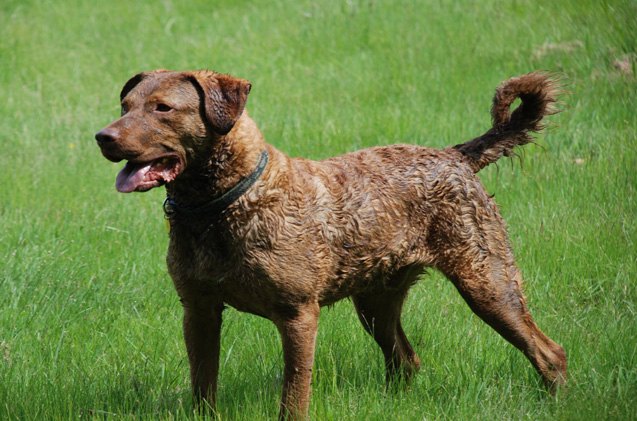
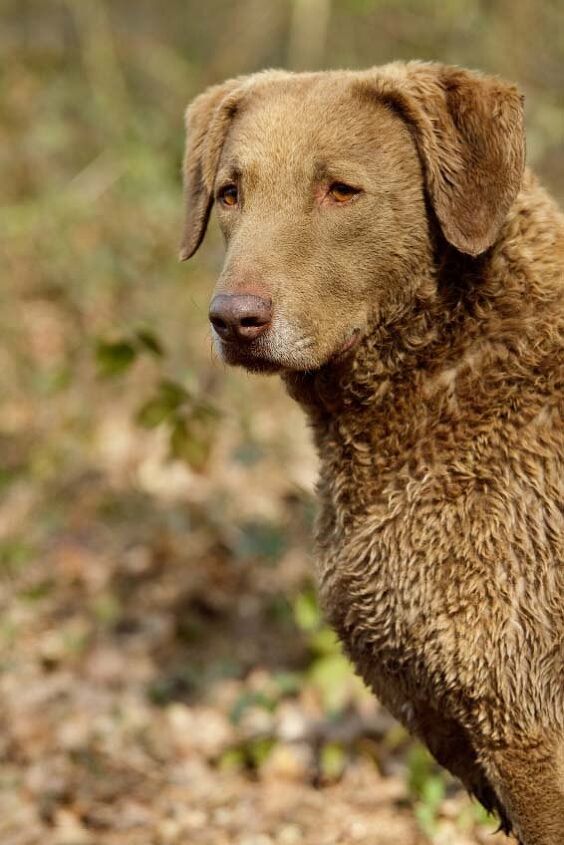
A brown coat that doesn’t deviate much in color also comes a double coat.
Puppies
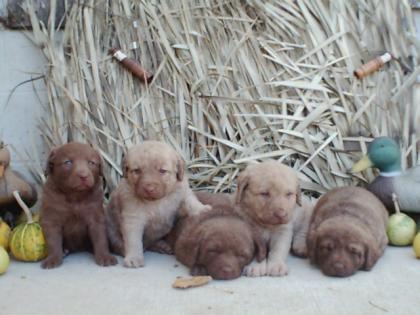
Properly socializing a Chesapeake Bay Retriever from a young age is important – it should be used to the presence of other people and other dogs.