Polish Tatra Sheepdog Basics
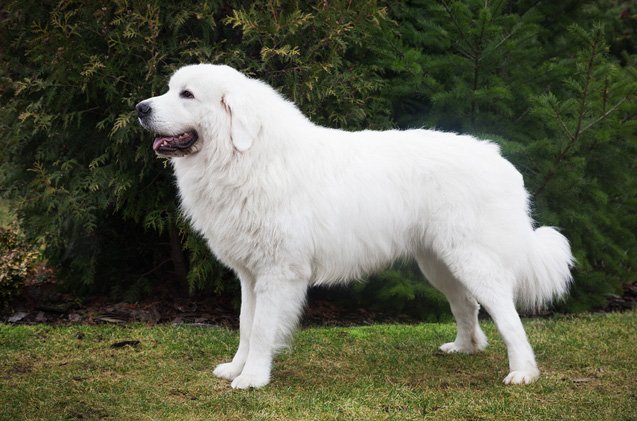
The Polish Tatra Sheepdog doesn’t look like the typical sheepdog. It doesn’t have a long, shaggy coat and it does have a beard and mustache to match. In fact, upon seeing this dog for the first time you might think that he is some kind of white-coated retriever or even a Great Pyrenees. Though the Polish Tatra Sheepdog doesn’t look like your average sheepdog, it is a talented herding breed and also incredibly independent and hard-working. If you are looking for a dog that doesn’t need to be by your side day in and day out but will develop a close bond with family, consider the Polish Tatra Sheepdog.
The Polish Tatra Sheepdog doesn’t look like your average sheepdog.
Origin
The Polish Tatra Sheepdog belongs to an eclectic group of rare dog breeds, though this label can be a little confusing because they are actually fairly common in their native land. It originated in Podhale, the Tatra Mountain region of Poland – that is where it gets its name. This breed is also known as the Polish Mountain Sheepdog or the Owczarek Podhalanski. This dog has lived and worked in the Polish mountains for many thousands of years, so long that its exact origins are unknown. One theory states that this sheepdog came from the Mastiff breed while others include them in the same class as other mountain herding breeds like the Kuvasz, the Great Pyrenees, and the Maremma Sheepdog.
Pedigree
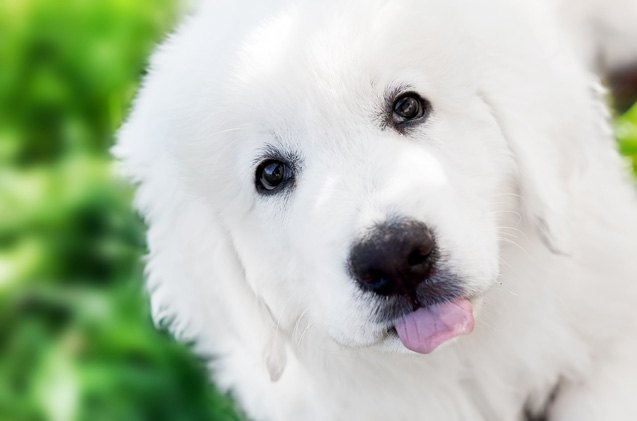
The exact origins of the Polish Tatra Sheepdog are unknown but it likely developed from various mountain herding breeds in Poland.
Food/Diet
As a large-breed dog breed, the Polish Tatra Sheepdog should be fed a high-quality commercial dog food diet formulated for dogs of its size. Because this breed is a high-energy herding breed, however, an active or working breed formula may be more appropriate to meet his needs.
The Polish Tatra Sheepdog was developed as a mountain herding breed which means that it has a independent nature and a strong will.
Training
The Polish Tatra Sheepdog was developed as a mountain herding breed which means that it has a independent nature and a strong will. These dogs were developed to be self-sufficient and to work without much guidance. This can be a good thing if you are looking for a low-maintenance dog but it can be a problem if you expect your dog to be people-oriented and playful. These dogs can be a little bit aloof around strangers so early socialization and training is recommended – you should also maintain a firm and consistent hand in training throughout the dog’s life.
Weight
The Polish Tatra Sheepdog is a large dog that typically stands 24 to 28 inches tall and weighs anywhere from 80 to 130 pounds at maturity.
Temperament/Behavior
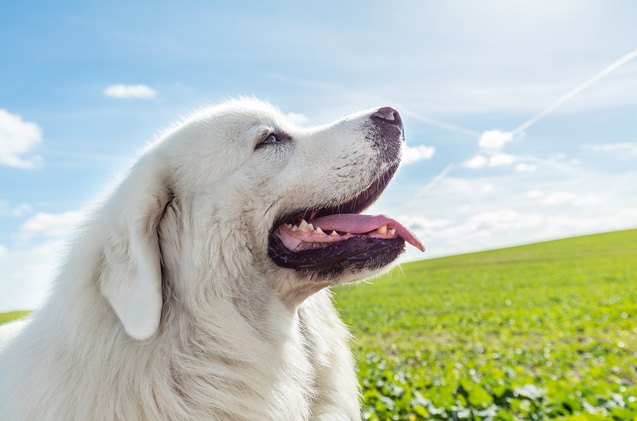
As a herding breed, the Polish Tatra Sheepdog tends to be fairly independent. This being said, they also form strong bonds with family and can be protective of their loved ones even if they are not always the most affectionate of companions. The Polish Tatra Sheepdog is not overly active indoors (though they do require plenty of daily exercise) and they don’t need to spend every waking minute by your side. They are naturally protective of their family and will bark at any suspicious, though they are not inherently violent or aggressive.
Common Health Problems
The Polish Tatra Sheepdog is considered a fairly rare breed but there is still some information available about health problems known to affect the breed. As a large-breed dog, the Polish Tatra Sheepdog is at risk for musculoskeletal issues like hip dysplasia and patellar luxation as well as gastric torsion. These dogs may also be at risk for epilepsy, juvenile cataracts, and allergic dermatitis.
Life Expectancy
The average lifespan of the Polish Tatra Sheepdog breed is about 10 to 12 years.
Exercise Requirements
The Polish Tatra Sheepdog was developed as a herding breed so it has good stamina and endurance. These dogs require a long daily walk to meet their exercise requirements and they also appreciate having a fenced yard to run around in. These dogs do not tend to do well with apartment or condo living, even though they don’t tend to be active indoors.
The Polish Tatra Sheepdog forms strong bonds with family and can be protective of their loved ones.
AKC
The Polish Tatra Sheepdog is still considered a rare breed and has not yet been accepted by the AKC.
Coat
As a mountain breed, the Polish Tatra Sheepdog has a thick coat that protects it from cold and harsh weather. These dogs have a pure white double coat and the top layer of fur sometimes has a bit of a wave to it. Its coat is self-cleansing which means that these dogs rarely need a bath. Like many mountain breeds, this sheepdog blows its undercoat in the late Spring so you may need to do some extra brushing and grooming at this time.
Puppies
The average litter size for the Polish Tatra Sheepdog breed is 5 to 8 puppies. Because the Polish Tatra Sheepdog is a highly independent breed, early socialization and training is highly recommended for puppies if you want your dog to be a family pet and to get along well with strangers.
Photo credit: Michal Bednarek/Bigstock