There’s something to the motto “Always be prepared” – especially when it comes to what to do with your dog during an emergency situation.
No matter how careful or diligent you are, you simply cannot predict when a disaster might strike. The only thing you can do to protect your family (including your pets) is to create an emergency plan. Having an emergency plan in place will help you to navigate disaster situations in a way that keeps your family safe. Let’s go over what you need to think about while putting together an emergency plan for your pet.
Planning Ahead for Emergencies
While you cannot predict when a disaster might strike, there are certain things you can do to mitigate the damage. One of the most important things you can do for your pet is to make sure they carry proper identification. In the event of an emergency, you might be separated from your pet and only if he carries proper identification are you likely to be reunited with him. For larger pets, such as cats and dogs, you should make sure they have a collar with an address and several phone numbers where you can be reached. You should also have your pet microchipped because, in the event of a disaster, your pet’s collar could become lost but a microchip is permanent. The key thing to remember with microchipping is to keep your contact information up to date so if someone does find your pet they have the right number to reach you.
Related:The Dog Scout’s Guide To Dog First Aid Kits
Another thing you should do to prepare for a disaster is to create an emergency supply kit for your pet. Stock this kit with at least a one-week supply of non-perishable food and water. You should also include any medications your pet may need along with his medical history, vaccination records, a recent photograph, and temporary ID tags. It is also a good idea to include a first aid kit in case your dog is injured during the disaster. In addition to stocking your emergency supply kit, you should also identify a friend or neighbor that will be your dog’s back-up caregiver in the event that you cannot get home. Make sure this person knows where the emergency kit is located.
What to Do During a Disaster
If you are lucky enough to have advanced warning of a disaster, plan to evacuate the area before you are told to do so by emergency personnel. If you wait until you are ordered to leave, you may also be ordered to leave your pets behind. Have an emergency plan prepared including where you will stay when you evacuate, how you will care for your pet, and how you will transport your pet. During an evacuation it is best to transport your dog in hard-sided carrier. This will help to keep him calm and secure during the trip and it will protect him from outside forces. When you arrive at your evacuation destination, give your dog plenty of comfort and reassurance, making sure he has plenty of toys on hand to keep him occupied.
Related:What To Do If Your Dog Gets Sick While Traveling
After the Disaster is Over
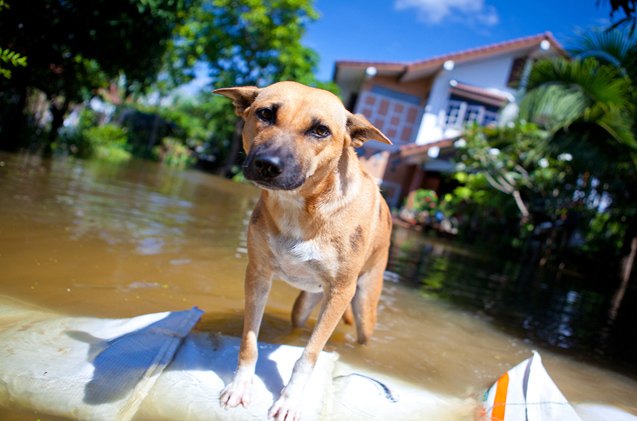
Once the disaster is over and you are able to return home, you still need to be very careful. Certain natural disasters like floods and fires could result in damage to your home and changes in the surrounding area. Make sure your home has been cleared by emergency personnel before you enter it and be careful about letting your dog loose without a leash. Be mindful of debris on and around your property because it could be dangerous for your pet – storms may also draw dangerous animals like snakes out of hiding. In the aftermath of a disaster, be patient in helping your dog adjust to changes around your home – if the landscape has changed, it may take some time for him to get used to things.
Now that you have a better understanding of how a natural disaster could impact your pet, take the steps necessary to prepare for it. Do you have an emergency plan for your pet in place? Do you have any addition info or advice to pass along? We want to hear it! Please share it with our pet community in the comment section below.