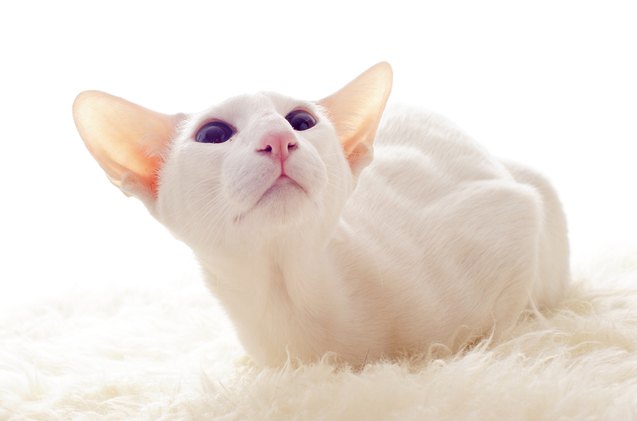
Foreign White

Published A Few Days Ago
ADVERTISEMENT
fast facts

About Foreign White

Weight
8-10 lb
Physique
Slim, elegant
Lifespan
15-20 years
Best Suited For
Any cat loving family, including those with children and other pets, as well as singles and elderly individuals
Temperament
Intelligent, loving, talkative, demanding
Comparable Breeds
Siamese, British Shorthair
Height
8-10 inches
ADVERTISEMENT

Foreign White Breed History

The Foreign White came to be when Patricia Turner, a feline geneticist, once saw a photo of a lilac point Siamese. The photo, however, was overdeveloped, so it inspired her to begin a cat breeding program that would produce a completely white Oriental feline with blue eyes. The goal was to create this type of cat without it being deaf, as many other totally white cats with blue eyes may carry a gene that causes deafness.

In 1962, the breeding program was started in England, and throughout the program, they crossed seal point Siamese cats with white British Shorthairs. This created the foundation for what is now known as the Foreign White breed, otherwise referred to as the white Siamese.

The Foreign White likes getting attention, lounging in your lap, and is curious and playful.

Breed Traits
ADVERTISEMENT

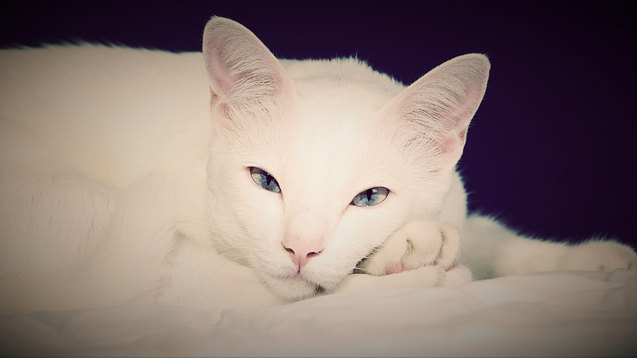
The Foreign White cat breed shares many of the same characteristics that Siamese cats exhibit. For example, they’re highly intelligent, with a wonderful temperament and a very loving personality.

These kitties are affectionate towards their human companions, but they also expect plenty of love in return. Like Siamese cats, they like getting attention, they thoroughly enjoy lounging in your lap, and they’re highly curious and playful.

Foreign Whites are also extremely loyal, often bonding very strongly to one member of the family. If you’re searching for a cat that will always want to be near you, this breed could be the perfect match.

Because these cats can be quite demanding and talkative, before you bring one home, you should be sure that you have plenty of time to devote to these social felines. And you also need to show them how much you love them by playing with them and snuggling with them.

Overall Description

Foreign White cats will basically have the same physical features of a Siamese cat, except they’ll be completely white and lack the usual color patterns that Siamese cats will eventually grow into.

These cats are also strong, lean, and muscular, as well as strikingly beautiful. And like the gorgeous Siamese cats that so many people love, the Foreign White will have incredibly beautiful blue eyes.

Colors
ADVERTISEMENT

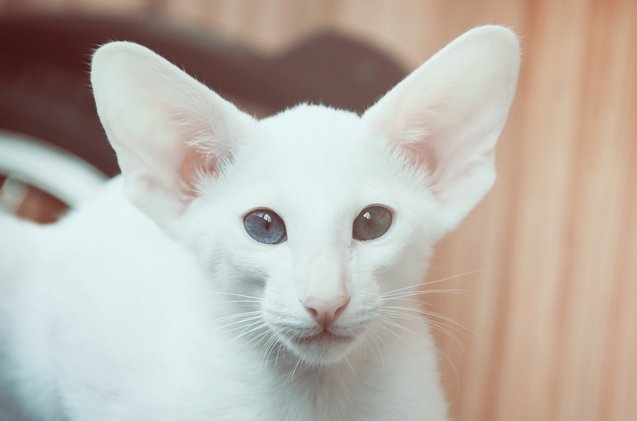
Because these cats have a dominant white gene, it will remove any instance of any other color from the coat. With this gene in place, a Foreign White kitten will grow into an adult without ever developing any of the chocolate, lilac, blue, or black colors that typical Siamese kittens would develop naturally.

Grooming Requirements

Foreign Whites don’t require extensive grooming, so you can simply brush your cat’s fur once a week, in addition to brushing his teeth, trimming his claws, and cleaning his ears whenever necessary. This weekly brushing should be enough to keep the coat feeling soft and looking glossy, and it can also prevent hairballs and excess shedding. Plus, because your Foreign White will love the attention, it’s a great way to bond with your cat.

Photo credit: cynoclub/Bigstock; Viktoryia Voinakh/Bigstock; TPAP8228/Bigstock

ADVERTISEMENT

ADVERTISEMENT

You May Like

Barbs

Barbs are a large family of freshwater fish that are a popular choice in the aquarium hobby. Different species of barbs come in a dazzling array of colors.

Thoroughbred Horse

The Thoroughbred Horse has a bold and spirited personality that isn''t suitable for riders and owners who do not have experience.

Flea Medications for Your Cat: Ingredients to Avoid

Keeping fleas of your cat is vital - but should you be using flea medications? Before you make a decision, keep these factors in mind.

The Quest For Dog: One Writer’s Search For The Perfect Dog Begins

Bringing a dog into your home shouldn’t be a spur-of-the-moment decision. It takes research, dedication and lots of planning to make sure you and your…

Ocicat

Neither a demanding or clingy cat, the Ocicat loves to be with his humans as much as possible and isn''t above nudging you for a bit of attention.

Bassetoodle

The Bassetoodle is a cross between a purebred Basset Hound and Poodle. Intelligent and willing to please, this dog makes a great family pet.

10 Pokémon Go Tips for Your PokéDog Walk

Are you trying to catch ‘em all and walk your dog? It can be done safely! Catch these 10 Pokémon Go tips while out walking your dog.

Danish Swedish Farmdog

If you were to see a Danish Swedish Farmdog, you might think that it was a Jack Russell Terrier - the two breeds are similar in terms of appearance.

Product Review: Cycle Dog MAX Reflective Collars

Cycle Dog has with a line of eco-friendly reflective collars. We tried out four of their Cycle Dog MAX Reflective Collars in Green, Blue, Silver and Purple.

West Siberian Laika

The West Siberian Laika, from Russia, is known for retaining traits from their wild ancestors, the wolf, both physical and behavioral.

UNC Students Allowed To Bring Their Pets Back To School With Them

Colorado college tests out pilot program allowing pets in campus dorms It’s the most wonderful time of the year (back-to-school, that is) and a few luc…

Adoptable Dog of the Week – Dillard

Meet Dillard, our Adoptable Dog of the Week from Adoptapet.com. He is an adult Labrador Retriever mix from Norman, OK and is already neutered. Dillard’…

How To Start Running With Your Dog

Pound the pavement with encouragement from a furry jogging partner - running with your dog is a wonderful way to keep the both of you in good health.

Effective Alternative Treatments For Dog Arthritis

Arthritis affects many adult dogs, as many as 1 in 5. For those looking for a non-traditional route, here are a few alternatives for treating dog arthritis.

Flounder

The flounder is also known as a flatfish; a fitting name because its body is laterally compressed and it lays on its side, burrowing into the substrate.