French Trotter Horse Breed History
The French Trotter Horse is also referred to as the Norman Trotter. In the early part of the 19th century, trotting races started to grow in popularity, so a lot of the horses that were bred throughout France during that time were bred for the specific purpose of racing them. This particular equine breed is the result of crossing the muscular Norman stock horse with the English Thoroughbred and the Norfolk Trotter.
Initially, the French Trotter was a coarse and heavy breed in appearance, much like its Normandy ancestors. But, over time, the Thoroughbred genes allowed this breed to attain a more refined form. Standardbred horses were also used in developing the French Trotter Horse, and those genes helped these horses develop their trotting gait, their level and balanced stride, and their speed. However, even though this equine breed has American Standardbred genes in its bloodline, it features a two-beat diagonal gait instead of the pacing gait or lateral two-beat gait.
The French Trotter Horse is calm, gentle, submissive, and easy to train.
The French Trotter Horse was officially recognized as its own breed in 1922, and in 1937, the breed’s stud book was closed to other horses that were not of a French breed. This was done to protect the French Trotter’s unique qualities.
Today, the French Trotter has become one of the most popular equine breeds in France, and it is still beloved as a powerful race horse.
Breed Traits
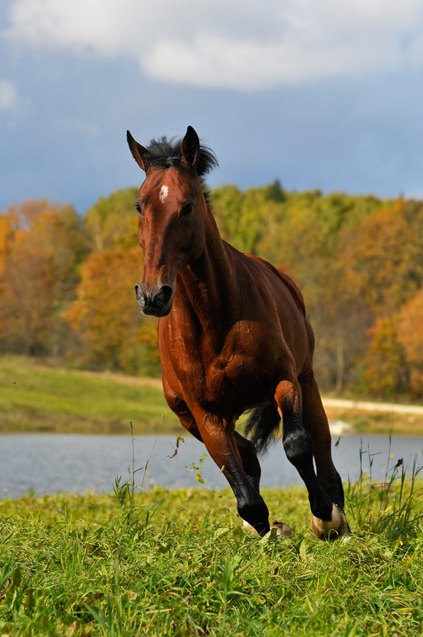
The French Trotter breed has a wonderful personality that makes these horses a pleasure to work with.
These animals are calm, gentle, and submissive, making them easy to train. Their good behavior combined with their energy make them enthusiastic horses that are athletic and willing to please.
Because of this horse breed’s strength and its solid contour, it has been used often in horse riding schools. The French Trotter exhibits discipline and determination, along with endurance, intelligence, and an exceptional gait, making it a great horse to ride, regardless of your experience level.
French Trotters can trot almost as quickly as a Thoroughbred can gallop.
Overall Description
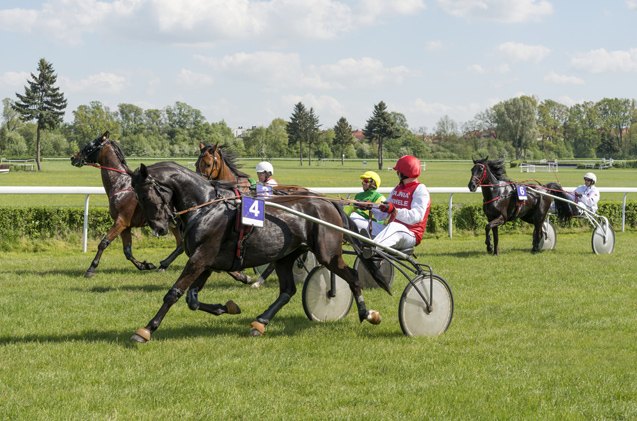
French Trotter horses are more than just beautiful animals, they are also revered for their high speeds, their incredible strength, and their high endurance and stamina. This is why they are popular for racing under saddle, as well as in harness racing. They are even used in skijoring, which is a type of horse race that occurs on snow and has the driver riding on skies behind his horse.
The French Trotter features a head that is slightly large and straight, and it showcases wide-set eyes. The ears are alert and the nostrils should be wide. There will be a well set, extended neck of a proportional length, and there will be powerful, sloping shoulders.
The horse’s chest will be deep and broad and also feature a prominent breastbone. The back will be strong as well, and the croup will be wide and long.
When looking at a French Trotter, you will notice that these horses also feature muscular, powerful hindquarters that allow them to attain high speeds, despite being quite short. In fact, a French Trotter could trot almost as quickly as a Thoroughbred could gallop.
Finally, these horses are known for showcasing straight, clean limbs, along with sound, strong hooves, and the tail is also well set.
The French Trotter is known for its speed, strength, and stamina.
Colors

The French Trotter is an attractive horse breed that can be found in just about all of the solid equine colors. The breed has several accepted coat colors that include gray, black, chestnut, brown, and bay. However, it is rare that you will find a gray French Trotter.
Grooming Requirements
The French Trotter Horse should be cleaned and groomed on a regular basis. You can use a gentle equine shampoo and conditioner whenever necessary, particularly if the horse becomes quite dirty as a result of being in the great outdoors. Otherwise, a standard grooming session should be sufficient to massage the skin and coat and increase circulation for healthy skin.
To keep your French Trotter’s lovely coat looking clean, smooth, silky, and healthy, you can use a standard equine grooming kit. This will include a shedding blade, curry comb, dandy brush, and body finishing brush, as well as a mane comb and a tail brush. All of these brushes can be used throughout the body to completely remove any loose hair, debris, mud, dirt, etc. that has accumulated in the coat. When dealing with sensitive areas, however, such as the horse’s eyes and ears, you can use a damp cloth and a gentle touch to get those clean.
Always make it a point to check your horse’s hooves during each grooming session. Dirt, rocks, and other debris can accumulate within the hooves, so they will need to be cleaned out using a hoof pick. While cleaning the hooves, make sure you look for any indications that an infection or injury may be developing or bothering your horse.
Photo credit: ElenaDijour/Depositphotos.com; ppart1/Depositphotos.com; vikarus/Depositphotos.com