Jagdterrier Basics
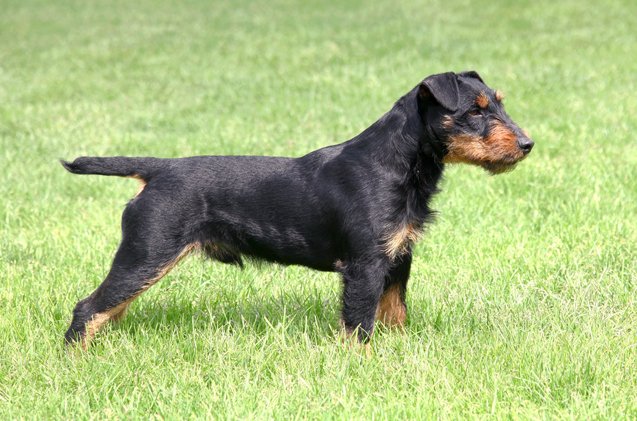
When you see the Jagdterrier, you may think you are looking at a Rottweiler puppy. These dogs are known for their black-and-tan coloration as well as their work ethic and hunting skills. Also known as the German Jagdterrier, this breed loves to work and enjoys spending time outdoors.
The Jagdterrier is known for its black-and-tan coloration as well as its work ethic and hunting skills.
Origin
The Jagdterrier was originally developed in Germany as a hunting and working breed. These little dogs belong to the terrier group and, despite their small size, they are talented in hunting some of the most ferocious prey including bobcats, badgers, foxes, and even cougars. These dogs are known for their courage and adaptability as well as their strong work ethic, the same skills that make it valuable as a hunting and working breed today. Early Jagdterriers were developed by crossing the Old English Fox Terrier with Black and Tan Hunting Terriers in Germany. The breed is the result of many years of selective and intensive breeding and, in Germany, it is used almost exclusively for hunting though it is sometimes kept as a pet in the United States.
Pedigree
The Jagdterrier, also known as the German Jagdterrier, was developed through selective and intensive breeding using the Old English Fox Terrier and the Black and Tan Hunting Terrier. Though it is used occasionally as a pet in the United States, it is bred almost exclusively for hunting in Germany.
Food/Diet
As a small-breed dog, the Jagdterrier should be fed a high-quality dog food formulated for dogs of its size. The Jagdterrier is also a hard-working hunting breed, so you may even want to consider an active, working breed, or high-performance dog food. Follow the feeding recommendations on the package according to your dog’s weight and make adjustments if needed to meet your Jagdterrier’s energy needs.
The Jagdterrier is a courageous and fearless breed that is known for its hunting skills.
Training
The Jagdterrier was developed as a hunting breed, specifically for its courage, energy, and intelligence. Because the Jagdterrier is so intelligent, it responds well (and quickly) to training. This breed thrives when given a job to do – especially one that gives it a chance to work off its excess energy. This is not the kind of dog you want to keep indoors all day – it is an outdoor dog and one that is bred to hunt. As a courageous hunting breed, these dogs do have a big of an independent side and they sometimes need to be trained to reel in that independence. These dogs have been known to follow their prey for miles through all kinds of terrain.
Weight
The Jagdterrier is a small terrier breed that generally stands 13-16 inches tall.
Temperament/Behavior
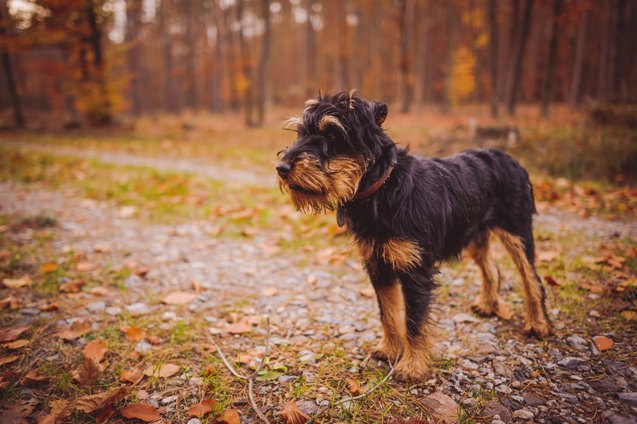
The Jagdterrier is a courageous and fearless breed that is known for its hunting skills. Because the Jagdterrier is so tenacious, this breed sometimes doesn’t get along with other dogs and they are notorious for having a high prey drive. This being the case, the Jagdterrier may not be the ideal family pet, though these dogs do tend to get along well with children. This dog can be a challenge to keep in the home because of their high energy level – they are more of an outdoor dog and they need a lot of exercise every day.
Common Health Problems
The Jagdterrier is generally a fairly healthy breed, though they do have a shorter lifespan than many small-breed dogs. This breed is highly prone to field-related injuries such as cuts, scrapes, and bruises – this is why they traditionally has its tail docked to a length of 2 inches.
Life Expectancy
The average lifespan for the Jagdterrier breed is only 10 to 12 years which is fairly short for a breed of this size.
Exercise Requirements
As a hunting dog, the Jagdterrier is a high-energy and active breed. These dogs require more than just a daily walk to meet their needs for exercise. This dog will appreciate having a large fenced yard to play in and this breed does particularly well when trained for hunting or active dog sports.
As a hunting dog, the Jagdterrier is a high-energy and active breed.
AKC
The Jagdterrier has not yet been recognized by the American Kennel Club but it is part of the Foundation Stock Service – when registration numbers are adequate, the AKC will accept the breed. Currently, the breed is accepted by the FCI, the UKC and the ANKC.
Coat
All Jagdterriers have a black-and-tan coloration, though the exact shade of the tan color may vary. These dogs are mostly black with rust-colored markings on the muzzle as well as the undercarriage – there may also be chocolate or liver-brown coloring. Brown nose and white markings are not favored. Its coat is short and either smooth or broken with moderate shedding.
Puppies
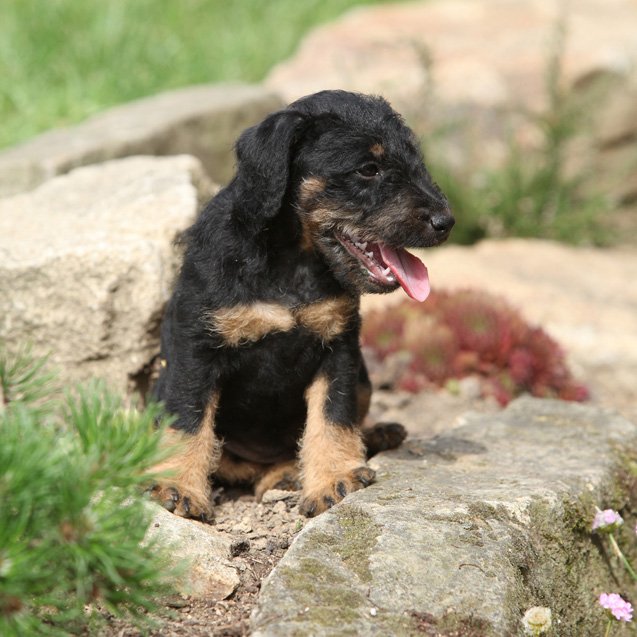
The average litter size of the Jagdterrier breed is 2 to 5 puppies. As puppies, this breed grows quickly so you need to provide your puppy with a high-quality, small-breed puppy diet. Puppies may look cute and cuddly but they are wily and energetic, so early socialization and training is a must. These dogs generally don’t do well as pets and if you plan to use them for hunting, it is best to start early.
Photo credit: CaptureLight/Bigstock; Snowboy/Bigstock; Zuzule/Bigstock