Lipizzan Horse Breed History
The Lipizzan Horse, which is also referred to as the Lipizzaner, was created by the Habsburg monarchy, which controlled Austria and Spain during a time when the art of classical horse riding was being revived as a result of the Renaissance. During that time, there was also a need for horses that would be fast and light for use in riding schools and in the military.
The Lipizzaner Horse is considered a horse of royalty, and because it took 400 years of selective breeding to develop this unique animal, it is also one of Europe’s oldest equine breeds.
The Lipizzan Horse is known for being highly intelligent and trainable.
The Spanish Horse that was the result of crossing Arab and Berber stallions with Iberian mares was known for its beauty, intelligence, and sturdiness, so Maximillan II brought this horse to Austria in 1562. It was at Kladrub that he was able to found the court stud. Archduke Charles, Maximillan’s brother, also established a stud farm using Spanish stock at Lippiza in 1580.
The Lipizza and Kladrub stock were bred with native Karst horses. Succeeding generations were also bred with the Neapolitan, as well as other Baroque horses that were of Spanish descent and were obtained from Denmark, Germany, and Spain. Kladrub focused on creating heavier carriage horses, but light carriage horses and riding horses were from the Lipizza stud.
Breed Traits
Lipizzan horses are known for being highly intelligent and trainable. Therefore, in addition to being beautiful and regal in appearance, these horses make wonderful equine companions to riders and owners who have some experience working with horses.
However, it should also be noted that Lipizzan horses can sometimes exhibit stubborn behavior, so they do require a bit of patience, as well as knowledge of how to handle a horse that is being a little difficult. By rewarding good behavior with treats, a trainer can instill good habits in this horse.
The Lipizzaner Horse is considered a horse of royalty.
Overall Description
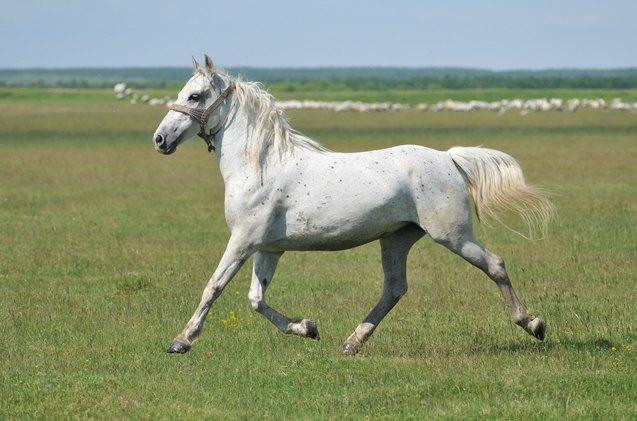
The Lipizzan Horse is renowned for its proud carriage and its sturdy, compact body. The head, which is usually slightly dished, is similar to that of the Arabian, but these horses may also feature the convex profile of the Spanish Horse. Also, the horse’s head is set high on a neck that is arched and muscular, and these horses are known for their large, dark, expressive, and beautiful eyes, as well as their alert, small ears.
When you look at the body of this breed, it is truly an image of strength, even though it is not incredibly tall. You will easily note the powerful shoulders, hindquarters that are clearly muscular, and the crested neck. The legs are also strong with well-defined joints and tendons. The back is short, as are the cannon bones, but the girth is deep.
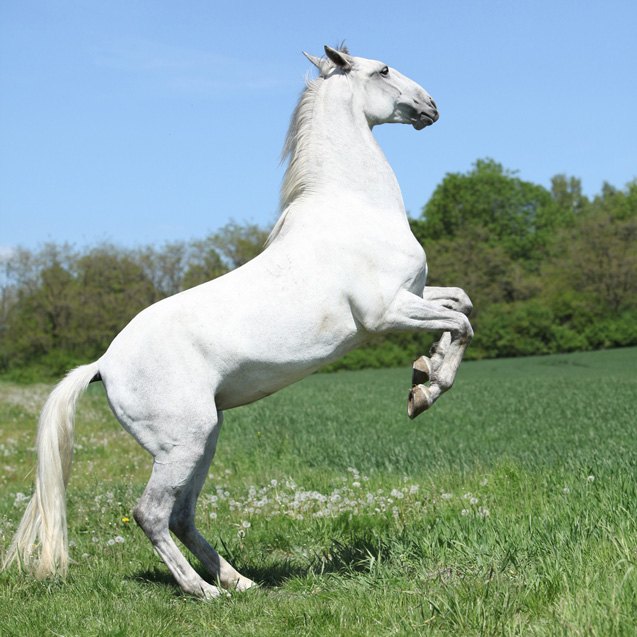
Because of their powerful hindquarters, these horses can perform challenging haute ecole dressage movements that include “airs above the ground.” Overall, the Lipizzan Horse’s gaits are considered elastic and powerful, and these animals are known for being naturally balanced.
The white coat of the Lipizzaner will come in anywhere from 6 to 10 years of age.
Colors
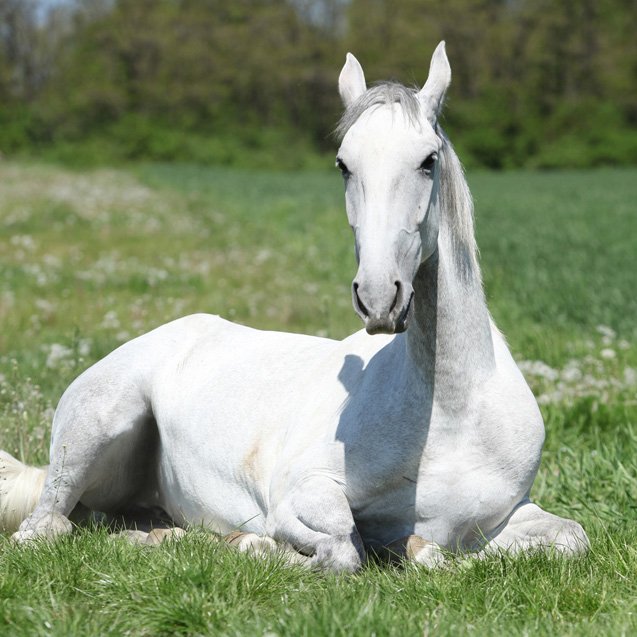
Genetically, the Lipizzan is a type of gray, not white, horse. Even though this equine breed features a white coat, these animals are born a dark color, such as brown, mouse gray, or black-brown. The coat will eventually lighten until the horse has a gorgeous white coat as an adult.
The white coat of the Lipizzaner will come in anywhere from 6 to 10 years of age, and it is the dominant color of this breed, although you may occasionally find a Lipizzan Horse that is brown or black. Historically, adult herds have also had horses of other colors, such as dun, chestnut, skewbald, and piebald.
Grooming Requirements
You will need to groom a Lipizzan Horse constantly in order to maintain the beauty of its unique white coat, as it will quickly begin to look dirty and unattractive if you do not regularly bathe and brush the animal.
Shampoo the Lipizzan Horse on a regular basis using an equine shampoo. This will remove the majority of staining that can occur on the coat. You can even search for products that are specifically designed for use on white horses. Also, if the mane or tail is stained badly, you can lather the shampoo into the hair and let it stand for a few minutes to allow the cleanser to work before rinsing and repeating.
In addition to shampooing the horse, you should also use standard equine grooming tools to remove dirt, dust, and other debris from the Lipizzan’s coat, from the mane all the way to the tail. These include a curry comb, which you can use all over the animal’s body, a mane comb, and a tail brush. A body finishing brush is ideal for sensitive areas like the face and legs, and a dandy brush can work on loosening mud, dirt, and hair quite easily as well. Use a hoof pick, too, in order to effectively remove debris from the animal’s hooves while checking for infections and injuries.
Photo credit: Zuzule/Depositphotos.com; predrag1/ Depositphotos.com