Podenco Canario Basics
The word “Podenco” is Spanish for hound, so the name Podenco Canario means Canarian Hound. This breed of dog originated in the Canary Islands where it is still used to hunt rabbit. Though this breed may be slender and slightly built, he has excellent stamina and is capable of great speed. If you are looking for a smart, trainable dog that does well as both a hunter and a family pet, consider the Podenco Canario.
The word “Podenco” is Spanish for hound, so the name Podenco Canario means Canarian Hound.
Origin
Many experts place the Podenco Canario among the ranks of ancient breeds, suggesting that it may actually be descended from the Egyptian dog. Though there is some evidence to suggest that the breed has existed for more than seven thousand years, it only appeared in the Canary Islands 500 years ago. Early ancestors of the Podenco Canario lived in the coastal regions of the Iberian Peninsula and are thought to have been imported to the Canary Islands by Mediterranean merchants. Because the breed was developed on the Canary Islands, it is given the name Podenco Canario.
Pedigree
The Podenco Canario is thought to have descended from the Egyptian Dog.
Food/Diet
As a medium-breed dog, the Podenco Canario should be fed a high-quality dry food formulated for small to medium breeds. The Podenco Canario is also a very active breed, so he may respond well to an active or working breed formula. You still need to be careful about overfeeding, however, to prevent obesity.
The Podenco Canario is a smart, trainable dog that does well as both a hunter and a family pet.
Training
The Podenco Canario is a smart breed but he can also be independent, and even stubborn at times. This being the case, this breed is not recommended for inexperienced dog owners. In fact, this dog requires an owner who will provide a firm and consistent hand in leadership. Though this breed can be stubborn at times, it is also very sensitive and will not respond well to punishment or negative training tactics. Improper treatment is likely to cause the dog to develop shy or aggressive behavior, both of which are unacceptable for the breed.
Weight
The Podenco Canario is a medium-sized dog, standing 21 to 25 inches tall and weighing anywhere from 44 to 55 pounds at maturity.
Temperament/Behavior

The Podenco Canario is a quiet breed that rarely barks and he has the potential to become attached to his family. This breed is usually gentle and playful with children, but he won’t tolerate rough treatment. This dog is a smart and active, so he requires a good deal of daily exercise to burn off his energy – this will also prevent him from developing destructive or aggressive tendencies out of boredom or frustration. This dog is often reserved around strangers, but generally not to the point of aggression. Early socialization and training is important for this breed, especially if you have children or other household pets. This dog does has a high prey drive so, even with early training, cats and other pets may be a problem.
Common Health Problems
The Podenco Canario is considered a primitive breed, so he is largely untroubled by genetic health problems. There is, however, one rare genetic disorder that has been seen in dogs of this breed – it is a disorder of sexual development known as testicular/ovotesticular disorder. This disorder can cause dogs that are born genetically female to develop testes or ovotestes in the place of ovaries.
Life Expectancy
The average lifespan for the Podenco Canario is 11 to 13 years.
Exercise Requirements
The Podenco Canario is an active breed that requires a good deal of daily exercise. This breed needs a long daily walk or a brisk jog and will also appreciate having time to run in a fenced backyard or at the dog park. This breed requires plenty of mental stimulation as well as physical exercise.
The Podenco Canario is a smart breed but he can also be independent, and even stubborn at times.
Recognized Clubs
The Podenco Canario is not currently recognized by the AKC. It is, however, recognized by the UKC and was granted recognition as a primitive breed by the FCI.
Coat
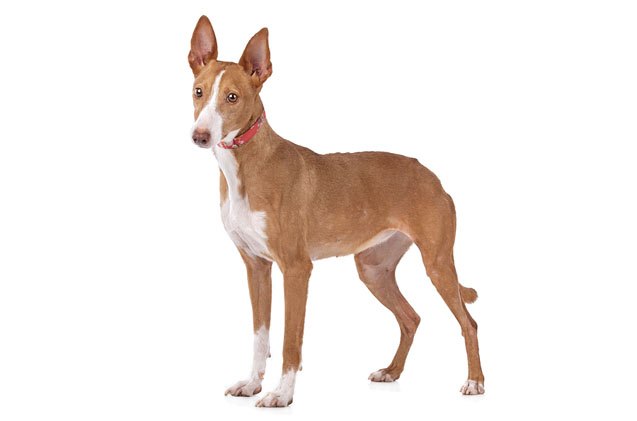
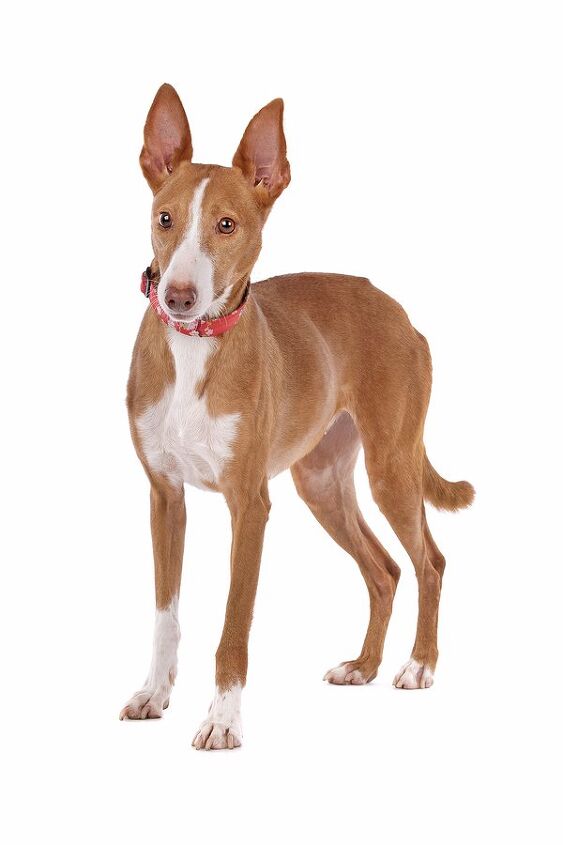
The Podenco Canario is a slender dog with a light build and a short, dense coat. The most common color for this breed is red, though many dogs exhibit a combination of white and red. The size and coloring of the dog is somewhat dependent on which island the dog comes from. Because the coat is so short, it requires little maintenance. Wiping the coat down with a chamois can help to give it a shiny appearance.
Puppies
The average litter size for the Podenco Canario is around 6 puppies, though they can have litters as large as 12. Because this breed can be a bit stubborn, it is important to start training and socializing as early as possible. This is also important if you plan to keep a puppy in a household with children or other pets.
Photo credit: eriklam/Bigstock; Darikot/Bigstock