Morab Horse Breed History
The Morab Horse is an American equine breed that was developed in the early part of the 19th century. The breeds that were mainly used to create this new breed include the Quarter Horse, the Arabian, and the Morgan.
In the 1850s, L.L. Dorsey produced a stallion, known as Golddust, by crossing a stallion known as Vermont Morgan 69 with a mare of Arabian descent. Golddust went on to have 302 foals throughout his life, as well as other distant descendants, including a horse that was named Morab.
Morab horses are a great choice for driving, trail riding, and other activities.
In the latter part of the 1880s, the breeding of Morab horses was started in order to create a fine carriage horse that would also be able to do moderate farm labor. This is why the modern Morab Horse has both elegance and power, and they make great family horses and work horses.
In the 1920s, the name Morab was created when William Randolph Hearst began his involvement in an equine breeding program for the herd he owned. He went on to produce horses that were of fine quality by crossing Morgan mares with Arabian stallions. Another Morab type was produced later, when the Swenson Brothers, who were based in Texas, crossed young Morgan broodmares and stallions with Arabian stock.
The Morab Horse of America organization was started in the 1970s in Clovis, California by the Fuller family. This sparked curiosity from the public regarding Morgan-Arabian horse breeding, and shortly after, another organization, called the Hearst Memorial Morab Horse Association was formed. However, when the family closed their doors to the public around 1980, Clovis records were lost. Therefore, the North American Morab Horse Association was formed in the early part of the 1980s. It was active from 1984-1998, when the name was changed to Purebred Morab Horse Association, or PMHA.
Throughout the years, Morab horses were mainly used as a way to improve other equine breeds. However, that has been changing recently, and these horses are bred, as well as trained, as a distinct equine breed today in the United States. Also, following selective breeding and training, today’s Morab horses are some of the best choices for those seeking horses for driving, trail riding, and other activities.
Breed Traits
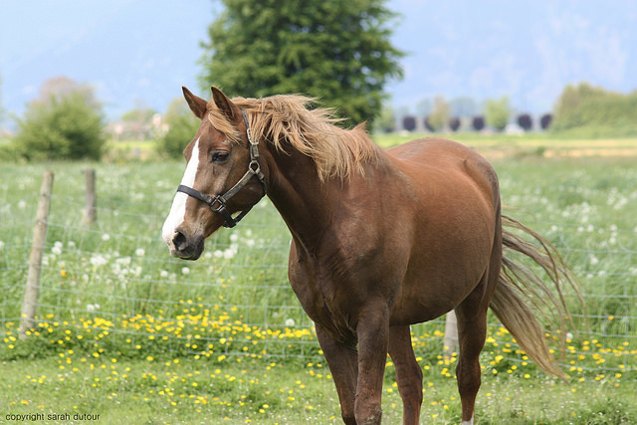
Because the Morab Horse has such a pleasant personality, it is an easy horse to work with and train. These animals are obedient, affectionate, and smart.
They are also a great option for riders who do not have a lot of experience, as they have a calm and easygoing temperament and are easy to train for a variety of activities.
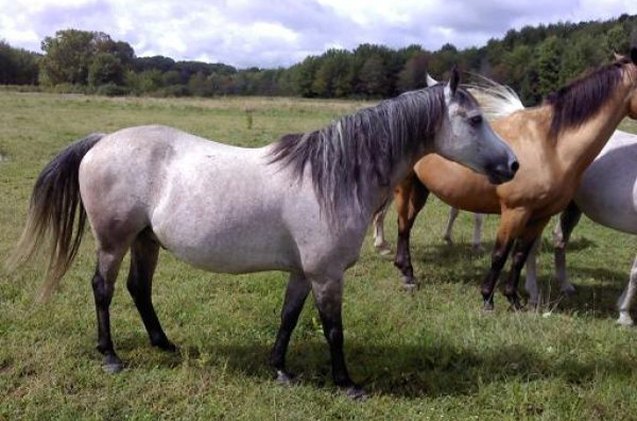
Morab horses feature characteristics of the Morgan and Arabian breeds.
Overall Description
Even though the Morab Horse can be described as elegant and refined, it does have considerable bone structure and strong muscles, making these horses powerful yet compact.
The head of a Morab Horse will be polished and will feature the concave profile and the wide forehead of the Arabian, at least to some degree. The jaw will be muscular and the muzzle will be substantial, much like the Morgan Horse. Also, this horse’s eyes will be expressive, bright, and large, while the ears, which can be tipped or fluted, will be alert and small.
The neck of the Morab Horse should be arched, strong, and deep-set, and the back will be short with an undercarriage that is well developed. The hindquarters should be built powerfully, showcasing a lot of muscles and strong bones. The forequarters are also strong, and you will notice a deep, wide chest and sloping, large shoulders.
The legs of this breed are quite thick. You will also note the short cannon bones, along with the well-developed and solid hooves.
A lot of Morab horses will feature a mane and a tail that are quite thick, flowing, and wavy. They can also have a flagged tail carriage that is the result of the breed’s Arabian and Morgan ancestry.
The Morab Horse is elegant and compact, with strong muscles for power.
Colors
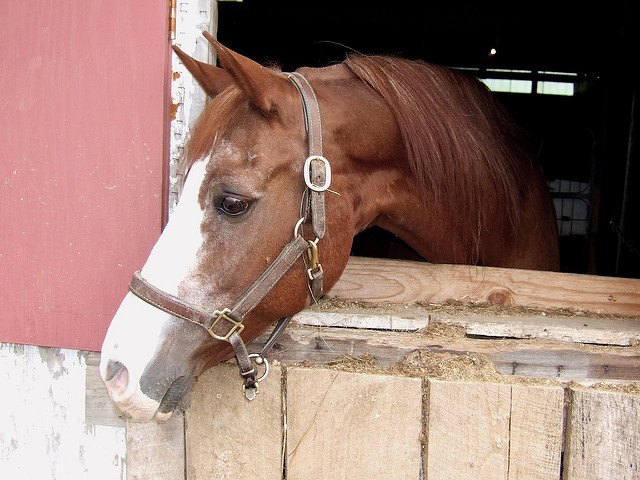
The Morab Horse breed can feature all of the solid equine colors. These include bay, gray, chestnut, dun, buckskin, palomino, and roan. However, gray, chestnut, and bay are the most commonly seen colors.
Grooming Requirements
To groom your Morab Horse, a standard equine grooming practice will be sufficient, but you will need to take extra care if your horse’s tail and mane are thick and wavy. You can also bathe your horse whenever necessary by using a gentle equine shampoo and conditioner.
Use a combination of tools, including a curry comb, dandy brush, shedding blade, and body finishing brush, in order to thoroughly clean your horse’s coat, massage the skin, and smooth your horse’s appearance.
Focus on detangling and smoothing out the lustrous tail and mane of this breed by using an appropriate mane comb and tail brush. Also, because tails and manes that are thick and wavy are often coarse and brittle, you can use a conditioner and detangler. Just be certain to rinse all of the shampoo out to avoid drying the hair. Ultimately, the more conditioned that your horse’s tail and mane will be, the easier that they will be to manage.
Finally, don’t forget to also clean out the horse’s hooves by using a hoof pick while checking for any signs of injury or infection.
Photo credit: c.werronen/Flickr; Sarah Dutour/Flickr; Shirley Corwin/Flickr