Peach Faced Lovebird General Info
Peach faced lovebird, also known as Rosy faced lovebird, is a cute, energetic and social little bird- no matter how you call them. Perhaps the most popular pet choice amongst the Lovebird family, these charming birds are widespread as a family pet and loved for their personalities and ease of care. Once you get to know your lovebird pet better, you will quickly fall in love with all the goofs, cuddles and funny tricks.
If you choose a Peach faced lovebird for your pet, you’re in for a lot of fun and laughs with this pretty little pocket bird!
Native Region/Natural Habitat
Native to the Southwest of the African continent, Peach faced lovebird is found mostly in Angola and Namibia. Always nesting in close proximity to a fresh water source, they live in open and dry areas, with sparse shrub growth and on woodland edges. Their numbers in the wild are stable, although they are often targeted by illegal trappers and hunters.
Overall Description
Affectionately known as the pocket birds, the Peach faced lovebirds will reach an overall length of up to 7 inches (18 centimeters). They have short and stubby tails with a usual size of only 2 inches (5 centimeters), unlike parakeets or conures. They are also monomorphic birds, which means that males and females are nearly identical and hard to distinguish.
Speech and Sounds
Peach faced lovebirds are often chatty and love to sing. Their call is made up of high pitched and slightly piercing chirps, which can go on for longer periods throughout the day and at sundown. You should take this moderate level of noise into consideration, although it doesn’t take away from the overall loving and fun nature of these lovebirds.
Colors
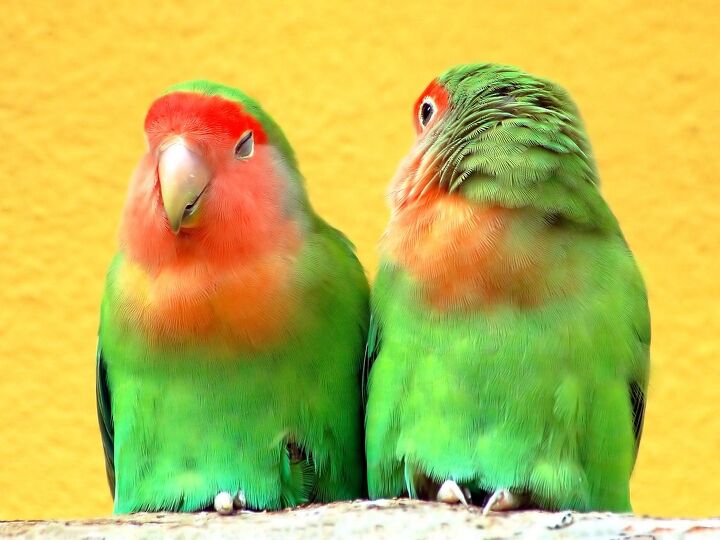
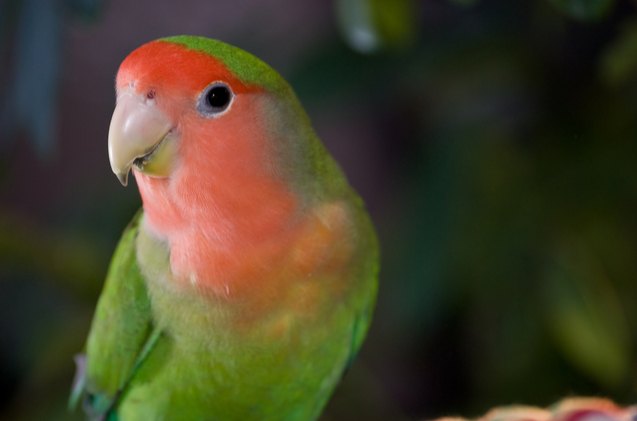
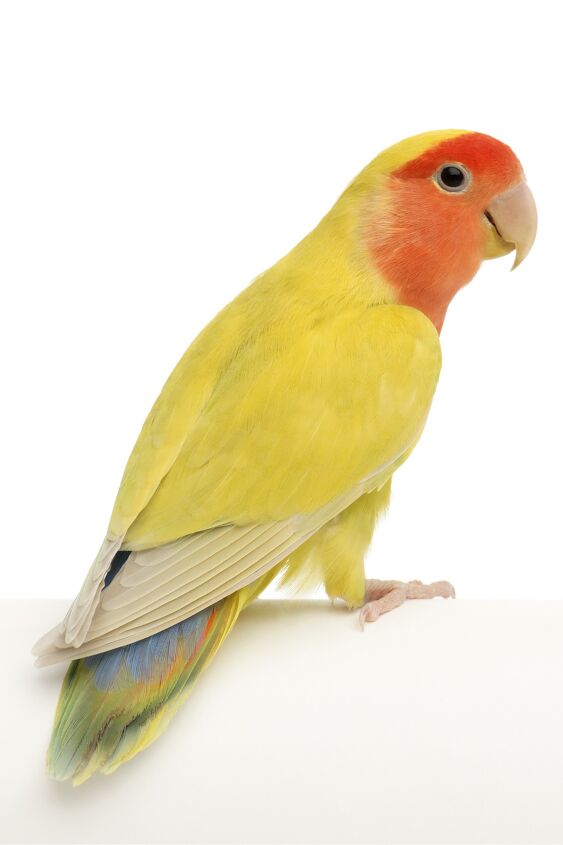
The main color is a muted tone of tropical green, with the characteristic rosy, light red over the face, which earned these birds their name. While the underside is a slightly lighter green bordering yellow, the tail and the rump are bright blue, providing a sharp and distinctive contrast. Even though this combination is vivid and has an exotic appeal, it is still simple in its prettiness. In captivity, a lot of new color mutations have been created. So now we can also see lovebirds that are yellow, turquoise and opaline.
While mostly green, Peach faced lovebirds are known for their blushing, rose colored faces, giving them a fun and unique look.
Care and Feeding
Lovebirds enjoy a diet of seeds, nuts, and fruits. To achieve a balanced diet for your pet, besides the commercial seed mix, you’d want to add a healthy dose of fresh fruits and green vegetables. Another thing to keep in mind is the hygiene, and the fact that Peach faced lovebirds absolutely love to bathe. Bathing dishes should be offered on a regular basis, to prevent feather related issues. Provide a roomy and large cage, as well as a lot of exercise time outside of it.
Health and Common Conditions
Don’t let the tiny size of the Peach faced lovebird fool you- they are small, but not fragile. Rose faced lovebirds adapt easily, and are well known for being hardy and strong. To keep them healthy, pay attention to the conditions, avoiding the draft, damp and cold. Hygiene should be a priority, ensuring a clean environment for your pet to thrive.
As they are very social and function best in pairs, a solitary lovebird can become sick due to neglect and boredom- make sure you get at least a pair of them!
In optimal conditions and with sufficient care and consideration, your pet lovebird will happily thrive.
Personality & Behavior
Peach faced lovebirds are a pocket-sized bundle of fun. They are energetic and fun, but cuddly and affectionate as well. They will bond with their owner as time passes and trust is built. These birds are highly social, so consider keeping a pair for the happiest results. Sometimes they can be aggressive or territorial, biting strangers and other birds. A must-do for lovebird pets is toys. They love to play, goof around and climb about. To help them exercise and spend their energy, provide them with a lot of toys and perches. This good combination of desirable traits and healthy nature makes them a popular pet among avian beginners and experts alike.
Photo credit: Twisted Shots/Shuttestock; Erich Iselee/Shutterstock; Shoarns/Shutterstock