How to Properly Pet a Cat

Published A Few Days Ago
ADVERTISEMENT

There’s a right way – and lots of wrong ways – to pet a cat. Keep your hand intact and your kitty purring by knowing what sweet spots to scratch.

Cats are known for being standoffish at times – they can even be downright ornery – but there are also times when a cat seems to be craving attention. When you try to give them what they want, however, they bat your hand away or chomp down before you can yank it away. Why do cats react in such a strange way to being pet, and is there a right way to do it?

Related:Are You Petting Your Cat Wrong?

What Are the Best Places to Pet a Cat?

Every cat has his own unique preferences for handling. Some cats love being rubbed on top of the head while others prefer being scratched at the base of the tail. Though you’ll need to learn your own cat’s preferences, there are a few places that tend to be safe for petting:

    Cats tend to enjoy being petted in the areas where their scent glands are concentrated. If you’ve ever seen your cat rubbing on the corner of the couch or another piece of furniture, he usually does it with his head and face. When your cat rubs his face on something he’s not just doing it because it feels good – he’s also leaving some of his scent behind. So, if you want to pet your cat where he likes to be petted, concentrate on these areas.

    Related:What Does It Mean When A Cat Wags Its Tail?

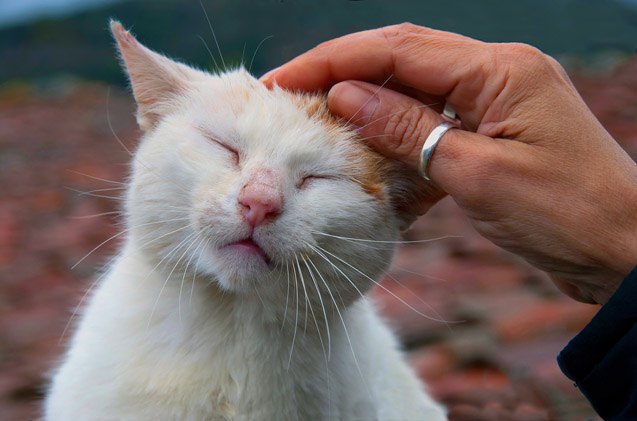
    The first place to pet a cat is under the chin – some cats like gentle stroking while others prefer scratching. Concentrate your attention on the area where the jawbone connects to your cat’s skull – petting in this area is almost guaranteed to elicit a purr. Many cats also like having their cheeks scratched just behind the whiskers or on the back of their heads behind the ears. Finally, if you pet your cat on the back, you may notice him raising his back end, begging you to scratch the base of his tail.

    Are There Any Areas to Avoid?

    Just as there are a few places your cat definitely wants to be scratched or petted, there are also some places you need to leave alone. Again, every cat is different, but most cats really don’t like having their bellies rubbed or scratched. Dogs like being pet in this area because they don’t feel as threatened exposing their bellies. Cats, on the other hand, are very aware that they could be either predator or prey, so they tend to protect the more vulnerable parts of their bodies. Even if your cat rolls over and seems like he’s asking for a belly rub, you shouldn’t be surprised if he immediately latches on to your hand when you try.

    Because every cat is unique, you may need to do some experimenting with your own cat to determine where and how he likes to be pet. Try different areas, paying close attention to your cat’s reaction – if he purrs, it is a sure sign that he likes it. If he growls or swats at your hand, stay away!
    ADVERTISEMENT

    ADVERTISEMENT

    You May Like

    Columbia Basin Pygmy Rabbit

    Columbia Basin Pygmy Rabbits are an endangered and rare species, best known for their tiny size. An adult specimen of the breed easily fits into a palm.

    Three-In-One Stride Dispenser Makes Every Step Of Your Dog Walk Count

    stride makes dog poop disposal stylish, sanitary and strong At this year’s SuperZoo, we were introduced to hundreds of cool products for dogs. One that…

    7 Gifts for People Who Love Dog Training

    Are there any dog training or dog sport fanatics on your holiday list? Our resident dog training pro hints at what she''d like to see under her tree.

    American Curl

    The temperament of an American Curl is nothing short of outstanding. They love spending time with humans, showing open affectionate and are interactive.

    The 411 On Colitis In Dogs

    A disease that can be a serious pain in the behind, learn what you can do about Colitis in dogs. This condition affects the dog''s colon, or large intestine.

    Pets’ Bad Eating Habits Cost $4.2 Million at the Vet in 2015

    Dogs and cats often eat things they''re not supposed to - and we pay for it. Trupanion''s report explains how foreign body ingestion in pets is on the rise.

    Bolognese

    A companion dog in every sense of the word, this small breed will be stuck at your side. Forever curious, the Bolognese want to always be with you.

    Lab Pointer

    The Lab Pointer is a hybrid of Labrador Retriever and Pointer. An intelligent, energetic dog that is the perfect addition to the active family.

    Best Lint Rollers To Tackle Pet Hair

    To help you find the best option for your household, we’ve rounded up the best lint rollers on the market – from reusable lint rollers to extra sticky rollers – so any pet owner can find a perfect match.

    The Loving Bowl Puts A New Slant On The Way Dogs Eat

    Flat-faced dogs rejoice – there’s now a bowl made just for you! A simple modification on a traditional design, The Loving Bowl serves up a new ta…

    Thuringer Rabbit

    The Thuringer Rabbit is a uniquely beautiful breed that features a coat that is buff to deep yellow ochre with blue-black ticking.

    The Latest in Dog Travel Essentials From Global Pet Expo

    At 2013 Global Pet Expo, we saw so many new and fashionable ways to travel with your pup. Here are just a few of the options we spotted.

    Northern Map Turtle

    The Northern Map Turtle is also referred to as the Sawback Turtle. They are one of the most difficult turtle species to keep in captivity.

    Best Dog Beds

    Dog beds give your pet a place of their own where they can nap and snooze to their heart''s content. Here are the 10 best dog beds on the market!

    American Sable Rabbit

    The American Sable rabbit has soft, fine, dense coat that requires more grooming that the average short-haired rabbit. An active and friendly rabbit.