Schipperke Basics
If you have a large household – children, dogs, and even cats – the Schipperke is a dog that has the versatility to get along with everyone. Well-suited for closed environments (it is even considered a quality breed to have with you on a boat), the Schipperke is energetic and playful, and has a confidence that means it will not get lost in the shuffle of your daily life. And since it is considered one of the better breeds for getting along with children, you will be more comfortable letting your children learn to raise and interact with dogs around a Schipperke.
So with all of that in mind, are there any weaknesses to this smaller, fox-like breed that really make it a bad choice for any particular type of owner? Most breeds have their shortfalls and weaknesses, as well as their strengths. Like with many breeds, you’ll find that the advantages of having a Schipperke, such as its energy, can be weaknesses for particular types of owners. Even so, the Schipperke is highly versatile and can make an excellent addition to your household.
Well-suited for closed environments, the Schipperke is energetic and playful, and has a confidence that means it will not get lost in the shuffle of your daily life.
Origin
As we mentioned the Schipperke’s affinity for boats, it should be noted that the word “Schip,” in Flemish means ship! The Schipperke actually descends from boat dogs, having originally been bred by a captain in Flanders. It also descended from a sheepdog known as the Leauvenaar, and the dog was bred down in size until it reached its currently small stature. It is related to the Black Sheepdog but was breed far enough away that it became known as its own breed with its own defining characteristics.
In the 19th century, the dog became very popular in Belgian households – probably because of the qualities we’ve already described – and started appearing in dog shows before the end of the century. Great on fishing trips and boat trips in general, this sea-faring dog has also made a name for itself guarding boats, which gives them an extra punch as a guard dog in your own home.
Pedigree
Having been bred as a boat dog, there’s no doubt the pedigree of the Schipperke makes it especially sea-faring and pleasant to be around when on boats. As a descendant of a sheepdog, it still carries some sheepdog-like qualities, and is even related to the Black Sheepdog, which also has the same ancestors but was bred into a different type of dog. This makes the Schipperke and the Black Sheepdog a bit like cousins, though this sheepdog should not be considered part of the Schipperke’s overall pedigree.
Food / Diet
Like so many other breeds, this dog enjoys a good cut of meat, and you can get wholesome, nutritional food like vegetables into its diet by mixing this meat in with those ingredients. Because they’re so small, they can be a bit prone to weight gain, so be sure not to over-feed them. Gaining a pound as a Schipperke is not the same as gaining a pound as a St. Bernard.
The Schipperke is highly versatile and can make an excellent addition to your household.
Training
Difficult to housebreak sometimes, this dog is energetic and friendly, but shouldn’t test your patience too much in its actual training. Instead, it can be surprisingly responsive, which isn’t always the case in smaller dogs with a lot of energy. Making sure that you train this dog to be highly understanding of its role in the household is important, though they will sometimes take to this role somewhat naturally. As with any breed, you’ll want to be sure that you can exercise effective leadership with patience and discipline.
Weight
Just weighing 12-18 pounds, these tiny dogs can be light like foxes and just as quick. Its thicker coat can sometimes hide a weight gain, so try to keep tabs on your Schipperke’s weight on a regular basis.
Temperament / Behavior
It is energetic, as noted, and generally friendly and playful, sometimes even mischievous. This breed gets along well with children and often relate to children on their level, making them very fun and “funny” house pets. Because they get along with children and other pets, they can fill a much-needed void in a household by being the lone dog to pair with your cats, if your cats have had troubles with other dogs. Schipperkes are generally receptive to good training and not always as rambunctious as you might think.
They are well-suited for apartment life, and can be difficult to keep tabs on if you don’t have a yard that’s fenced in.
Common Health Problems
Overfeeding should be avoided. The breed is susceptible to a number of health problems including hip dysplasia, cataracts, and Progressive Retinal Atrophy.
Life Expectancy
Despite their health problems, this breed can often live from 15-18 years.
Exercise Requirements
Sometimes known to be “tireless,” they should get plenty of both play and exercise. This will make them tougher to tire out, despite their small size, and you’ll be surprised what a little bundle of energy these dogs can be. If you want a small dog with a high tolerance to exercise, this might be the right breed for you.
The Schipperke is energetic and generally friendly and playful, sometimes even mischievous.
AKC
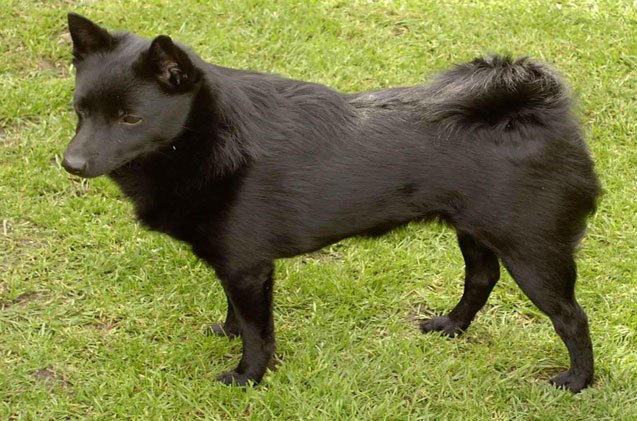
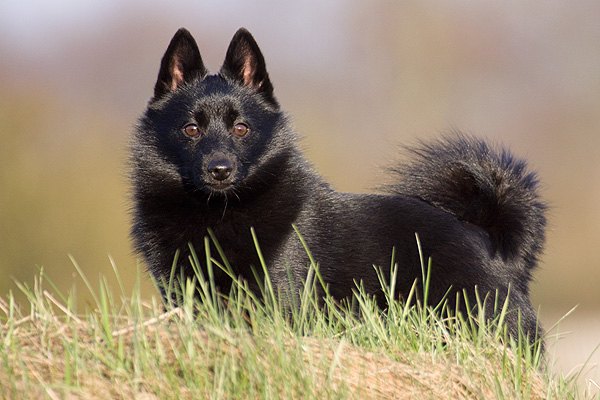
The American Kennel Club describes the Schipperke as: “The small, foxlike Schipperke is known for its mischievous expression and distinctive black coat, which stands off from the body and is harsh to the touch. This enthusiastic, joyful, and sometimes willful dog has a thickset and cobby body, and lacks a tail.”
Coat
Considered a generally self-grooming animal, you’ll still want to make sure your Schipperke is regularly brushed to maintain an overall coat quality. Typically having a dark coat with a medium length, it’s not hard to see when a Schipperke is coming your way… except maybe at night.
Puppies
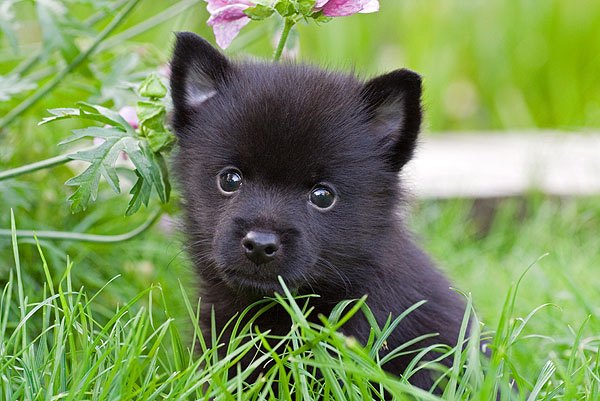
Schipperke puppies can be mischievous, energetic, and rambunctious, but let them play as long as you set boundaries for them and you raise them to socialize well with people and other pets.