Scottish Terrier Basics
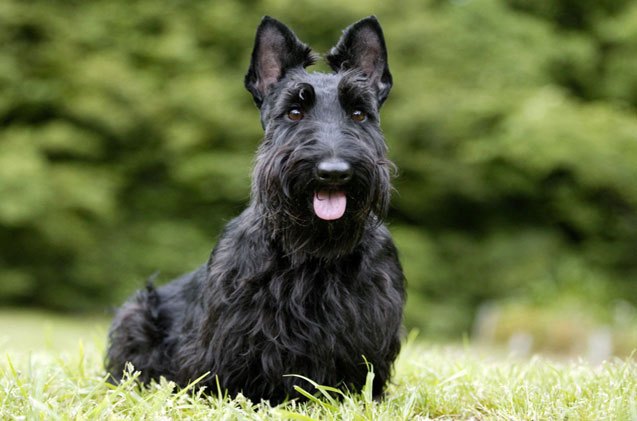
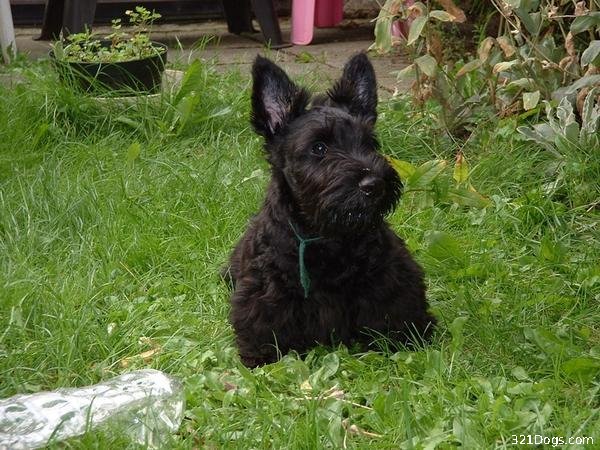
When you think of a terrier, what kind of breed do you think of? Well, depending where you are, you might have a different answer. But perhaps no terrier is as unique or easy to recognize as the Scottish Terrier. Take one look at the pictures presented in this article and you may find that you recognize the breed right away. That’s because three former Presidents, including George W. Bush, have had Scottish Terriers at the White House. But whatever your political leanings, the Scottish Terrier doesn’t have to be a breed reserved only for U.S. presidents – it can make a great pet for you and yours.
So what makes a Scottish Terrier special? As you’re about to find out, there’s a great deal of information about the Scottish Terrier that inspires a cult following of this playful, easy-to-get-along-with breed. Like many breeds of dog, you’ll find that the relatively peaceful personality makes for a perfect pet. Just make sure your dog gets plenty of exercise, affection and discipline and you’ll rarely go wrong.
You’ll find that the Scottish Terrier’s relatively peaceful personality makes for a perfect pet.
Origin
Scottish Terriers, of course, trace their roots back to Scotland, where its time in the highlands was shared with other breeds. Technically, experts don’t really know the origins of the Scottish Terrier in terms of its ancestral heritage or pedigree, which we’ll get to in a moment. The Scottish Terrier does have a rich history, dating back to perhaps the 15th or 16th centuries, but really only made its own as a formal breed during the 19th century. This makes the Scottish Terrier similar to a great deal of other breeds that didn’t gain official recognition until a relatively recent time in human history.
Pedigree
As mentioned, the Scottish Terrier’s ancestral roots are a little iffy. Like the legend of William Wallace, people just aren’t totally sure about what exactly went on in Scotland. Early records of Scottish Terriers, or at least Scottish Terrier-like creatures, go back to around the year 1500 when a man named Don Leslie described them in a book.
There’s information out there that states that Scottish Terriers are closely related to old breeds like the Aberdeen Terrier. The Aberdeen Terrier was just another name for the Scottish Terrier. Actually, Scottish Terriers come from a larger family of dogs known as Syke Terriers. This group was eventually split up into a number of breeds including the Scottish Terrier we all know and love today.
Food / Diet
Scottish Terriers actually have a high propensity for a number of illnesses – which we’ll discuss later – and making sure that your terrier gets a steady and healthy diet with plenty of exercise is even more important than with many dogs. Scottish Terriers will enjoy a range of foods as do most dogs, particularly meat and meat-flavored kibble. Mixing in vegetables with this kind of diet can be a good idea, but it’s best to speak to a veterinarian before you make any food decisions regarding the Scottish Terrier.
Scottish Terriers can be terrifically playful and energetic.
Training
Scottish Terriers can be a bit of a handful to train due to a breed-wide general stubbornness and a behavior that many people would describe as aloof. Scottish Terriers can be terrifically playful and energetic, but this can be a cause for frustration if you don’t have a lot of experience in working with dogs.
Weight
A relatively small breed, both male and female Scottish Terriers will grow to about 20 pounds or so in weight, usually without a lot of variation. If your Scottish Terrier matures well above this weight, it’s important to remember that you should think in percentages. Five pounds overweight doesn’t sound like a lot to you, but for a dog, it can represent a fifth of its total weight.
Temperament / Behavior
As mentioned in the section on training, the Scottish Terrier can be a love-‘em-or-leave-‘em breed. They’re playful and energetic but also stubborn and independent. They might be considered to behave a little more like energetic cats, but if you have worked with smaller dogs before there’s probably little about the Scottish Terrier that you can’t handle.
Common Health Problems
With a higher propensity to developing cancers than other dogs, it’s important to monitor your Scottish Terrier’s health with a close eye. Frequent trips to the veterinarian will be required particularly as your dog advances in age. Other issues like Scottie Cramp and von Willebrand’s disease might have interesting names but you don’t really want to see your terrier develop them. Be sure to keep your terrier plenty active – you might be surprised how durable they can be.
Life Expectancy
Scottish Terriers should typically live around 13-14 years or so, making them a relatively long-surviving breed.
Exercise Requirements
Scottish Terriers are small but come with plenty of endurance and have a high tolerance for activity. They make excellent play dogs – have your kids play in the yard with your Scottish Terrier, as it’s a great way to wear them both out. If you don’t exercise your Scottish Terrier on a regular basis, expect them to become antsy and even irritable.
Scottish Terriers are playful and energetic but also stubborn and independent.
AKC
The American Kennel Club notes that the Scottish Terrier “were introduced to America in the 1890’s and continue to remain a common fixture in American households.”
Coat
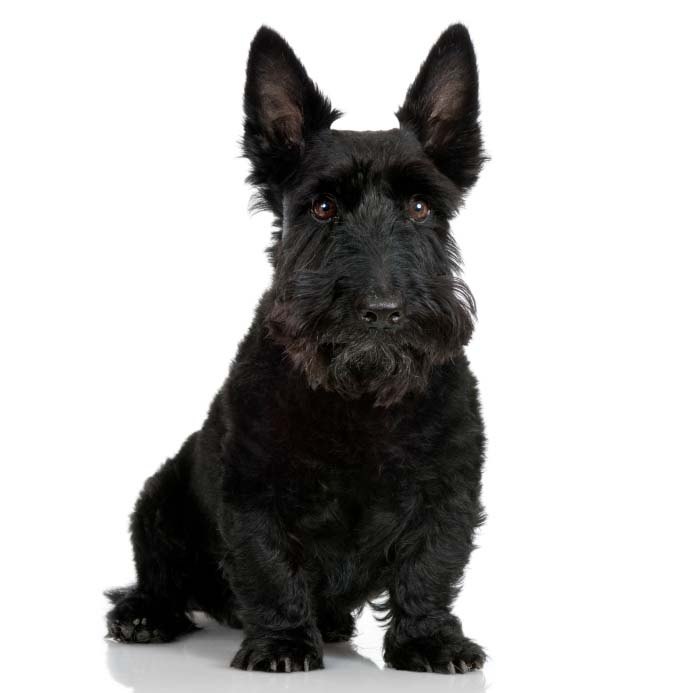
Perhaps the distinguishing feature of Scottish Terriers, its thick and unique dark coats often makes it a favorite with children. Regular brushing and clipping will be required.
Puppies
Don’t be surprised if your puppy Scottish Terrier has plenty of energy to spare. And that energy doesn’t let up, even as your puppy gets order.