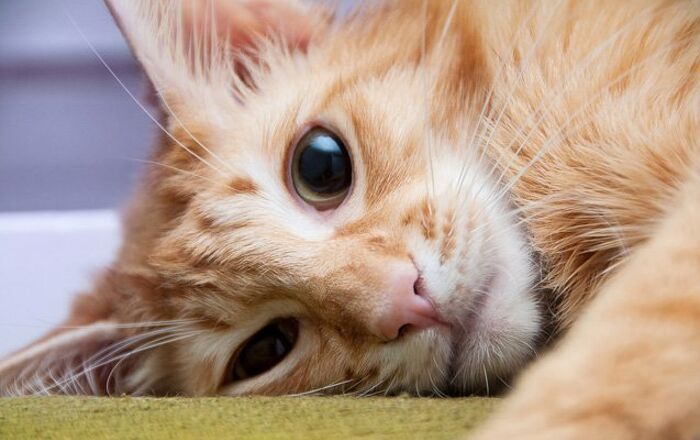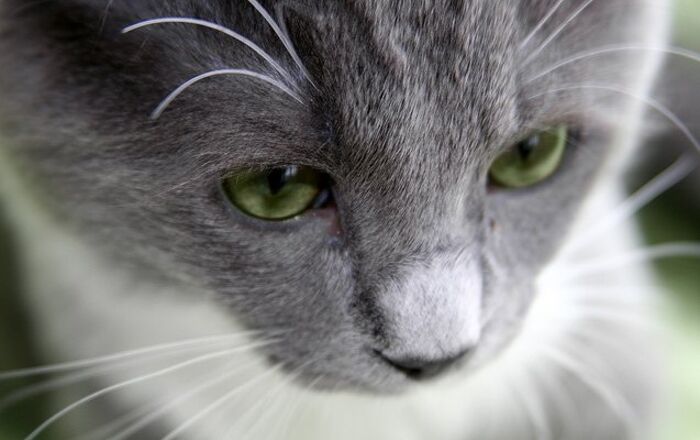
Forget puppy-dog eyes – cats have a way of making you drop everything to tend to their every need!
If you share your home with a feline, you know that she knows exactly how to get her way all the time. For example, she might give you that look. You know the look. The one that’s all wide-eyed, dilated pupils, and pleading for your attention. Or she might stand on her hind legs so that she could paw at your thigh. I mean, how can you resist, right? Okay, kitty, you can have an extra treat…or two.
But beyond using their absolutely adorable looks and gestures to get their way, our feline friends have also figured out how to talk to us to communicate their needs. Researchers refer to this as the purr-whine. Clever cats, indeed.
Related:Could Your Cat’s Purring Have Healing Effects on You?
A Little Annoying, but Totally Irresistible
According to National Geographic, a study discovered that kitties who are asking for food will use an “annoying but irresistible combination of sounds.” Thanks, science; tell us something we don’t know!
But, seriously, researchers found that this combination of sounds might be the reason why you give in and fill up your cat’s bowl even when you know you shouldn’t. Like at the crack of dawn, or in the middle of the night, or when you know that your kitty needs to lose a few pounds. The purr-whine makes it pretty much impossible to ignore your furry friend and make her wait for her next meal.
Mimicking Human Infants
You know your kitty is smart, but this might surprise you. When your furbaby is hungry, here’s what she does: she blends her normal purring sound (which is totally cute to begin with, right?) with a whining sound that’s actually similar in frequency to the cries that a human baby would make while in distress. So it goes without saying that our natural instinct is to quell the cries and make the little one feel better. Damn, that’s good!
Related:Why Do Cats Purr?
How They Do It
How do cats produce the purr-whine? Well, they start by purring, which is a vibration of the muscles that are found underneath the vocal folds. Because the inner edges of their vocal folds remain free while purring, cats can at the same time create another sound at a higher pitch. Impressive!
When researchers recorded the sounds of regular purring and the purr-whine combo, they were able to play these sounds for people to judge. Individuals who heard the purr-whine found it to be a less pleasing, as well as more urgent, sound compared with regular purring. You can listen to the purr-whine (AKA solicitation purr) here, and the regular purring here to note the difference.
Not All Kitties Do It
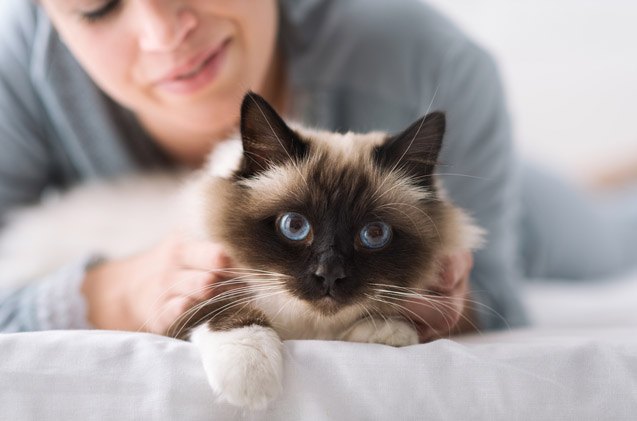
Even though some cats have discovered this highly effective means of communication with their humans, not all felines will use the purr-whine combo. Researchers found that this sound appears to be used more by kitties who have developed special one-on-one relationships with their caretakers. Kitties who live in bigger households tend to use a loud meow to get your attention instead.
So, as it turns out, your cat is even more cunning than you thought. She knows that the average meow might not get her too far when it comes to asking for a yummy snack, so she’s devised a way to entice you to act with urgency and fulfill her needs. It might feel like you’re being duped, but we think that this makes cats all the more interesting and lovable.