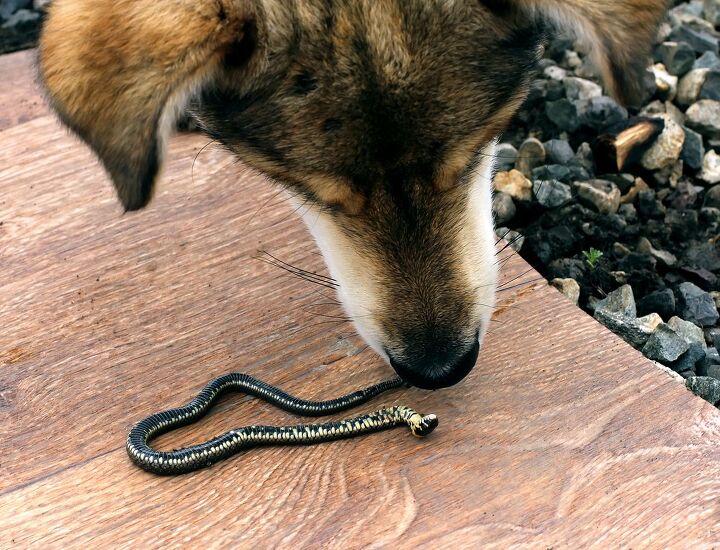
When dogs get nosy, it can lead to trouble – especially with snakes! Here’s what you need to know about how to treat snake bites in dogs.
Though cats are the ones known for their curiosity, dogs also have a tendency to get into trouble. When your dog is out in the woods, he’s likely to encounter many potential dangers including snakes. Even if a snake isn’t poisonous, snake bites are painful and can lead to infection. Keep reading to learn everything you need to know about snake bites in dogs.
How High is the Risk for Snake Bites?
There are 25 different types of poisonous snake found in North America and every state has at least a handful. While not every snake has deadly venom, the bite itself can be very painful for a dog and the wound may be susceptible to infection. If your dog is bitten by a venomous snake, timely treatment is extremely important. But how high is the risk for snake bites and what are the signs of a snake bite?
Related:Dog Rattlesnake Vaccine – Is It Effective?
If your dog is bitten by a snake, you should err on the side of caution and assume that it is venomous. Non-venomous snakes don’t typically bite their prey – they constrict it. In cases where your dog gets bitten by a snake, the bite is most likely to occur on the head or neck. Not every bite delivers a dose of venom but, again, it is better to be safe than sorry and treat any bite as an emergency situation. Here are some of the signs of snake bite in dogs:
Snake venom can affect one or several of your dog’s bodily systems including the nervous system, cardiopulmonary system, and even the coagulation system. The amount of venom delivered is not relative to the size of the snake and you should never try to remove the venom from the bite yourself.
What Should You Do If Your Dog Is Bitten?
If you see your dog bitten by a snake, make note of any identifying characteristics so you can tell your veterinarian what type of snake it was. Once you’ve done so, get your dog to the vet as soon as you possibly can. Do not attempt to extract the venom and do not apply a tourniquet yourself. Restrict your dog’s movement and immobilize the affected limb if your dog is bitten on the leg. Do not apply ice and do not apply pressure or covering to the wound.
When you get your dog to the vet, he will be able to determine the proper course of treatment. In some cases, antivenom may be administered but it is most effective within 4 hours of a bite – the longer you wait, the less effective it may be. In some cases, IV fluids and oxygen support may be administered to control shock and to prevent tissue damage. Anti-inflammatories, antibiotics, antihistamines, and anticonvulsants may also be called for. Your dog will need to be monitored for a minimum of 12 hours and his recovery depends on the type of snake, the size of the dog, and the promptness of treatment.
What About the Rattlesnake Vaccine?
If you live in an area where rattlesnakes are common, you may have heard of the rattlesnake vaccine. Unfortunately, there is a great deal of controversy surrounding the use of the vaccine, so you’ll need to talk to your veterinarian to determine if it’s something you want for your dog. The vaccine works by inciting your dog’s immune system to produce antibodies against rattlesnake venom, essentially neutralizing the toxin. The problem is that the vaccine isn’t a guarantee of safety and it can actually reduce the signs if the dog gets bitten. More study is needed to determine the efficacy of the vaccine.
Unfortunately, the world is full of danger and you can’t always protect your dog. The best thing you can do is know what to look for when it comes to venomous snakes in your area and be on the lookout when you take your dog into a high-risk area.