It’s Not Just Gas – Dog Bloat Is A Serious Issue
dog bloat
Also known as gastric dilation-volvulus (GDV), stomach torsion or twisted stomach, dog bloat is a serious enough problem that a dog could die within several hours if left untreated. And even if a dog is treated for bloat, more than quarter of dogs suffering from GDV will die because of the problem.
So what makes bloat such a serious health problem for your dog? It’s because it is a two-fold illness with several causes. A dog’s stomach can fill up with air due to a variety of issues (usually eating too fast) and this air puts pressure on internal organs that surround the stomach, as well as the large veins in the abdomen and the diaphragm. The dog is unable to breathe and it prevents blood from entering the heart.
The dog’s stomach is like a balloon, and once it’s filled with air, it can rotate and twist, cutting it off from a vital blood supply. Without a fresh blood supply, the stomach will die quickly. But the stomach isn’t the only organ affect – since the blood supply is disrupted, the dog will begin to deteriorate rapidly.
When it comes to GVD, it is found that purebred dogs are much more susceptible to bloat than mixed breeds. As well, bloat occurs more often in large dogs with deep, narrow chests. Breeds that are more prone to suffer from bloat are: Gordon Setters, Great Danes, Irish Setters, Saint Bernards, Standard Poodles and Weimaraners. Age plays into the factor as well, appearing in dogs older than seven years (it is rare to occur in dogs under four-years old). Another interesting fact – male dogs are more than twice as likely to develop bloat as females; regardless of whether the dog has been neutered. If you’ve got a nervous dog on your hangs, the odds are place it at a higher risk (there’s no reason why this happens – it’s a real head scratcher).
If your dog has bloat, you’ll notice that its abdomen is swollen and it looks like it is vomiting, but nothing is coming up. Symptoms can include abdominal pain, restlessness, drooling and rapid, shallow breathing. The dog will go into shock if its stomach is twisted, and it will become pale, have a weak pulse and a rapid heart rate, and will eventually collapse.
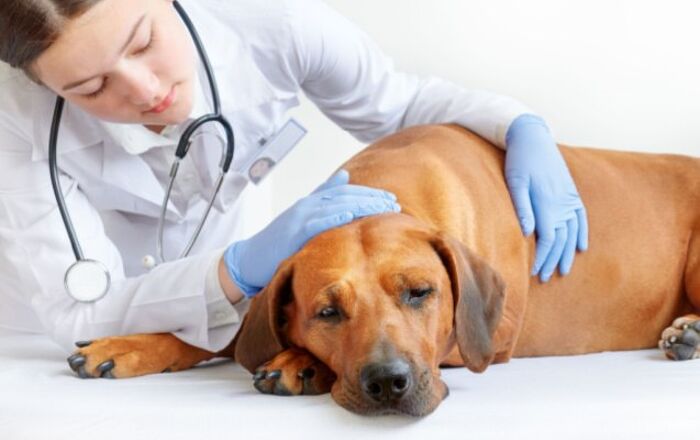
Your dog will need medical attention as soon as you notice it suffering from bloat. You dog will receive intravenous fluids to prevent shock. Next, gas will need to be removed from the stomach, which involves a stomach tube down the throat or a needle inserted into the stomach. To stabilize your dog, antibiotics, blood thinners (to prevent clots) and pain medications may be administered. Your dog is stabilized, surgery is performed, which sometimes involves restoring the stomach to its proper position. If the stomach and/or spleen are too damaged, the dog must be euthanized. Surgery may include a gastropexy, a procedure that stitches the stomach in place to prevent it from twisting again. With it, about 80 percent of dogs affect with GDV will experience a recurrence.
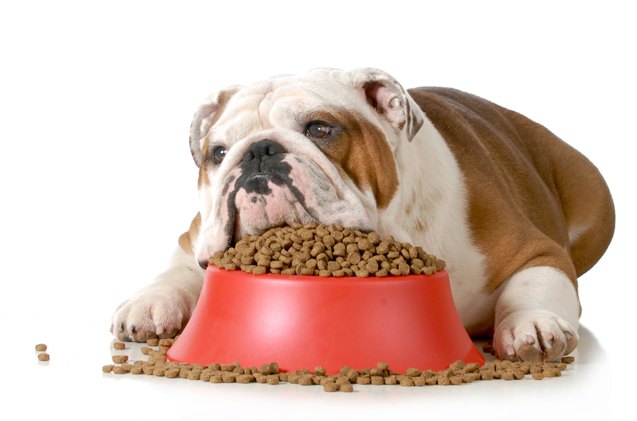
Good news – there are ways you can prevent your dog from suffering from bloat. One large meal a day can cause GDV, especially if a dog is a voracious eater. Feed your dog a few small meals a day or leave a food out so your dog can graze through the day. And after eating, wait before running around or playing a vigorous game of catch – this can cause the stomach to twist.
Do you have any questions about dog bloat? Please feel free to leave them in the comment section below.