White Shepherd Basics
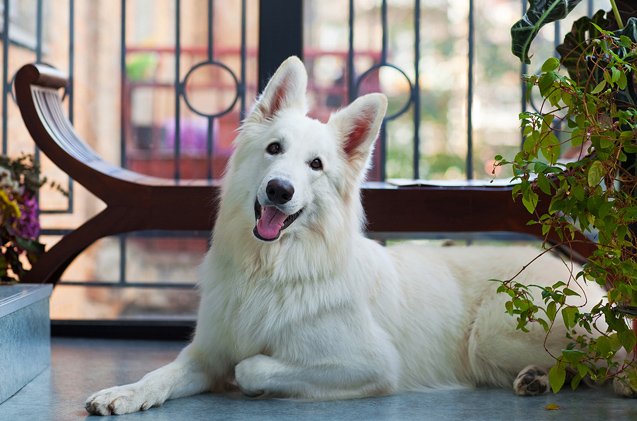
If you were to picture a dog with the body and build of a German Shepherd but a bright white coat, you would be picturing the White Shepherd. This beautiful breed was, in fact, developed from German Shepherds with the recessive gene for a white coat. Not only is the White Shepherd a unique and attractive breed, but it is also highly intelligent and can be trained for a variety of purposes including herding, agility, obedience, flyball, tracking, and showmanship.
If you were to picture a dog with the body and build of a German Shepherd but a bright white coat, you would be picturing the White Shepherd.
Origin
The development of the White Shepherd began during the 19th and 20th century when Germans began a breeding program to develop the German Shepherd Dog. It was during this time that the recessive gene for white coat color was cast in the gene pool. The White Shepherd was extensively developed during the 20th century when a German breeding program began to line breed and inbreed dogs that carried the recessive gene for white coat color. In 1933, white coat color was made a disqualification in the German Shepherd Dog breed standard but by 1959, the white coat color was back in development. In 1969 both the U.S. and Canada formed White German Shepherd breed clubs and, despite a few setbacks, the breed was officially recognized by the UKC in 1999. The AKC has yet to recognize the White Shepherd as anything other than a color variant of the German Shepherd Dog.
Pedigree
The White Shepherd was developed from German Shepherd dogs carrying the recessive gene for a white coat. This gene was cast in the gene pool sometime during the 19th or 20th century when the breeding program responsible for the development and expansion of the German Shepherd Dog breed was happening in Germany. A white-coated herding dog named Greif was the grandfather of Horand von Grafrath, the dog credited as the foundation for the German Shepherd Dog breed.
Food/Diet
The White Shepherd is a large-breed dog so it is best to feed him a high-quality dog food formulated for large-breed dogs. More importantly, the White Shepherd is an active breed so consider using a dog food formula designed for active breeds.
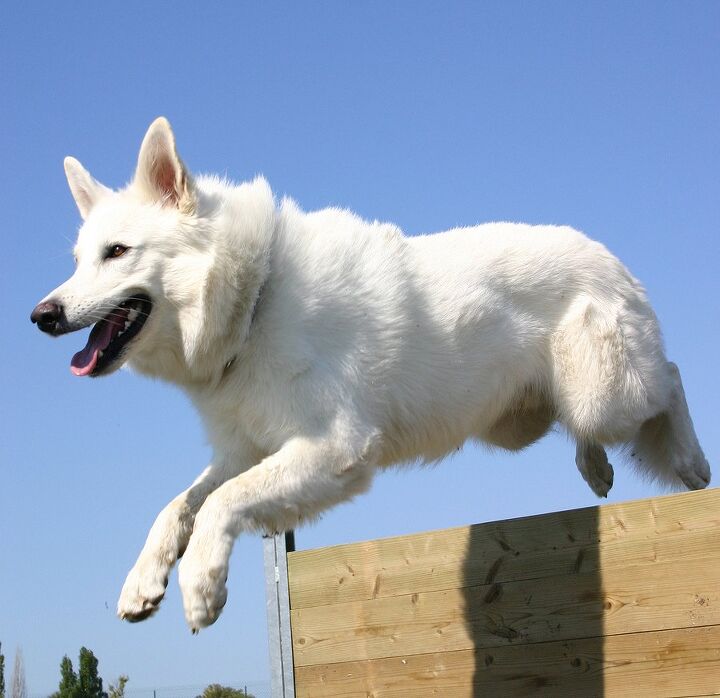
These dogs can be trained for any number of applications and dog sports including herding, agility, obedience, flyball, tracking, and showmanship.
Training
The White Shepherd is an incredibly intelligent dog that responds very well to training. These dogs can be trained for any number of applications and dog sports including herding, agility, obedience, flyball, tracking, and showmanship. These dogs are typically friendly and not aggressive with other dogs or people, so you do not have to worry about training against these qualities. It is important to note, however, that White Shepherds have a tendency to white and howl, so you may want to train your dog to respond to a “hush” command.
Weight
The White Shepherd is a large-sized and muscular dog that typically weighs between 60 and 70 lbs. for females and 75 to 85 lbs. for males.
Temperament/Behavior
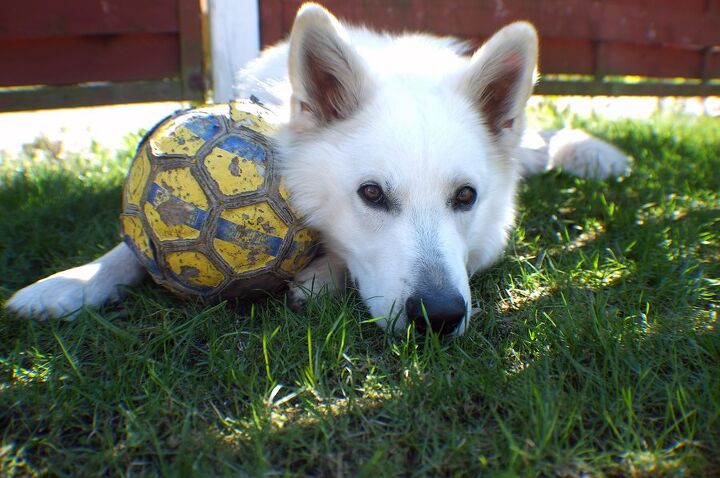
The White Shepherd is a friendly and fun-loving breed that gets along with people of all ages. Though this breed may be a little wary around strangers, it rarely shows any aggression toward people or other dogs. The White Shepherd forms strong bonds with its family and can be very protective at times. Socialization and training should be started at an early age to prevent the development of problem behaviors.
Common Health Problems
The White Shepherd is generally a healthy breed. Like all dogs, however, it is susceptible to certain diseases. Some of the conditions to which this breed is prone include hip dysplasia, elbow dysplasia, degenerative joint disease, eye problems, allergies, and skin problems. Some genetic lines have also shown problems with autoimmune diseases like lupus and congenital spine disease.
Life Expectancy
The average life expectancy for the White Shepherd is 12 to 14 years.
Exercise Requirements
Because the White Shepherd was developed from a herding breed it is an active dog. This being the case, the breed requires at least a 30-minute brisk walk each day in addition to plenty of play time – outdoors, if possible. These dogs love to run and play fetch, though they will enjoy any activity that allows them to spend time with their family. If not provided with adequate mental or physical stimulation, this breed is prone to developing problem behaviors.
The White Shepherd is a friendly and fun-loving breed that gets along with people of all ages.
Recognized Clubs
The AKC has yet to recognize the White Shepherd as a breed separate from the German Shepherd Dog – if the dog is born to two AKC-registered German Shepherd Dogs, it must be registered as such. The UKC, however, officially recognized the White Shepherd as a breed separate from the German Shepherd Dog in 1999 and published a separate breed standard that same year.
Coat
The defining characteristic of the White Shepherd is, of course, its all-white coat. The coat is medium-length with a thick, fine undercoat and a dense, harsh outer coat. The coat is heavier around the neck, especially in males. Though pure white is the ideal color, White Shepherds may exhibit colors ranging from light cream to light biscuit tan. All dogs should have a predominantly black nose.
Puppies
The average litter size for the White Shepherd breed is between 5 and 10 puppies. These dogs tend to grow quickly and they require both training and socialization from a young age to prevent the development of problem behaviors.
Photo credit: bibacomua/Bigstock.com; Artistan/Bigstock.com; cynoclub/Bigstock.com