White Vienna Rabbit Breed History/Origin
The White Vienna Rabbit was first presented in 1907. Wilhelm Mucke, an Austrian railway official, wanted to create a white, medium-sized rabbit that didn’t have ruby red eyes. After 15 years of breeding, Mucke finally succeeded and created one of the most popular rabbit breeds in Europe. He started with breeding Dutch rabbits, but only once he crossed them with the white varieties of Flemish Giant and Holland Lop he managed to get a pure white rabbit with beautiful blue eyes and soft fur.
Although the White Vienna Rabbit is recognized by the British Rabbit Council, it’s yet to be accepted by the American Rabbit Breeders Association.
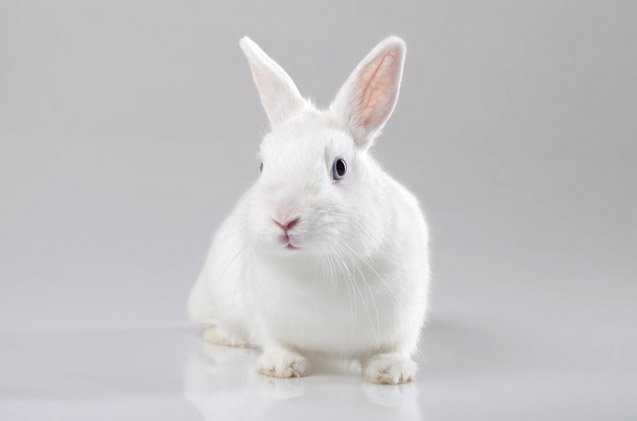
White Vienna Rabbit is best known for its beautiful blue eyes, white fur, and docile, easy-going temperament.
Overall Description
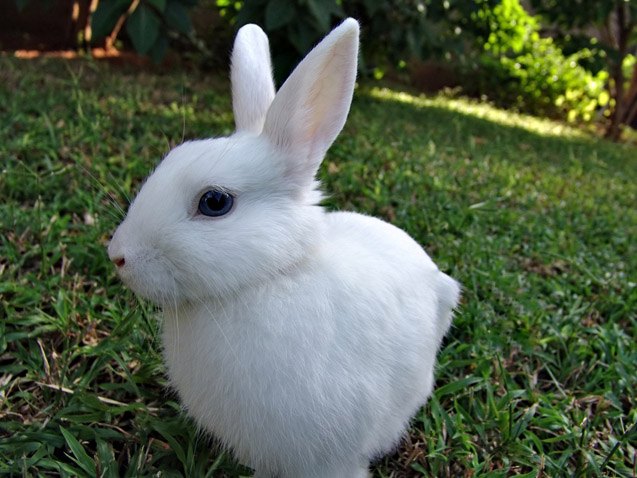
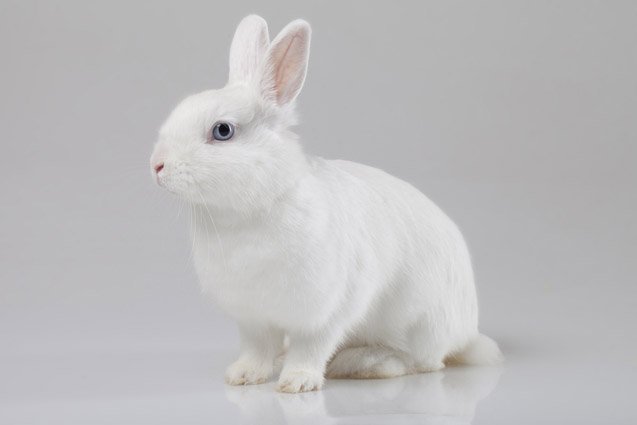
Considered a medium to large-sized breed, the White Vienna Rabbit has a broad, slightly elongated cylindrical body shape with well-developed muscles. The well-furred ears are between 11 cm to 12 cm long, rounded, and held upright. Their heads are large and strong, with a short neck that’s not visible when they sit. Their best known for their pure white, soft coat and blue eyes.
Coat
The fur of the White Vienna Rabbit is fine, silky, and very lustrous. They have medium length hair (about 1 inch long) and a dense undercoat rich in guard hairs. A distinct trait of the breed is that the ears are furred as well. Their shiny coat is easily groomed, and brushing them once or twice a week is more than enough to keep their fur shiny and lush. The regular brushing will also help minimize shedding, especially in time of seasonal molts, when rabbits tend to shed the most.
The White Vienna Rabbit has a dense coat with shiny, soft hair.
Colors
Vienna rabbits come in Blue, Black, Agouti, and White. The White Vienna Rabbit is always exclusively white, with pale blue irises and dark pupils. The whiteness of their fur extends evenly, and both the undercoat and the visible layer of fur are white, without markings or discoloration. Their whiskers and nails are also white.
Care Requirements
Calm and docile, White Vienna Rabbit can be kept both outdoors and indoors, as long as their needs are met and proper care provided. However, if you are to keep a rabbit as a pet, it’s recommended to house them indoors, so they can form a bond with you and your family, and overcome their initial shyness.
When preparing an enclosure for a White Vienna Rabbit, you need to take their size and weight into consideration. Rabbit cages or hutches should have rabbit-friendly bedding (wood shaving, straw), and be large enough for your rabbit to be able to hop around and sit upright on its hind legs. Their enclosure should be kept clean and tidy, so remove the bedding with fresh one once soiled. Once a week, replace the bedding completely.
Although this breed is considered calm and docile, they still need a lot of space to explore and roam about freely. At least a few hours a day, the White Vienna Rabbit should be let out of their enclosure, whether outdoors or indoors. If you’re letting your rabbit play outside, always supervise their playtime and let them out only in safe and protected areas of your yard. In case you are letting your bunny hop around your home, rabbit-proof your home to prevent them from nibbling on electrical cords or anything else that could harm them.
Even though White Vienna Rabbit is not a giant breed, it has a very strong body, and it’s not easy carrying them around. Make sure that you’re handling them with utmost care during playtime, as they are quick to jump out of your hands with their muscled legs, and that can cause a serious spinal injury.
When it comes to feeding White Vienna Rabbit, their nutritional needs are not much different than those of other rabbit breeds. High-quality hay or rabbit pellets will make the most of their diet, as they provide all the essential nutrients and hay helps them grind down their teeth. They also enjoy vegetables (carrots, lettuce, celery), alfa alfa, and fruits (apples, pears). Fresh drinking water should always be available to your pet.
Health
A vigorous breed, White Vienna Rabbit is not susceptible to any breed-specific health issues. Same as it with all rabbit breeds, though, they’ll need proper care to avoid any trouble down the road.
At your first visit to the vet’s office, you should vaccinate your bunny for Myxomatosis and Viral Haemorrhagic Disease (VHD). These deadly viruses are man-made diseases that were meant to reduce population of rabbits in the wild, but can now pose a serious threat to beloved pets. Your veterinarian should also provide information on deworming and flea treatments for rabbits, especially if they share a home with other pets, such as cats or dogs.
As for the common rabbit health issues, be on the lookout for dental problems, the lethal GI stasis, parasite infestations and hairballs that can lead to impacted gut. Not unlike any other pet, the way to stay ahead of any potential problem is to interact with your rabbit and monitor for any sudden mood and behavior changes.
Whether you have a pair of White Vienna Rabbits or just one bunny, you might want to get them spayed or neutered. Even though their temperament is already docile so sterilization is not needed to improve their character, spaying and neutering your rabbit can prevent reproductive system diseases, unwanted litters (if you have multiple bunnies) and urine marking during heat.
These rabbits are gentle and affectionate.
Temperament/Behavior
If you are looking for an energetic, playful bunny, the White Vienna Rabbit might not be the best choice for you. Known as being docile and laid-back, this breed will not mind being petted and they are quite calm. However, even though they are not grumpy or quick to snip, due to their size, White Vienna Rabbits don’t make best pets to young children. In case you are thinking about getting this breed for an older child, it’s important to talk with them and explain that the rabbit shouldn’t be picked up, as that can lead to serious injury.
This breed is a great choice for people who already had rabbits and know how to properly handle a bunny of this size. Their easy-going nature makes them great companion to seniors, or singles who are worried that their rabbit will get bored while they are at work.
Of course, a proper socialization, especially at a young age, will have a big influence on the rabbit’s personality. If brought up in a friendly, caring environment, the White Vienna Rabbit will become a sociable, relaxed rabbit that makes a wonderful pet.
Photo credit: shipic/Shutterstock.com; Lucian Coman/Shutterstock.com