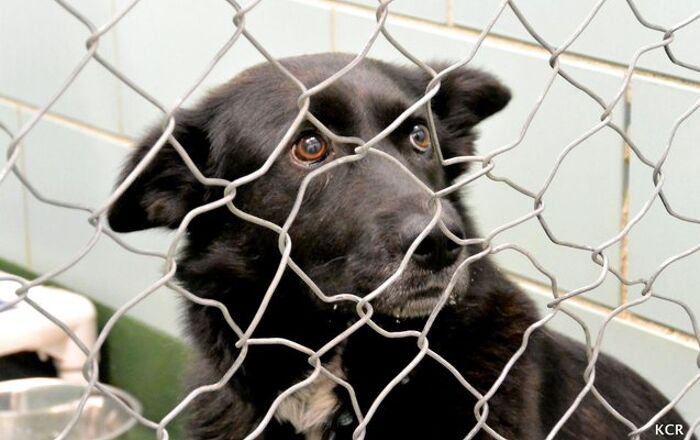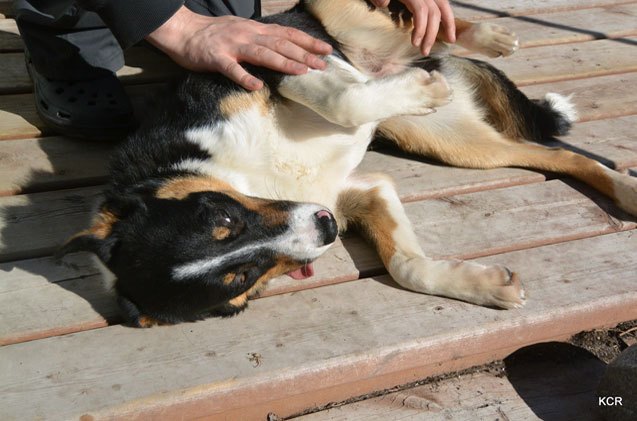
Kevin Roberts has taken in a new foster dog. The first bloom of excitement has worn off – it’s time for Francis to show his true colors.
The first 24 hours are the hardest. When you take on a foster dog, it does get easier, but the first 24 hours are always the hardest. The honeymoon feelings start to wear off. You question your sanity. You may not sleep much. You worry if this is the right thing to do. Take my word for it – this too shall pass.
Such was the case of Francis, our latest foster. He was unclaimed stray who he ended up in a high-kill shelter before he was rescued and transported to a shelter in my city. In fact, that local shelter is how our dog Belle came to us, so we often foster for the organization.
Related:Adventures In Fostering: Meet Francis
As is often is the case with rescue dogs, we had scarce background information about Francis. Part of our role as a foster family is to let him relax, give him some time to unpack his baggage and let his true colors show. We were responsible to work on basic training and try to sort out behavioral issues before Francis could be placed for adoption.
Kennel Training
In our house, we kennel train. With young dogs, I’ve found this to be a sanity saver, for both us and the dog. Housetraining goes smoother and it’s a comfy den for time outs. That meant kennel training was the first task to tackle with Francis. What I find works wonders is letting the dog romp around to burn off energy, and then bribing him with treats every time he goes in his kennel. If you think that kennels are prisons, you’ve obviously never seen the five-star digs our dogs have become accustomed to. It’s full of toys, soft blankets and delicious noms – it’s more of a suite than a cell.
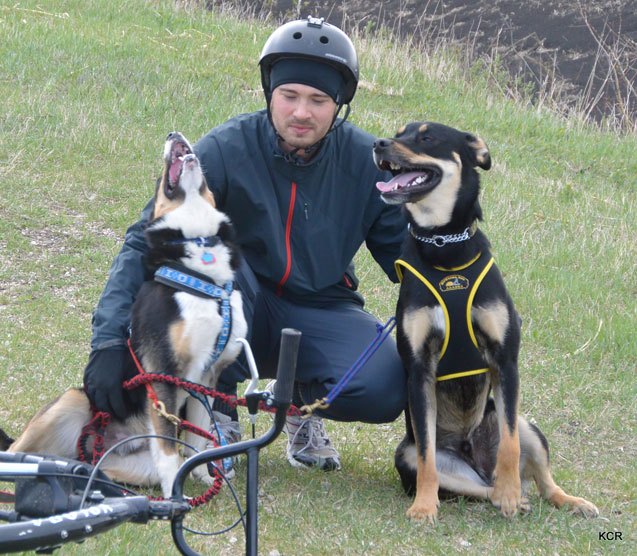
When we took Francis out in the yard, he quickly showed his intense interest in toys! We have fostered dogs who have needed to be taught to play, but Francis knew what toys were, and he knew he loved them! Good news for us – a dog who enjoys toys is easy to train for fun things like disc and flyball. It also means that it’s easier to burn off the energy and bond with the dog over play. Once our play session was over, I called Francis over to me: “Francis, Come!” He looked right at me…. and he froze. Then, he promptly turned around and bolted, jumping over the fence!
The words that came out of my mouth are not suitable to print. Let’s just say there would have been a ton of beeps had this been TV.
I cleared the fence after him (not an easy feat in a pair of crocs) and headed to the front yard. Francis hadn’t gone far – he was on the cusp of the lawn, so I grabbed a few Frisbees, and began playing with him again. Once I had lured him over to play, it was easy enough to bring him back into the house.
Related:Why You Should Consider Fostering a Dog
That incident was a strong indication that Francis had to be taught the importance of the “Come” command. In our house, he learned that “Come” was a positive word, as he was showered with praise and treats every time I said it. I hadn’t planned to teach the recall command “Come” with Francis, but I certainly didn’t want him to bolt next time I called the other dogs. The positive response from the other dogs to this command certainly helped Francis learn that nothing bad was going to happen. In fact, their leaping, bounding and salivating at the word helped teach him that “Come” really meant “Come over here and PARTY!”
Working It Out
To turn Francis into a model canine-citizen, we had to find outlets for his energy. It’s a good thing we’re an active family, so Francis got to join the pack on all of our adventures. A pleasant surprise for us (and him) was his natural ability for canicross and scootering. He was a natural, and it didn’t take much training before he was strutting his stuff in a harness!
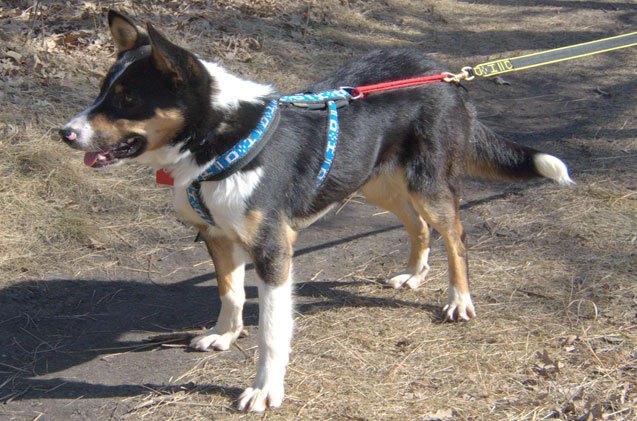
An added bonus of running in harness with the pack is that Francis fit into the pack easier. He was accepted into our clan. By literally pulling his weight, he earned the respect of the other dogs. Once we start a foster in harness, the other dogs accept them a lot quicker than without. Added bonus: when all the dogs come home happy and tired from pulling, they can just chill out together.
Francis fit into our lifestyle perfectly, and friends began placing bets on whether or not we’d be keeping him. At first, I strenuously objected… but I’ve always been a lightweight to peer pressure. Once I started thinking about it, the idea didn’t sound like a bad one. He has bonded with Burger, River and Belle, and they had accepted him. He was sweet, not too big, and so much fun to train and play with. Sure, four dogs is a lot, but then again, so is three! “What was one more?” I found myself asking.
Next up in the series: Will I be a Foster Fail?