Australian Shepherd Basics
G’day dog! You don’t have to go to the outback to enjoy the Australian Shepherd. In fact, we’ve got some interesting information about this breed you’d be surprised to learn. What you won’t be surprised about is that the Australian Shepherd is a hardworking dog that was used on the farm and made its way to herding trials. With its trainability and eagerness to please, the Australian Shepherd is regarded for its skills in obedience and its considerable energy and drive.
Also used as search and rescue dogs, disaster dogs, detection dogs, guide, service, and therapy dogs, the Australian Shepherd is full of energy and loves to play and run. Loyal and obedient, this dog can be a bit reserved with strangers but is protective and an excellent watchdog. Because it’s a herder, the Australian Shepherd may try to herd children when playing, and may even nip – but even so, this breed makes an excellent family pet. To find out more about this breed, read on.
With its trainability and eagerness to please, the Australian Shepherd is regarded for its skills in obedience and its considerable energy and drive.
Origin
It may be called an Australian Shepherd, but the name is misleading. This sheep herder actually originated in the Unites States. Back in the 1800s, the Australian Shepherd did come to America by way of Australia, but it is not considered an Australian breed. The name came about due to the fact that some of these dogs were used to herd Australian sheep
The Australian Shepherd was used primarily as a sheep herder in the Rocky Mountains because it was relatively unaffected by altitude. Ranchers began breeding the dogs, and as word of its legendary sheep herding abilities traveled, interesting purchasers from across the country to take one home with them. Not only is it successful on the farm, the Australian Shepherd made an excellent addition as a family pet.
Pedigree
Historians believe that they were bred from dogs that were originally from England and Scotland. Although it is hard to tell the exact makeup of this breed, people speculate that dogs such as the English shepherd, Cumberland sheepdog, and Welsh Sheepdog are a part of its ancestry.
The AKC recognized the Australian Shepherd in 1991.
Food / Diet
When it comes to what you should be feeding your Australian Shepherd, owners can make home-cooked meals fresh, using quality ingredients, without preservatives. This can prove to be less expensive than buying the average any-breed commercial pet food.
Since this breed is intelligent, it will often sense what the owner will request before the command is given – that’s pretty smart!
Training
When training the Australian Shepherd, you’ll need to be consistent and firm. This breed will pick up on changes to your voice, so keep it positive. The Australian Shepherd should never been punished, so try using positive rewards and training methods. Since this breed is intelligent, it will often sense what the owner will request before the command is given – that’s pretty smart! A naturally clean dog, the Australian Shepherd will housetrain easily when given the opportunity to go outside.
Weight
The male Australian Shepherd weighs about 50 to 65 pounds, while the females weigh around 40 to 55 pounds.
Temperament / Behavior
Since this is a working dog, the Australian Shepherd needs lots of activity to be happy and content. The breed is excellent with children, especially when raised from puppies. And because it is a herding dog, the Australian Shepherd will often try to herd kids, pets and other animals, so train early to prevent nipping. This breed also plays well with cats, and is typically not aggressive.
A devoted family dog, the Australian Shepherd is a natural watchdog, although it’s too friendly to be a guard dog. And even though the Australian Shepherd loves to be around people, it is independent enough to handle being alone in the day, as long as it has lots of toys and plenty of space to exercise.
Common Health Problems
There are some health conditions that may be found in the Australian Shepherd. The more common health concerns include autoimmune disorders, cataracts, Collie Eye Anomaly (also known as CEA) and hip dysplasia.
Eye concerns are common with Australian Shepherds so always ask for a vet certification for an eye test on the parents. Blindness and deafness is more likely to occur in merle Australian Shepherds due to color linked genetic condition.
Life Expectancy
Australian Shepherds have a life expectancy of 12 to 15 years.
Exercise Requirements
These working dogs need a lot of regular exercise to avoid becoming bored and destructive in the house when left alone. If your Australian Shepherd is left inside for most of the day, they will need to get outside for a few hours if possible, which is where a yard comes in handy. Take at least one or two long, brisk walks per day.
In addition, these dogs need to be mentally challenged when exercising. You’ll find that Australian Shepherds are excellent when it comes to obedience, agility and competitive type training.
The breed is excellent with children, especially when raised from puppies.
AKC
The American Kennel Club says this about the breed: “Animated, adaptable and agile, the Australian Shepherd lives for his job, which still involves herding livestock and working as an all-purpose farm and ranch dog. Today, due to the breed’s intelligence and versatility, ‘Aussies’ also excel in AKC events such as agility, obedience and herding.”
Coat
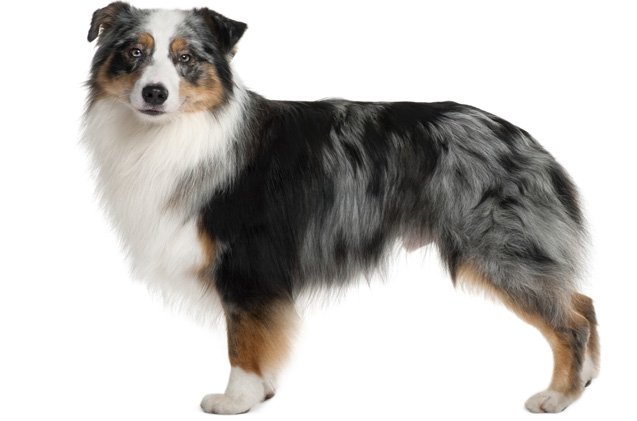
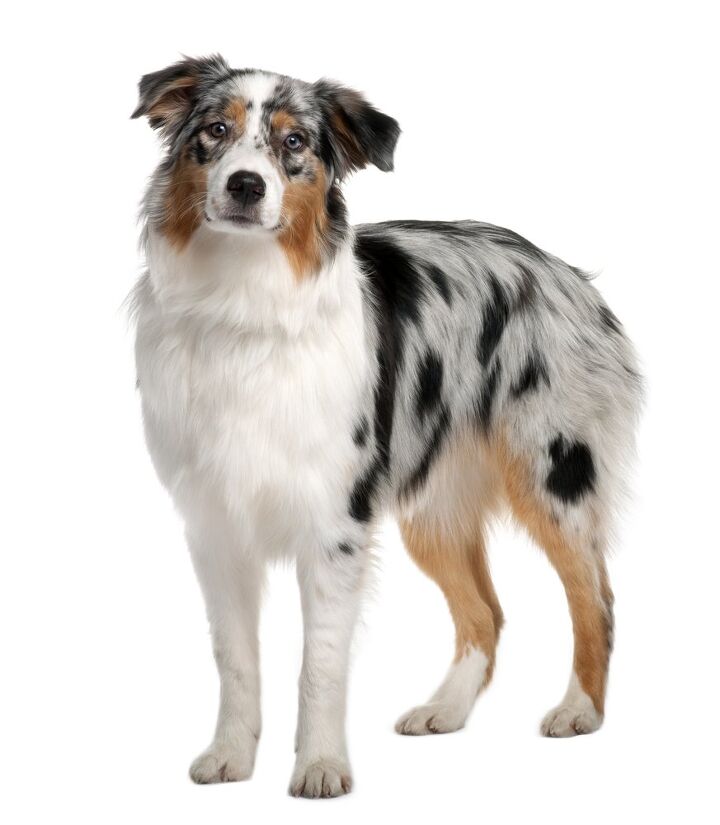
The Australian Shepherd sports a thick double coat that consists of a wooly inner coat covered by a longer, wavy to straight waterproof outer coat. In warm climates the inner coat is light, but in colder or damper climates it becomes thicker. The hair on the face and legs is short, while longer feathering will be found on the back of the front and hind legs. The coat colors range from tri-color of black, tan or red and white to solid black, solid red or blue or red merle colors. White markings are often found on the chest, face and feet.
Puppies
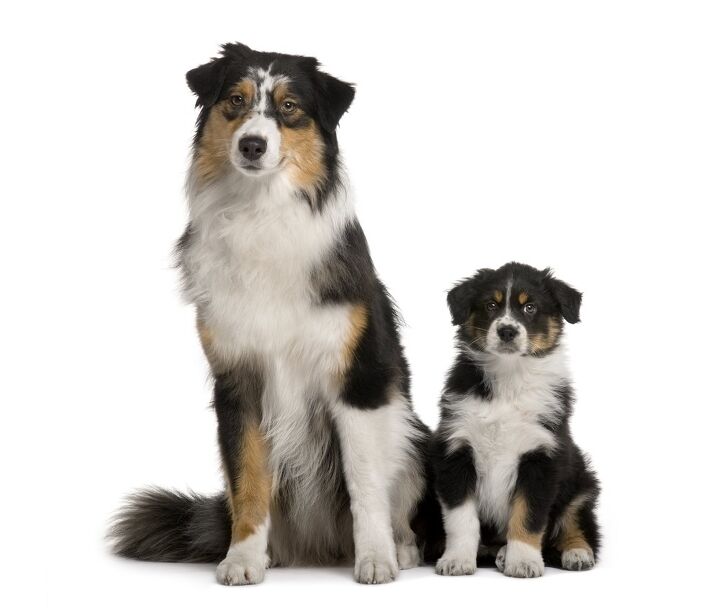
Australian Shepherd puppies should be trained at a young age to avoid the habit of herding children.
Photo credit: Eric Isselee/Shutterstock