Don’t let your dreams of a litter box-free home get flushed – here’s how to toilet train your cat!
If you are absolutely tired of dealing with cleaning your cat’s litter box every day, there is hope if you want to throw it away and never look at it again: you can toilet train your kitty to use the bathroom just like you do. While this may sound unrealistic and impossible, the truth is that many people have successfully trained their cats to stop using the litter box in favor of the toilet. And with some time, dedication, and patience, you can train your cat to do the same.
Below are some instructions on getting started, but there are also a variety of products out there that are specifically designed for this purpose and can come in quite handy as well.
Related:What Is The Best Cat Litter
Put the Litter Box in the Bathroom
The first step in the training process involves placing your cat’s litter box in the bathroom and introducing him into the room where you want him to do his business. The box should be an open, standard litter box rather than a complicated, bulky, covered one.
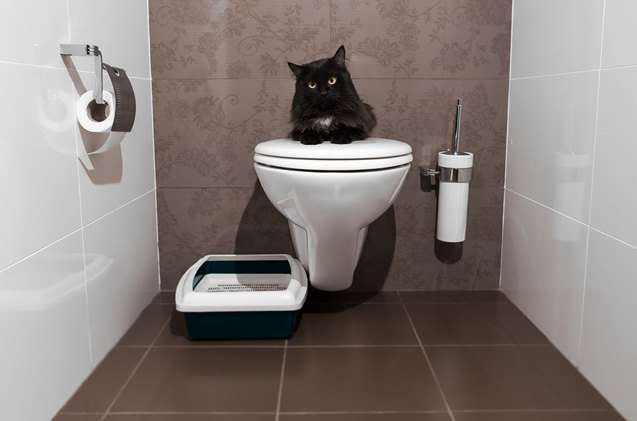
Be sure to put the litter box right next to the toilet. After a few days, place the box a few inches off the ground with the help of a textbook, phone book, or anything else you can find that will support the box. Raise it higher and higher every few days as your cat gets accustomed to the new height. This will begin to train him to jump into the box in order to go to the bathroom, which is a drastic change from walking right into the box on ground level.
Related:How To Create A Cat-Friendly Home
The goal is to slowly work your way up to the point that the litter box is at the same height as your toilet. Again, work with your cat as the days go on and observe when he gets comfortable with each height change. If you rush the process, your cat will become confused and frustrated and start eliminating around the house instead.
Place the Litter Box on Top of the Toilet
The next step is to place the litter box right on top of the toilet itself. This will require him to jump onto the toilet seat in order to go to the bathroom. Again, follow this process slowly and make sure your cat is ready to take this step before placing the box on the toilet.
Get a New Litter Box
The next step involves replacing your cat’s old litter box with a disposable aluminum roasting pan. If the litter you have been using up to this point is not flushable, make the switch to one that is. Fill the roasting pan with litter and place it inside the toilet, with the seat holding it in place. Your cat should continue to jump up onto the toilet at this point, understanding that the litter box is there.
Start Cutting a Hole in the Bottom of the Pan
After your cat has grown accustomed to using the litter box that is inside the toilet, it is time to make a small hole in the bottom of the litter pan in order to begin exposing the water inside the toilet to your cat. This is yet another slow-moving process because you want to start with a really small hole and make it bigger as the days go on and your cat is comfortable going to the bathroom this way. As always, you need to work with your individual kitty and not force him to do something sooner than he is ready because he will get frustrated and confused and start using your home as a giant litter box instead.
Eventually, there will be a hole big enough that there is hardly any litter left in the toilet and your cat will grow accustomed to the sound of the water as he goes to the bathroom. Then you can remove the pan from the toilet completely. If you reach this point, you have successfully toilet trained your kitty!
Now, if you could only get him to flush the toilet…