Californian Rabbit Breed History/Origin
The Californian Rabbit breed was developed in the 1923 by George West of California. His plan was to develop a breed with the “perfect” meat as well as a dense, desirable coat. After five years of breeding, he developed a small, chinchilla-colored male by crossing a Himalayan white with Chinchillas. The buck was bred with several of West’s New Zealand rabbits to increase their size, and so the Californian Rabbit was born. West gave a few of his stock to two trusted Southern California breeders and together, they perfected the breed.
The Californian rabbit was first shown as a breed in 1928, its first appearance at an American Rabbit Breeders Association (ARBA) convention in 1932 and became a recognized breed in 1939. Today, Californian rabbits are only surpassed in popularity by the New Zealand whites.
The Californian Rabbit makes a great pet because of its mild temperament.
Overall Description
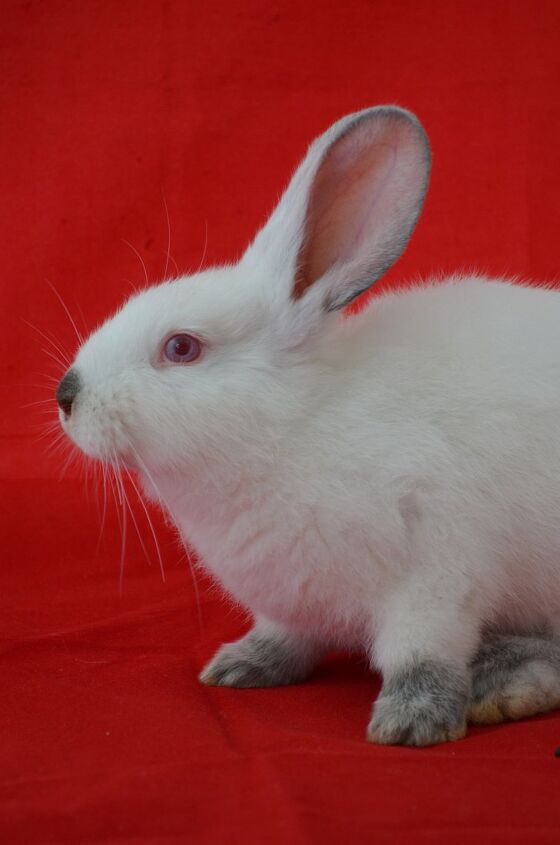
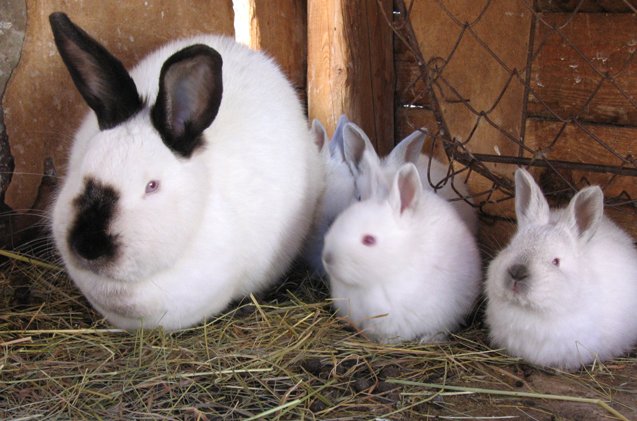
This rabbit breed has a commercial body type and should ideally weigh between 8-11 lbs. They also have a muscular body with full shoulders and hindquarters, which are as deep as they are wide. Their coat is usually completely white with Himalayan-like markings. Their ears are broad and medium in length, and should point straight up.
Coat
The Californian rabbit breed’s coat is dense and coarse and not soft, so petting them probably feels better for the rabbit than for a human. Its fur is short and the undercoat should be dense. You may find they tend to shed its coat more in the spring than other season of the year. To keep as much of their fur out of your home as possible, simply groom them with a bristled brush outdoors 1-2 times per week when they are shedding the most. Otherwise, once a week or once every two weeks should be more than enough.
Colors
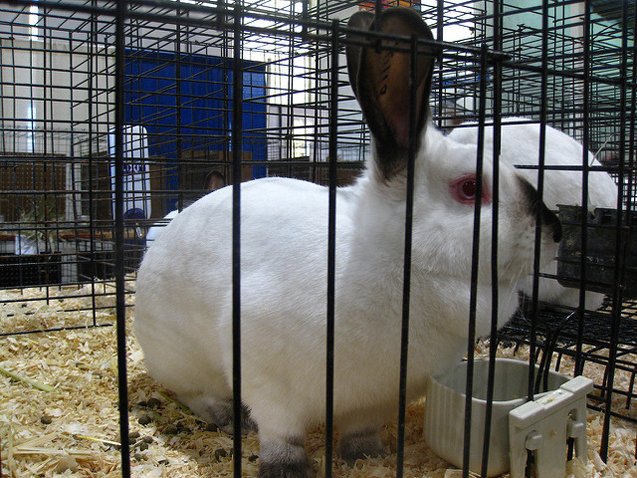
The only color accepted by the ARBA when it comes to Californian rabbits is white with markings as dark as possible. They have black/near-black markings on their nose, feet, ears and tail and must have pink eyes (like that of an albino rabbit).
Californian Rabbits do well with human interaction and also make excellent pets.
Care Requirements
In order to see their personalities blossom, the Californian rabbit needs plenty of time outside of its enclosure to explore and form a lasting bond with human families. Despite being used mainly as a show or meat rabbit, they do well with human interaction and can make excellent pets. This particular breed does well either in indoor or outdoor enclosures, as their coat is dense enough to handle cold temperatures (even with snow), so long as their outdoor enclosures are protected from the elements (sun, rain, snow). Outdoor enclosures should also be covered on three sides to protect rabbits from cold drafts in the winter, as well as provide ventilation and shade at the same time during the hotter months.
Indoor enclosures should be made of wire, be large enough for them to stretch out in and have a plastic bottom. The bottom should be laid with good-quality bedding (some owners like using small amounts of horse bedding, which is perfectly acceptable), should be spot-cleaned every day and completely replaced every week.
Like with any rabbit, their diet should mainly be made up of high-quality hay (timothy hay is a great example). Seventy percent should be hay with the rest being high-quality pellets, vegetables, leafy greens, and fruits. Fruits and vegetables can also be used as incentives or treats to reward your bunny whenever they complete a task or obey a command (such as sitting, staying, or using their litter box). Adult rabbits can eat about 1/4 cup of high-fiber pellets everyday for every 5 lbs. they weigh and always make sure to research what kind of fruit/leafy green/vegetable you’re planning on feeding them, as some are not recommended for rabbits.
Health
The Californian rabbit does not have any particular disease of health issue, but it can develop sore hocks should they be kept in an enclosure with a wire bottom (which is not recommended for any rabbit, for that matter). Having said that, rabbits are susceptible to a few problems which differ from cats or dogs. Should you keep your rabbit mostly outdoors, for example, flystrike can happen, especially in hotter months. This occurs when flies lay their eggs in soiled parts of your rabbit’s fur (mostly near their bottoms) and once the eggs hatch, their main source of food is your rabbit while it still lives. This causes excruciating pain for your rabbit and can even be lethal – be sure to take your rabbit to your local vet to get them treated should you suspect this is happening.
Also check your rabbit’s mouth every two weeks or so for overgrown teeth, as rabbit’s teeth never stop growing. Should their diet be low in hay, teeth can continue to grow into their faces and jaws, which can also be very painful. Thankfully, veterinarians can usually treat any infection due to overgrown teeth and can also shave those teeth down to a manageable length. Finally, every rabbit should also be periodically checked for ear mites, as it is a common problem especially among rabbits who are mostly kept outdoors.
Californian rabbits need plenty of time outside of their enclosures to explore and form a lasting bond with their human families.
Temperament/Behavior
While mostly bred as meat or show animals, many love having the Californian as a pet rabbit because of their mild temperament. While they may seem shy and sometimes even quiet, with proper socialization (which means lots of time outside of their enclosure, interacting with their human families), their personalities will bloom and you will soon find out that your Californian loves to play and be active but also loves to sit back and cuddle when the time is right. This makes them great first-time pets for couples, singles, seniors or families with children of any age, so long as they are careful when holding or petting the rabbit. Always make younger children sit on the ground when they are petting rabbit (even ones as large as this one), as if they happen to fall or flip over, they won’t get as hurt since they are already near the ground.
Like most rabbits, your Californian should be given a couple of toys to make sure they aren’t bored, as boredom can lead to the destruction of your personal property such as shoes, your room’s baseboard and basically anything else that they can sink their teeth into (much like puppies). Toys can include a few balls, a paper towel roll or anything that is bunny-safe purchased from your local pet store.
Unlike other pets such as dogs and cats, rabbits are a little bit tricker to litter train. With lots of time, patience and rewards, rabbits can be potty trained but it takes much longer than other pets. Instead of using just one litter box, try to spread a couple around the house so they won’t be tempted to do it in a corner because they cannot hold it in. When rabbit parents find that their bunny tends to do their business where they are not supposed to (such as their favorite corner in the living room), they put a litter box in that particular area and sometimes, that is enough to make the rabbit understand that this is where they need to do the deed.
Photo credit: Ervinpospisil; rabbit_mage/Flickr; MiranM/Bigstock