Cleveland Bay Horse Breed History
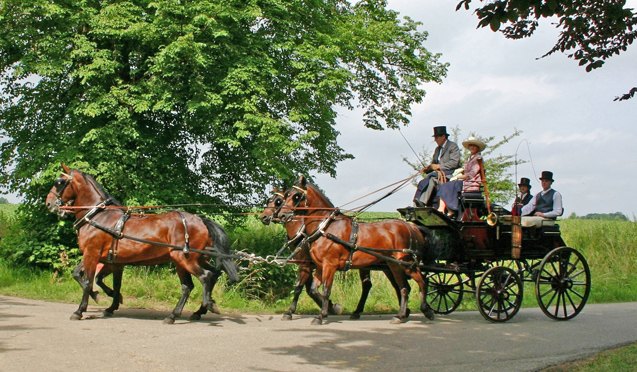
The Cleveland Bay Horse is a breed that was developed during the Middle Ages within the Cleveland Hills in Yorkshire, England. It is the result of crossing packhorses, which were hardy, with refined breeds like the Arabian, Thoroughbred, Barb, and Andalusian. The goal was to have a refined horse that would be able to pull carriages.
In order to make it easier to match pairs of horses, and to make them suitable for use during any occasion, all of the horses were bred so that they would be bay in color. This also distinguished the Cleveland Bays from white horses that were considered unsuitable for more somber occasions, as well as black horses, which would not be suitable for festive occasions.
The Cleveland Bay was bred to be a hard working and devoted horse.
The Cleveland Bay Horse became the preferred carriage horse for wealthy individuals, and they are still utilized today for royal carriages. However, they were in highest demand throughout the 19th and 20th centuries, when they were used as cavalry horses as well.
As a result of being used in the cavalry, however, many of these horses died with their riders, and by the conclusion of World War I, the number of Cleveland Bays had dropped considerably. This resulted in efforts to protect the animals, which were largely unsuccessful as a result of the depression in the 1930s, World War II, and the overall decline in horse-drawn carriages. However, Queen Elizabeth II purchased one of the four purebred Cleveland Bay stallions that remained in the UK in 1962. That stallion’s descendants helped to revive the breed, and Prince Philip began using them in driving competitions as well.
Today, stud books are maintained by the Cleveland Bay Horse Society of North America, which was founded in 1885, and the British Cleveland Bay Horse Society, which was founded in 1883.
Breed Traits
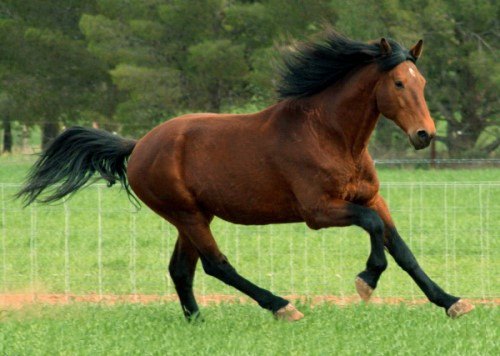
The Cleveland Bay Horse was bred to be a hard working and devoted horse, so it is an honest worker that is highly versatile and intelligent. The breed is also renowned for being able to cope well in traffic when properly trained for those types of situations and environments.
These horses make wonderful riding companions for all levels of riders, including beginners who are seeking to gain experience. They are a great option for teens who are taller and unable to ride ponies but are seeking a docile horse to learn how to ride properly and safely.
Cleveland Bays have high amounts of strength and stamina.
Overall Description
The Cleveland Bay Horse has a body that is deep and wide and that provides the animal with strength and stamina. Although the back is strong and the loins are muscular, the back shouldn’t be too long. Also, the shoulders are muscular, deep, and sloping, the quarters are powerful, long, oval, and level, and the tail should spring well from the horse’s quarters.
A Cleveland Bay’s head will not be too small, and it will be bold in appearance. The horse should carry the head well on a lean, long neck. The eyes should be well set, kind in their expression, and large as well. The ears are also fine and large.
This horse’s legs should appear muscular, and the pasterns are sloping, not too long, and strong. Also, the legs of this breed should not have superfluous hair, and they should be as hard and as clean as possible. Finally, the horse’s feet, which are one of the breed’s most vital features, should be blue in color, and they should not be narrow or shallow.
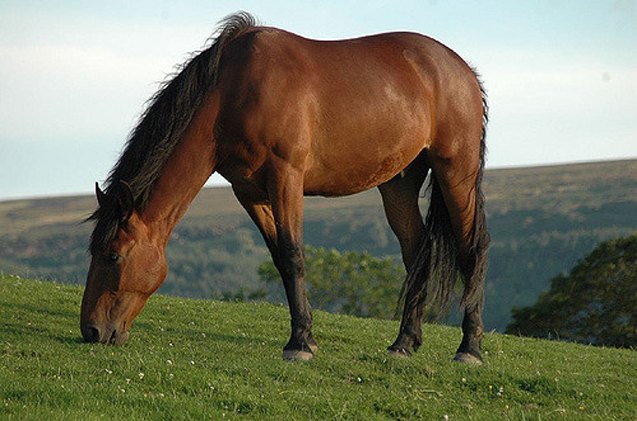
The Cleveland Bay has a bay colored coat with black points.
Colors
The Cleveland Bay only features a lovely bay colored coat with black points. This means that the horse will have black legs, a black tail, and a black mane. A very small white star is also permitted, but no other white is allowed. Horses may also feature legs that are red or bay below the hocks and knees. Rarely, you will also find a Cleveland Bay with a chestnut colored coat.
Grooming Requirements
Every Cleveland Bay benefits from a daily grooming session, which is strongly recommended because it will effectively stimulate the horse’s blood flow, in addition to keeping the horse clean and smooth. Regular checkups with a farrier are also highly recommended to keep the hooves clean and healthy.
Use every grooming session to deepen the bond that you share with your beloved equine companion. Also check your horse thoroughly, from head to tail, for any injuries or infections.
Consistent grooming sessions will effectively remove loose, dead hair, as well as dirt, mud, and other debris that can accumulate on your Cleveland Bay’s coat while spending time in the great outdoors.
Every six weeks, the horse will require shoeing, and you should shampoo and condition your horse regularly too. Using standard equine tools that include a hoof pick, mane comb, tail brush, dandy brush, body brush, curry comb, and shedding blade should be sufficient to keep the attractive bay coat smooth and shiny.