You’ve heard that when someone gets stung by a jellyfish, you pee on the wound. But what do you do when it happens to your dog?
For those of us with pets that enjoy the great outdoors, we know that natural perils exist. From nosy cats and bee stings to playful pooches that get the wrong end of a skunk (or porcupine); stuff happens.
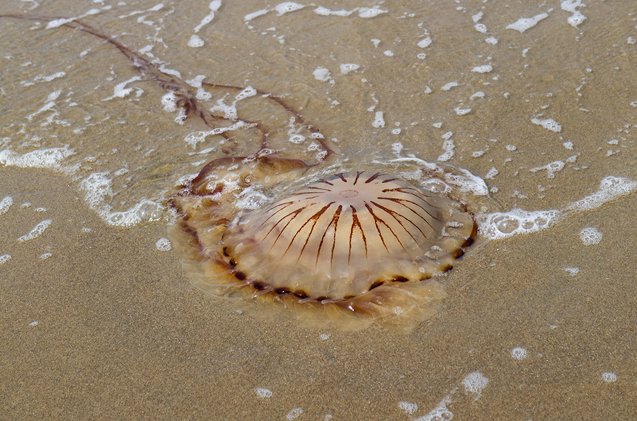
One has to wonder what you do when the more “exotic” injury occurs like a snake bite or worse… you’re walking along a beach when Rover steps on a jellyfish!
Related:
5 Cool Ways To Keep Your Pet Safe This Summer
I can tell you from googling sites for human stings that any interaction with these gelatinous blobs hurts. Seriously hurts. So you’re going to need to jump in with quick and decisive assistance ASAP in order to minimize the pain and actually prevent the injury from spreading.
Right off the mark, understand that this type of injury isn’t akin to a bee sting that will diminish over time. A jellyfish sting releases thousands of extremely small barbs that hook into your skin and release venom. Get the picture? The venom typically causes a painful red rash but can also result in illness so take it seriously.
Related:10 Essential Tips For Camping With Your Dog
When it comes to how badly your pooch has been injured, you may want to consider this human-grade criterion for determining if a trip to emergency is needed:
First Step:
The first step in effectively dealing with the situation is to immediately remove the barbs from your pet. Remember these tentacles can continue stinging and releasing venom so he needs to remain perfectly still and you need to safeguard your hands and fingers in the process. Try using the edge of a credit card or sticky tape.
Lift that Leg:
Next, you need to neutralize the pain by pouring warm saltwater over the affected area. Note that warm saltwater is the recommended neutralizer by health care professionals (over plain water, vinegar or the folklore cure of urine). In fact, research suggests that applying vinegar can increase the amount of venom fired by the nematocysts by as much as 50 percent.
Treatment:
After all tentacles have been removed you should clean any open sores with plain warm water and bandage as needed. The removal of all stingers means you now don’t need to worry about the nematocysts re-activating and spreading venom.
For treatment of pain only after all tentacles have been removed, you can alternate cold and heat – cold compresses (ice wrapped in a cold, wet washcloth) help numb the sting and reduce swelling. Apply them for 10 to 30 minutes. Then, alternate with a towel covered hot compress, 5 minutes on and 5 minutes off until it cools, to bring healing blood back into the area and flush out the poison. You’ll need to alternate cold and hot packs for 20 minutes.
Another option for pain alleviation after tentacle removal is a baking soda-fresh water paste that you can layer on the affected sites to help soothe the stinging sensation. Additionally topical treatments such as calamine lotion can help ease the pain and an antihistamine such as Benadryl can alleviate any allergic reaction – always seek veterinary advice and assistance for the correct dosage for your dog.
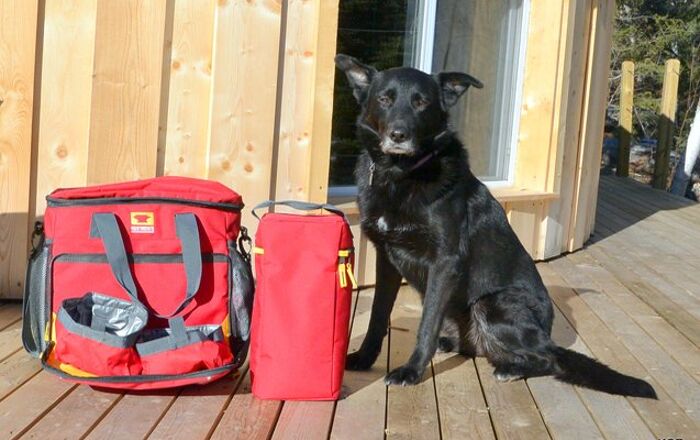
Now realistically, when I walk along a beach with my pooch I tend to have a small wrist-bag that includes sunblock, my iPhone, glasses, keys, poop bags and some cash. But after researching that article, I’m going to have to upgrade to a tote bag to carry a jellyfish emergency kit.
In sunspots known to have jelly-fish it makes sense to also pack a credit, debit or key card (for scraping tentacles off before you get him back home for treatment) as well as the local vet on speed dial in case an emergency intervention is needed.

Mary Simpson is an animal-loving writer and communications professional. A soft touch for anything stray, she shares her century home with an eclectic collection of rescues that include orange tabby Chico, tuxedo Simon, and jet black Owen. She enjoys running, politics, exploring local wine regions and is an avid supporter of the “shop local” movement.