
Goldenapso Basics
The friendly Goldenapso delivers a wonderful mix of the sweet-natured and gentle Golden Retriever and the often, mischievous little Lhasa Apso. This fun family dog is loyal to a fault and is likely to follow his pet parent around the house to see what they’re up to and if he can join in. Yes, he considers himself a big part of the family and gets along well with kids and other pets alike. He’s active – but not overly so – and in spite of the “small dog” DNA is this pooch, he’s a calm pooch that isn’t yappy and can actually be quite independent – which means he may not pick up the Golden’s tendency to suffer from separation anxiety when he’s left on his own for longer periods. He is a protective little guy and will be quick to bark at strangers until he knows all is good, but he is not an aggressive dog.
The friendly Goldenapso brings together the gentle nature of the Golden Retriever and the mischievous personality of the Lhasa Apso.
Origin

The Goldenapso’s Designer Dog status means he likely first appeared on the scene 30 or 40 years ago when breeders first began crossing two (or more) popular pure-breds to produce a dog that was healthier, often non-shedding and sometimes smaller and gentler than many of the parent breeds. With the Goldenapso, his parent breeds include the Golden Retriever and the Lhasa Apso and while he himself is a relatively new breed, both his parents have some rather impressive history. The Golden Retriever was developed in Scotland back in the mid-19th century to fill the need for a hunting dog that was adept on land and in water and could bring back waterfowl with a gentle “mouth” meaning without damaging the bird. These days there are American, Canadian and British versions of the Golden, all of which have that iconic gentle nature and sweet personality. Now the Lhasa Apso has some pretty serious history and dates back to around 800 BC in the Himalayan plateau regions of Tibet. He was bred as a watchdog to alert Buddhist monks to intruders and considered sacred… which might explain his sometimes aloof personality.
Pedigree
With the American Kennel Club (AKC) committed to advocating for pure-bred dogs, the Goldenapso doesn’t qualify to become a member however both of this Designer Dog’s parent breeds are long-time members; the Lhasa Apso joined the club’s “non-working” group back in 1935 and is described as confident, smart and comical. Meanwhile, the much-loved Golden Retriever became a member of AKC’s “sporting” group in 1925 and he’s considered to be a friendly, intelligent and devoted. What a mix!!
Food/Diet
A nutrient-rich food that is specifically designed to meet your Goldenapso’s age, weight and activity level is ideal for this dog. Although this is an energetic breed who loves to be out and active, he can be prone to obesity and particularly when you have a dog that may inherit joint issues later in life, it’s important to establish a feeding routine that will satisfy his hunger but also help him maintain an ideal weight. For that reason, it’s recommended that this dog not be free-fed but be given 2 to 3 smaller meals throughout the day and that his diet consist of protein-rich foods that will help keep him satisfied versus fillers (carbohydrates) that may leaving him constantly peckish and constantly mooching food from his pet-parents or raiding the cat’s bowl. Typically, he will not inherit the flatter face of the Lhasa Apso which can make eating a messy challenge, but if he does, you should explore bowls with a tilt feature that allow him to access his food without having to bury his entire face into the dish.
The Goldenapso is loving, affectionate and often stubborn.
Training
While the Golden in your little Goldenapso is a keen people-pleaser with enough smarts to pick up commands quickly, the Lhasa Apso side is a little more headstrong and certainly brings attitude to the mix. As a result, you’re best to start training early – in the 8-week age range – before he becomes too set in his ways. Socialization is a big part of the training process with this little dog and it should begin as soon as you bring him home. Exposing him to new people, places and situations including puppy training classes will build a comfort level with different experiences and discourage anxious behaviors. As with most dogs, the Goldenapso responds well to a positive, rewards-based approach that means lots of verbal praise, appreciative pats and his favorite treats for a job well done. Because the Golden side of this pooch has such an eager-to-please personality, any training where he has the opportunity to show you he can pick up and respond to your commands will go a long way in building a positive bond between you and your dog.
Weight
When your Goldenapso has reached maturity, he will weigh somewhere in the range of 40 to 50 pounds. Less than the Golden but much more than the Lhasa Apso. This weight will vary depending on the dog’s gender as well as how heavily the DNA from each side of his parent breeds influences his make up.
Temperament/Behavior
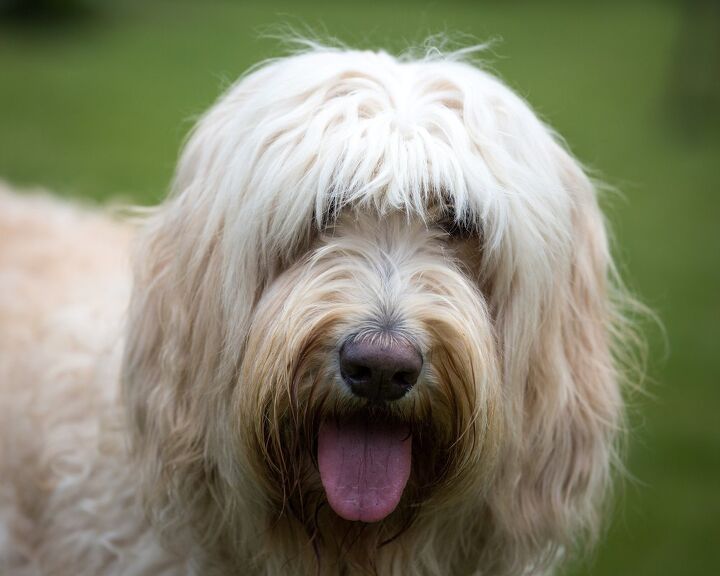
The Goldenapso brings a friendly, family-oriented personality that is loving, affectionate and comfortable with kids, pets and other dogs once socialized. While he loves to be involved in all family activities, he isn’t considered a needy type of dog and likely picks up on the Lhasa Apso’s tendency to be rather independent. While this may make for a dog that does well on his own, the Golden is notorious for suffering from separation anxiety, so it may be luck of the draw with this pooch in terms of whether he’s okay with being left on his own for longer periods of time. The “small dog” side of this pooch also brings a bit of a headstrong nature that can often get him into trouble when he’s decided he’s his own boss. This little guy is loyal, protective and won’t hesitate to bark to let you know he sees a stranger or hears sounds and while he makes a great watchdog, he isn’t aggressive or overly yappy – he’s great for just barking when he feels it’s needed. He will need socialization to ensure he knows how to behave around new faces and other dogs but is a snap with training and should be on his best behavior in no time.
Common Health Problems
While Designer Dogs are typically healthier than their pure-bred parents, it’s always important to do your research to understand what your new pup may inherit from down the line from his parents. With the Goldenapso, this can include certain cancers from the Golden Retriever as well as joint issues such as hip dysplasia. From the Lhasa Apso, your new pup may experience vision issues including cataracts and Progressive Retinal Atrophy (PRA). But don’t be alarmed by this list of issues because the Goldenapso is still considered a fit and healthy little dog that might never suffer from any of these issues during the course of his lifetime.
Life Expectancy
Your Goldenapso will need regular exercise, a top-quality food designed for his age and size as well as preventative maintenance check-ups with your vet to ensure he lives a long, healthy life. As a result, you can expect him to live between 10 and 14 years; which is a good age for a medium sized dog.
Exercise Requirements
Take advantage of your Goldenapso’s love of activity to help him stay both physically fit and mentally stimulated. Because this pooch can have a tendency to put on weight, there is a need to keep him moving and rain or shine, this should become an important part of his daily routine. He’ll love chasing a ball in a fenced backyard or running and interacting with other dogs, so be sure to schedule this type of playful activity into his regular exercise regimen. While he’s great for a good long walk or hike, he will likely inherit the Golden’s need to be useful so retrieving a ball or Frisbee is a great opportunity to show off his agility and his ability to take direction. This boy needs to be in motion to help burn off some of his energy and if you aren’t able to meet this daily need you may find he resorts to destructive behaviors such as chronic barking and chewing.
The Goldenapso brings a friendly, family-oriented personality that is loving, affectionate and comfortable with kids, pets and other dogs once socialized.
Recognized Clubs
Being a cross of two different pure-bred dogs, the Goldenapso (also known as the Goldenlhasa) doesn’t qualify to join the coveted American Kennel Club (AKC) which is dedicated solely to promoting pure-bred dog breeds. He is however, recognized by the International Designer Canine Registry (IDCR) and the Dog Breed Registry (DBR).
Coat
Your Goldenapso is the offspring of two long-haired breeds: The Golden Retriever and the much-longer-haired Lhasa Apso which means you’re going to have a long-haired dog that will typically have a soft, wavy coat that needs daily brushing to ensure his flowing locks remain matt- and tangle-free. In spite of the need to brush, the Goldenapso is not necessarily a heavy shedder. While the Golden is known to shed seasonally, the Lhasa Apso has a much longer growth cycle which means shedding will be nominal and sporadic (but constant) throughout the year. Clean up should be much simpler than a double-coated dog and keeping hair in check will be fairly simple (though lint brushes are recommended). This is a floppy eared dog and with that much hair it’s important his ears be inspected and cleaned weekly – which is as simple as doing a quick wipe with a damp cotton ball. Failure to clean can result in dirt and bacteria building up and the result being a smelly yeast infection that is uncomfortable for your pooch and off-putting for pet parents. Particularly if your Goldenapso is prone to swimming, ear inspections are essential to ensure the inner ear and flap have dried properly to prevent moisture build-up.
Puppies
Goldenapsos will typically have a litter of between 6 to 8 puppies that can be gently handled from birth – as long as mom’s okay with that. These pups can grow to inherit the Lhasa Apso’s stubborn streak so it’s best to begin training while they are young and less inclined to resist instruction. Socialization is also key to ensuring this pooch becomes a great family dog and it can be as simple as slowly, gradually exposing him to new situations such as different sounds, smells and new faces. The goal is to help this little puppy gain confidence and that’s why you need to keep all these new interactions positive and controlled. Your smallest family member will also have a very healthy appetite that needs to be monitored and capped as he reaches maturity (near the 12-month mark). Obesity from over-eating and being fed those tasty but fatty and carb-laden treats can be a problem with the Goldenapso and when coupled with joint issues later in life, this can present serious problems as he ages.
Photo credit: Daz Stock/Shutterstock; Joy Baldassarre/Shutterstock; Image Alleviation/Shutterstock