How to Crate Train Your Dog

Published A Few Days Ago
ADVERTISEMENT

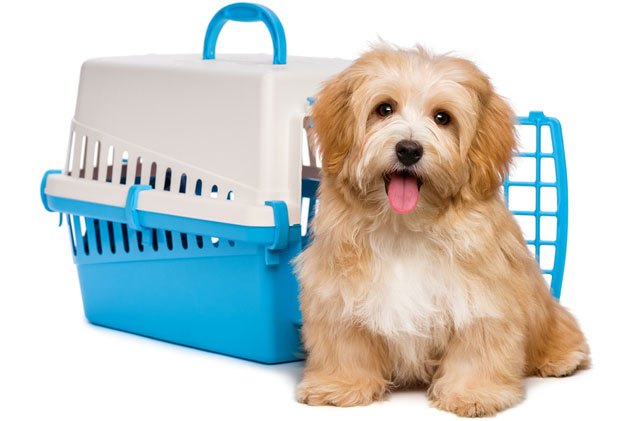
To a dog, a crate is a home within a home. It’s a safe den to chill in, or to recuperate – here’s how to crate train your dog.

Crates provide a number of benefits – they offer your dog a den, a place to go when they want to get away from the noise, or when he’s not feeling well. But it also offers a big benefit to you as well. As a pet parent, it’s in your best interest to housetrain your dog. While it is certainly possible to train your dog to do his business on pee pads indoors, it’s not the most sanitary solution and can cause a mess. Though housetraining a dog may seem like a long and complicated task, it is actually quite simple if you use crate training.

Getting Your Dog Used to the Crate

Some people believe that confining a dog to a crate is cruel. While this is certainly true if you use the crate as a form of punishment, proper use of a crate can actually be good for your dog.

Related:Keeping Your Dog Safe During A Thunderstorm

Having descended from wolves, dogs like to have a space they can call their own – a den, if you will. If you condition your dog to have a positive response to his crate, he will come to think of it as his den and he will be perfectly happy spending time there. In fact, even after you finish crate training your dog, he will probably voluntarily spend time there when he wants to take a nap or when he just needs a break from family.

The trick is to get your dog used to the crate before you start crate training to prevent him from forming a negative association with it. Try throwing some treats into the crate – you can even feed your dog some of his meals in the crate with the door open to help him get used to it.

Related:Why You Should Start Puppy Crate Training Now

Steps for Crate Training a Dog

After you’ve gotten your dog used to spending time in the crate, the process of crate training is actually quite simple. The key is to keep your dog in the crate when you are not able to watch him yourself – this will help to reduce the risk of him having an accident in the house until he fully learns to do his business outside and outside only. Here are the steps to follow for crate training:

Every dog will respond to crate training differently. For some dogs, you may achieve success in a matter of two or three weeks, though some dogs might take months to fully get the hang of housetraining. Just be firm and patient with your pup during training and eventually you will get there.
ADVERTISEMENT

ADVERTISEMENT

You May Like

Product Review: The Monster Factory’s VW Campervan Pet Carrier

We flashback to the ‘60s with The Monster Factory''s VW Campervan Pet Carrier. If the van is a ‘rockin... it''s because my two dogs fit inside of it.

Texas Heeler

An excellent watch and herding dog, the Texas Heeler is a hybrid breed resulting from the crossing an Australian Cattle Dog and Australian Shepherd Dog.

Westphalian Dachsbracke

The Westphalian Dachsbracke comes from a long line of hunting dogs. This short-legged German breed is alert, active, and energetic.

Kickstarter Gloves Keep You Warm While You Scoop The Poop

Walkease winter gloves for dog owners promise to make long walks in the cold easier to bear. Can''t say the same from picking up poop, though.

How to Solve the 7 Most Common Kitty Litter Problems

From peeing in miscellaneous places to suddenly refusing to use the litter box: here''s what your cat is trying to tell you.

Adoptable Dog of the Week – Spike

Our Adoptable Dog of the Week is Spike, a 3 years old Labrador Retriever and German Shepherd mix from Richmond, Virginia. Spike is neutered and vaccinated.

4 Basic First Aid Tips For Cat Emergencies

Know what to look for before an emergency with these first aid tips for cats Knowing what steps to take during an emergency involving your cat can be the dif…

Sealyham Terrier

Fun-loving and typically the clown of the family, the Sealyham Terrier is playful and comedic. He is content to be left alone while you''re gone for the day.

Is There A Difference Between Natural Vs Organic Dog Food?

Aren’t they the same thing? Nope – here’s how to make the choice between Natural or Organic dog food When it comes to choosing a food for y…

Australian Labradoodle

The Australian Labradoodle is a cross with Poodle, Labrador Retriever, American and English Cocker Spaniels, Irish Water Spaniel and Curly Coated Retriever.

Romanian Mioritic Shepherd Dog

One glance at the Romanian Mioritic Shepherd Dog is all it takes to know that this breed was developed for herding and guarding livestock.

Gouldian Finch

If you''re looking to get a pet bird to liven up your days and bring you some fun - then look out for the rainbow-colored Gouldian finch!

Checkered Giant Rabbit

The Checkered Giant was first known as the Land Kaninchen. It has a muscular build and a long, hare-like body with a semi-arched/mandolin body type.

Pumi

A multi-functional dog, the Pumi is often used as a sheepdog, guard and hunting dog. He fits in to a family setting and makes a wonderful companion.

Best Raw Cat Foods

Raw cat foods are a healthy alternative to commercial pet foods laden with artificial ingredients and cheap fillers that could seriously harm your pet.