Irish Wolfhound Basics
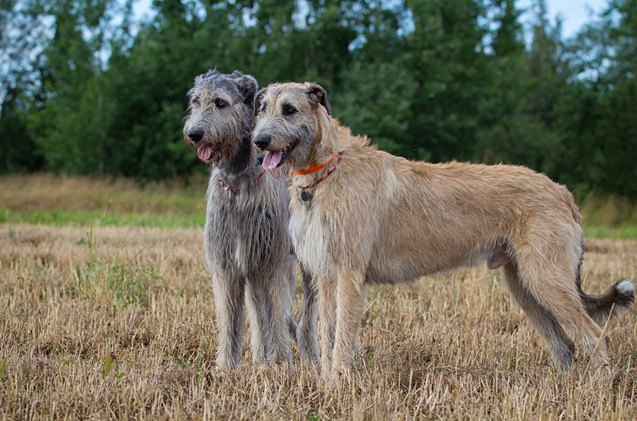
Known as the tallest of dog breeds, Irish Wolfhounds are truly gentle giants. This breed is famous for being easy going, soft natured, calm, sensitive, sweet, and patient. A relatively good watch dog that can provide some protection, the Irish Wolfhound is excellent with children, strangers, pets, and other dogs.
Friendly and loving to its owners, the Irish Wolfhound is intelligent, which makes it an easy dog to train. It needs regular exercise so it can stretch those long legs. If you’ve been toying with the idea of bringing an Irish Wolfhound into your home, read on to find out more.
Known as the tallest of dog breeds, Irish Wolfhounds are truly gentle giants.
Origin
Experts believe that the Irish Wolfhound was brought to Ireland from Greece as early as 7000 BC. During the 1st century, this breed was used in wars (Irish Wolfhounds could take a knight off his horse) and as guard dogs. Irish Wolfhounds were also used as hunting dogs and to protect a farmer’s stock.
In the 19th century, Irish Wolfhounds were only allowed to be owned by royalty, and because of this exclusion, the breed almost became extinct.
Pedigree
After its close call with extinction, the Irish Wolfhound was bred with the Great Dane, Barzoi and Deerhound.
The Irish Wolfhound was recognized by the AKC in 1897.
Food / Diet
You should feed your Irish Wolfhound a quality diet that features the proper balance of protein, carbs, fats, fiber, vitamins and minerals. Choose a high-quality commercial dog food, a natural brand that comes with human grade food and no fillers or meat by-products.
This breed is famous for being easy going, soft natured, calm, sensitive, sweet, and patient.
Training
Training an Irish Wolfhound is quite easy, since this breed is intelligent and loves to please. Start training as early as possible, as you will find a puppy easier to handle. Start your training with leash control. The Irish Wolfhound likes to pull on the leash, so you need to teach your dog that this behavior is unacceptable. Leash training is especially important because as your dog grows bigger, it will have no problems dragging you along on its leash.
The best way to train an Irish Wolfhound is to be consistent and patient. When your dog follows a command, reward it with a treat, and when it does something wrong, firmly but positively correct the behavior.
Because the Irish Wolfhound is smart, it will quickly understand what is expected. You should continue to work with your dog, even when it starts to mature. As well, be sure to socialize your Irish Wolfhound with other dogs and people so that it does not become frightened.
Weight
Male Irish Wolfhounds weigh 110 to 120 pounds, while females weigh 105 to 115 pounds.
Temperament / Behavior
Since Irish Wolfhounds are so loving and friendly, they do not make good guard dogs. But if you are looking for a dog as a companion and best friend, you will find that the Irish Wolfhound fits the bill perfectly.
A wonderful companion and a great pet, the Irish Wolfhound is loyal, smart, calm and loving. The more kids, the merrier – the Irish Wolfhound is great with children of all ages. Even during playtime, this dog is gentle.
Common Health Problems
Just like all dog breeds, the Irish Wolfhound can suffer from health problems. Some health issues that are common to this breed are bone cancer, cardiomyopathy, hip dysplasia (a type of arthritis that affects large dogs which is painful and decreases the ability to walk or run), Von Willebrands, PRA and bloat (caused by feeding your dog too much food at one time) and could require surgery.
To keep your Irish Wolfhound healthy, make sure to take your dog out for regular exercise and visit the veterinarian when needed.
Life Expectancy
Irish Wolfhounds have a short life expectancy of 6 to 8 years.
Exercise Requirements
This is one large dog and it needs a large area to play and exercise in. You’ll need to take your Irish Wolfhound out for a walk or run at least twice a day. You can incorporate your dog’s exercise routine into your workout routine if you like to ride a bike, run or rollerblade. This is where leash training comes in handy, so be sure to start this training from the time your dog is a puppy.
A relatively good watch dog that can provide some protection, the Irish Wolfhound is excellent with children, strangers, pets, and other dogs.
AKC
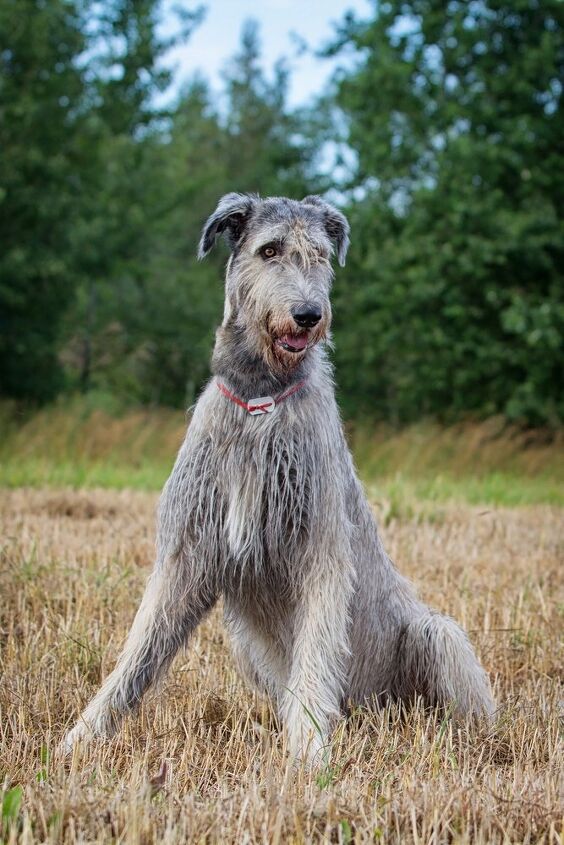
The American Kennel Club says this about the breed: “An Irish Wolfhound must be “of great size and commanding appearance.” He has a large, muscular greyhound-like shape, and he is the tallest of dogs, but not the heaviest. A superb athlete and an endurance runner, an old Irish proverb describes him perfectly: “Gentle when stroked, fierce when provoked.”
Coat
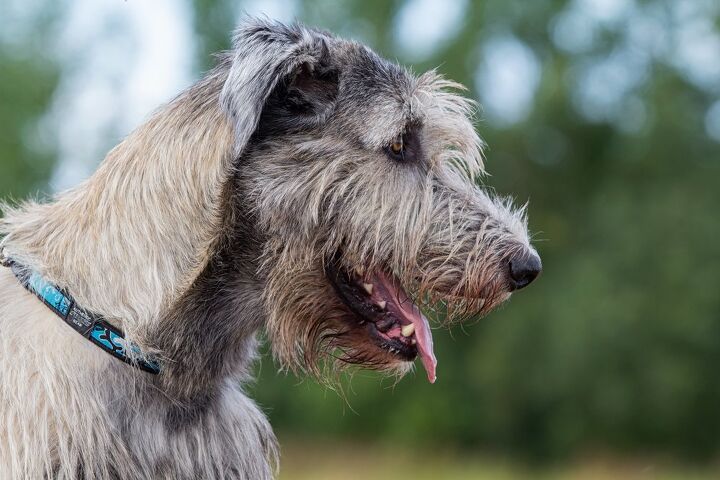
The medium/long haired Irish Wolfhound sheds a fair amount – don’t be surprised if you find hair stuck to pretty much everything in your house. You’ll have to brush its shaggy coat at least twice a week in order to keep shedding under control. There is a range of coat colors but grey is the most common.
You’ll need to take your Irish Wolfhound to a professional groomer to have its hair plucked – this is a process that removes dead hair.
Puppies
Even as puppies, Irish Wolfhounds are still big. You can expect your puppy to reach adult height by about six months of age. In the way of training, start leash training as soon as your puppy comes home.