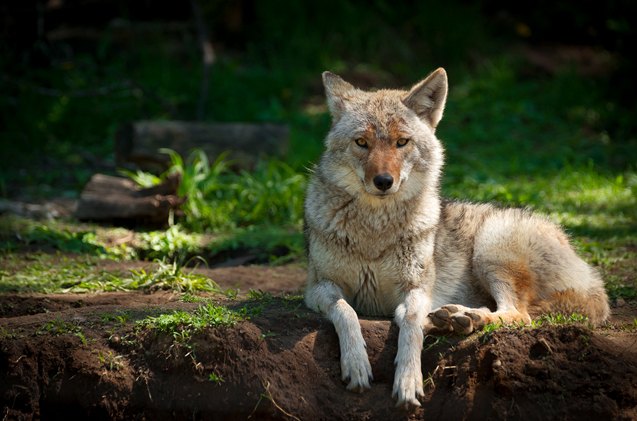
With human developments expanding into wooded areas, it’s not uncommon to hear of coyote attacks on pets close to home. Here’s how to protect your furry loved ones.
Depending where you live, the possibility of a coyote hurting your pet may not have ever crossed your mind. The fact of the matter is, however, that coyotes live in all fifty states except for Hawaii, and in Canada, have spread north into the boreal forest, west into the mountains, and east into Ontario, Quebec, and the Atlantic provinces. They actually thrive in populated areas, eating garbage and preying on pets. The danger of wild coyotes for your pets is real, even if you have never seen one near your home. If you hear of a coyote sighting in your area, here’s a list of tips for keeping your pets safe.
Related:What Animals To Watch Out For While Hiking With Your Dogs
The Threat of Coyotes
In the United States, coyote populations have spread along the eastern seaboard. While some coyote species are the size of a small dog, the Eastern Coyote is large enough to take down a deer – that makes your toy poodle barely even a challenge. Coyotes can be found even in heavily populated areas like Manhattan and they even have the capacity to attack humans, as rare as the occurrence may be. Every year about 4.5 million Americans experience a dog bite, compared to less than 200 coyote vs human attacks annually. Even though the likelihood of you coming across a coyote may be low, depending where you live, you should still take some steps to ensure the safety of your pet.
Basic Coyote Safety Tips
If you happen to see a coyote, do something to drive it away – don’t shoot at it for the safety of others around you, but throwing a rock near it is a good idea. Many local governments in areas known to house coyotes encourage people to do this because it will keep the coyotes in fear of humans so they are less likely to wander into places where humans (and their pets) live. To keep coyotes off your property make sure to close any gaps in fences, under porches, and into sheds. Ideally, you should bury mesh wire at least 18 inches into the ground around the fence surrounding your property to keep coyotes from digging under the fence to get at your pets.
Related:Road Tripping With Your Dog
Coyotes are carnivores, but they are also scavengers so they are just as likely to get into your garbage as a raccoon or a bear. Keep your garbage cans locked away or do not take the trash out until the morning when it is scheduled for pickup. If you have a compose pile in your yard, enclose it with a strong fence at least 6 feet tall to keep coyotes out. You should also be sure to clean up outdoor areas that have a smell of food – this includes pet bowls, fallen fruit from trees, and grills. Even birdfeeders play a role in attracting coyotes because they prey on the birds that visit the feeders. Below you will find a list of additional tips for keeping coyotes away:
In addition to following these basic tips, make sure to keep your pets locked inside at night when coyotes tend to hunt. Even during the day, however, you should keep an eye out for coyotes and report them immediately to animal control if you see them.