
Large Indian Parakeet General Info
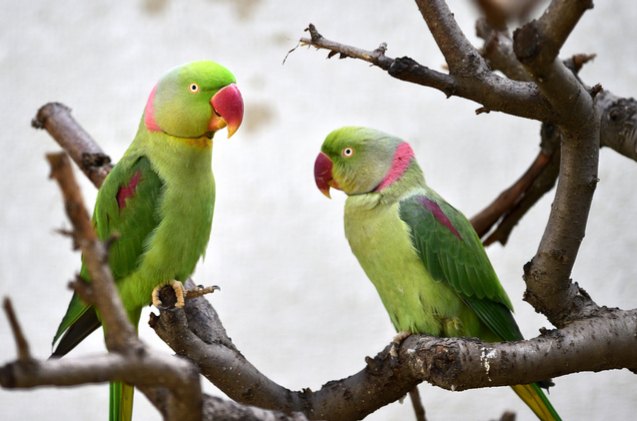
Considered to be one of the largest parakeet breeds, the Large Indian Parakeet is more commonly known as the Alexandrine Parakeet. These intelligent, energetic parrots are highly popular worldwide and have been so for hundreds of years. With their radiant personality, unique and pretty looks and good companionship, they offer something for every owner. Owning one of these parrots is a wonderful journey and a rewarding experience – one that will enrich your life and your family.
Did you know that Alexandrine parakeets get their name from Alexander the Great? He owned one and introduced them to the courts of the Ancient World.
Native Region/Natural Habitat
The Large Indian Parakeet is found in a vast region that includes countries such as Pakistan, Afghanistan, India, Nepal, Bhutan, and Sri Lanka. They thrive in woodlands, mangrove fields and dry and moist forests that are found in the region. These parakeets are also often seen in many of the world’s capitals, where feral, escaped populations have been established. They are found in Spain, Germany, Japan, Hong Kong, United Arab Emirates, Qatar, Turkey, and many more. In most of these countries, they are a loved sight and a recognizable local symbol.
Overall Description
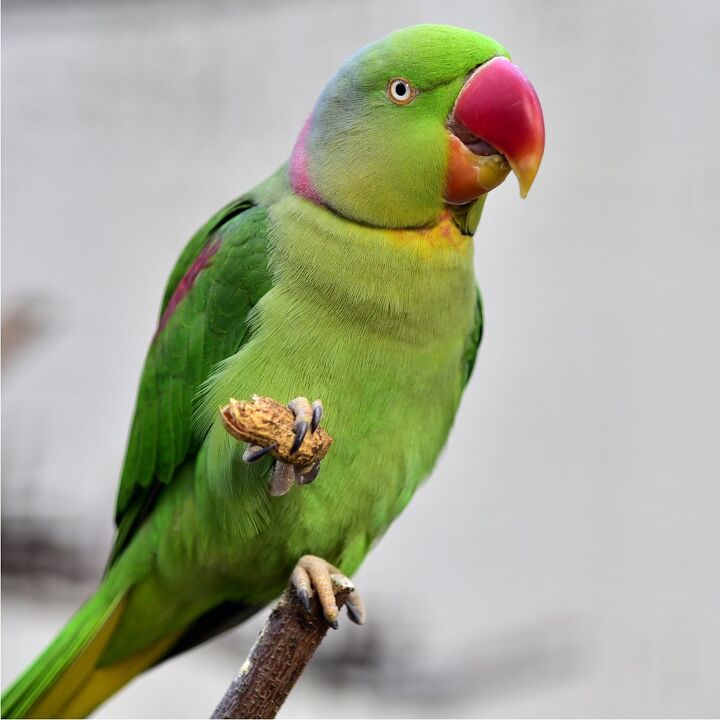
Mostly similar in appearance to their nominate species, the Large Indian Parakeet is slightly, but noticeably larger and stand apart with a few key details. The adults reach an average length of up to 24 inches (60 centimeters) and can weigh around 9 ounces (260 grams). Their main feature and one that makes them so easy to recognize is the extremely long tail. Their tail feathers often measure as much as 14 inches (35 centimeters), which makes up for most of their overall length. When you take this into consideration, you will understand that these parrots will need a lot of room and a spacious aviary or a cage. Without proper exercise, many health issues can occur. Keep this in mind.
Speech and Sounds
A lot of owners are satisfied with the loudness levels of a Large Indian Parakeet. While they are not overly vocal, they can express their excitement or surprise with loud, screeching natural calls. But when things are running smoothly, these can become rare. They can also learn to repeat a few words and mimic the basic sounds, but they are not too skilled as talkers, so you shouldn’t expect a lot. But when combined with the size of these parrots, it becomes clear that an apartment setting just might not work.
Colors
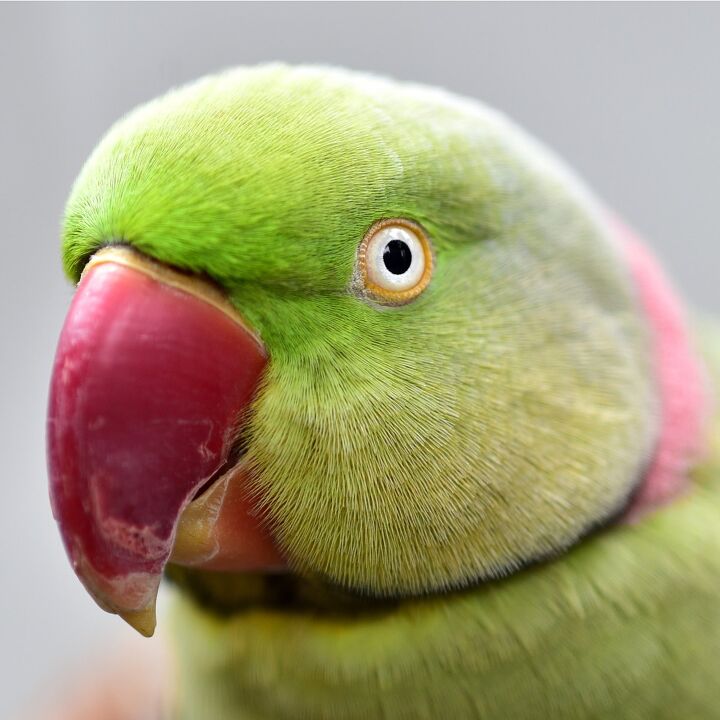
Although simply colored, the Alexandrine parakeets all share the same charm and a unique beauty that only they have. With a few key details, Large Indian Parakeet can be easily spotted. The body is almost entirely green, with darker shades on the wings and back and lighter, grey-green tones on the underside. On the back of the head, males have a wide pink band and a black stripe in the front. This is a feature that females don’t have. With light blue on the cheeks and back of the head, and with small red patches on the shoulders, this look is tied down and complete. With a few distinct details, we are shown that flashy colors, bright patterns, and exotic looks are not what makes a beautiful and charming parrot.
You can easily recognize the females because they lack the distinct ornaments on the neck.
Care and Feeding
In its natural habitat, the Large Indian Parakeet will thrive on a variety of seeds, insects, fruits and agricultural crops. They often invade plantations in India, destroying valuable crops in the process. For your pet, you will want to base their diet on a commercial seed mix for parakeets, which includes all the important varieties and nutrients. Supplement this with fresh fruits and vegetables, and you’ll have a finely balanced diet that will serve as the foundation of good health for your pet parrot.
Health and Common Conditions
One of the best traits of Large Indian Parakeet is its endurance and the ability to adapt. That is the very reason they managed to become so widespread and popular. With just enough good care and adaptation, your pet will thrive and flourish with your help. They have an average lifespan of around 40 years, which makes them great companions and lifelong pets. The things you’ll want to focus on are a balanced diet, a regular and maintained hygiene and plenty of social interaction.
Did you know that some of the oldest Hellenic mosaics depict Alexandrine parakeets?
Personality & Behavior
With its interesting and unique personality traits, Large Indian Parakeet has won over the hearts of many owners around the world. They are most energetic and playful, with great intelligence as well. These parrots won’t fail to surprise you with new tricks and fresh ways to entertain themselves. And when they show you their affectionate, cuddly side, you will be smitten! This mix of energy, playfulness, and cuddliness will offer something to every owner, which is the very thing that makes the Large Indian Parakeet so popular around the globe. Photo credit:Wang LiQiang/Shutterstock