Papuan King Parrot General Info
Large, unique, and exotic, Papuan King Parrot is the go-to choice for an aviary. This breed is one of the three distinct members of the King parrot family, and they are also known as the Green Winged parrots. Although rare, these birds make good pets. Active and very smart, they will need a lot of space, though – that’s why an aviary is the best choice. Papuan King Parrot is not very loud and has a friendly, docile personality that makes him a great companion for seniors and singles.
These unusual parrots are smart, docile, and friendly- all of these traits make them a great pet for seniors and singles.
Native Region/Natural Habitat
These parrots are native to New Guinea. They cover the entire region of this large island, and they thrive in the regional dense forests. Surprisingly, they can be spotted even at altitudes of 2600 meters. They also like sparse growths and casuarinas. An interesting fact about wild Papuan King Parrot is their tame nature, even when not in captivity. A wild bird can be easily approached – if spotted. They tend to be very quiet and hard to notice in the dense growth. The populations are stable and quite common.
Overall Description
All of the three members of the King parrot family share a lot of similarities. What they all have in common is a majestic, elegant appearance crowned with feathers in exotic colors. And it’s the colors that set them apart from each other. The adults reach an average length of 14 inches (36 centimeters) and can weigh around 7 ounces (200 grams). These are robust birds – they require a lot of space. One distinguishing feature is the long and strong, broad tail which not often seen in the parrot world. Owing to their physique and friendly personality, they’re best kept as aviary parrots. If you keep them in a cramped page, it’s certain that your pet will feel neglected, lonely and bored, leading to its poor health.
Speech and Sounds
The exotic breeds of Guinea and Australia are not exactly known for their quietness. That is where the Papuan King Parrot stands out. Like its cousins, this bird is also not too noisy, making them acceptable as apartment birds – provided there is ample room for them to spread their wings. This quiet behavior is directly related to their relatively docile personality. These are laid-back and relaxed parrots – but make no mistake, they don’t really like to be handled too much.
Color
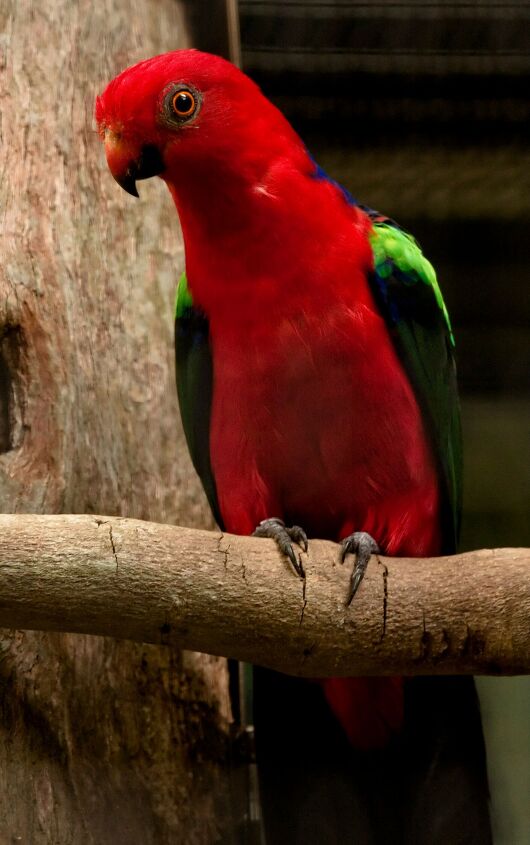
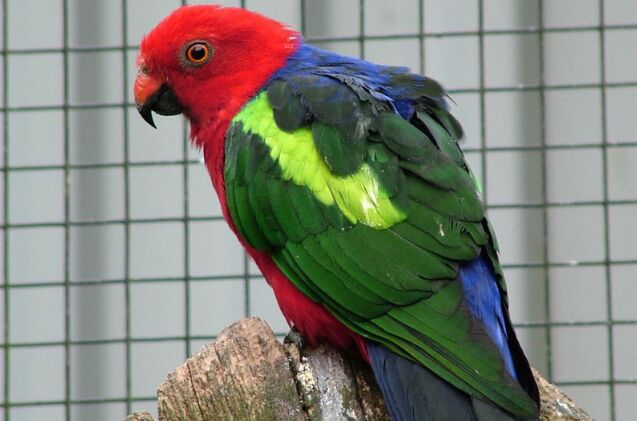
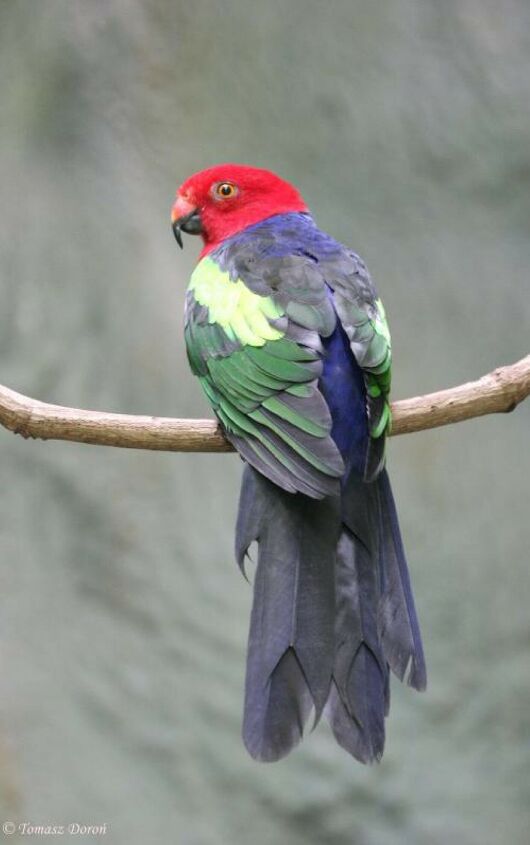
It’s the colors that make these parrots truly earn their name. The richness and vibrancy of their feathers gives off a royal impression, that’s for sure! The males and females are very different. Male Papuan King Parrot has a mostly red body, stretching from their head, down to the thighs. Their backs and rump are blue, with dark green wings. A unique detail is two very bright, almost neon strips at the shoulders. The females have much more green feathers, particularly on the head and chest. The striking colors and interesting variations definitely make this breed a sight to behold.
All breeds in the King Parrot family have noticeable differences between males and females.
Care and Feeding
In their natural habitat, these large parrots have a varied and very rich diet. It consists of various fruits, nuts, seeds, berries, insects and flower buds. When recreating this diet for your pet, you should give them an optimal mix of proteins and nutrients. Start with a small seed mix. This has the important canary, oats, safflower and hemp seeds. The next step is to include plenty of fresh fruits. Apples, pears, bananas and oranges, as well as some nuts, all make a good choice. Almonds and walnuts are a favorite treat for Papuan King Parrot.
Health and Common Conditions
If you want to buy a Papuan King Parrot, you need to keep in mind that they require a lot of space. If you don’t have a proper aviary, you can turn a small spare room into a parrot-friendly space. This is what most large parrot owners do, as a bird room offers plenty of flying space, free room, and ensures your pet is happy. Documented cases of lonely and lethargic King parrots all come from birds that were kept in small cages.
For a Papuan King Parrot, an aviary or a bird room make the best living conditions.
Personality & Behavior
It is rare that bigger pet birds such as Papuan King Parrot are so calm and friendly. These lovely birds can surprise you with their shy and docile demeanor, as well as their intelligence. They react to new situations in a careful, but inquisitive way. Papuan King Parrot will also like to play – who doesn’t if there are fun toys around? Provide a lot of ropes for swinging and untreated, real branches. They will act as perches and chewing material. With a lifespan of around 25 years, you can count on your new pet to be a loyal companion for a better part of your life- and it will be a pleasure to spend it by their side.
Photo credit: Nico Rosseel/The Internet Bird Collection; Tomasz Doroń/The Internet Bird Collection; Peter Tan/Wikimedia Commons