Pudelpointer Basics
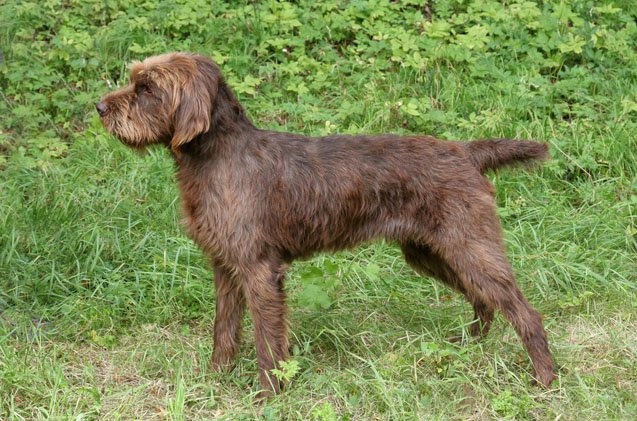
Looking at the Pudelpointer, you might not guess that he is a relative of the German Poodle because he has the characteristics of a Pointer. This breed was developed for tracking, pointing, and retrieving but his gentle and affectionate nature gives him potential as a family pet. If you are looking for an intelligent, trainable, hunting breed with a unique appearance, give the Pudelpointer a try.
The Pudelpointer was developed for tracking, pointing, and retrieving.
Origin
The Pudelpointer is a fairly new breed, having only been developed in the late 1800s. German breeder Baron von Zedlitz is credited for developing the breed, using the German hunting poodle (Pudel) and English Pointers to create what he believed to be the ideal pointing, tracking, and retrieving gun dog that was suitable for work on both water and land. Using 7 specific pudels and over 100 different pointers, Baron von Zedlitz achieved his goal over the course of 30 years of selective breeding. The Pudelpointer was first introduced in America in 1956 and while it has yet to be recognized by the AKC, it was admitted into the Foundation Stock Service in 2016.
Pedigree
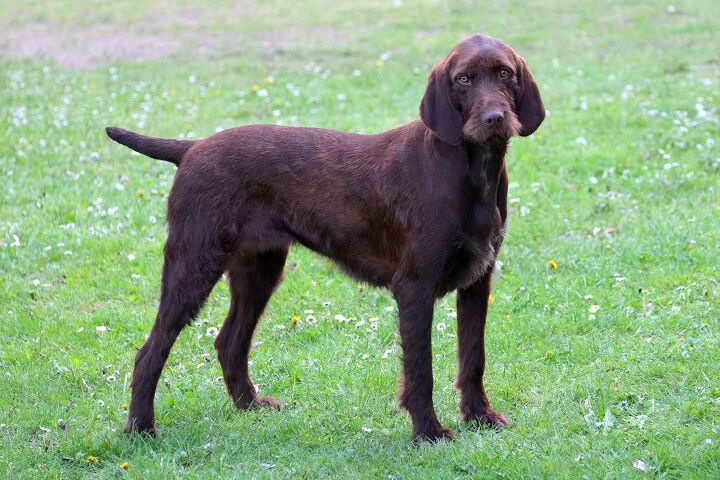
The Pudelpointer is the result of a cross between the German hunting poodle (Pudel) and the English Pointer.
Food/Diet
As a large-breed dog, the Pudelpointer should be fed a high-quality dry food formulated for large-breed dogs. You should also think about the fact that this breed was developed specifically for hunting – he may do well on an active or working breed formula. Just make sure you keep a close eye on your dog’s weight and body composition to ensure that he doesn’t gain too much weight.
The Pudelpointer is a very intelligent and trainable breed that was developed specifically for hunting.
Training
As a combination of two hunting breeds, the Pudelpointer is a very intelligent dog and relatively easy to train as well. This breed has a natural eagerness to please, so consistent training with positive reinforcement methods will work very well. It is best to start your Pudelpointer with socialization and training from a very young age but make sure that you continue the training throughout his life. This breed is not willful or dominant, but he does need a reliable pack leader.
Weight
The Pudelpointer is a medium- to large-sized dog, standing between 21 and 26 inches tall and weighing between 44 and 66 pounds at maturity.
Temperament/Behavior
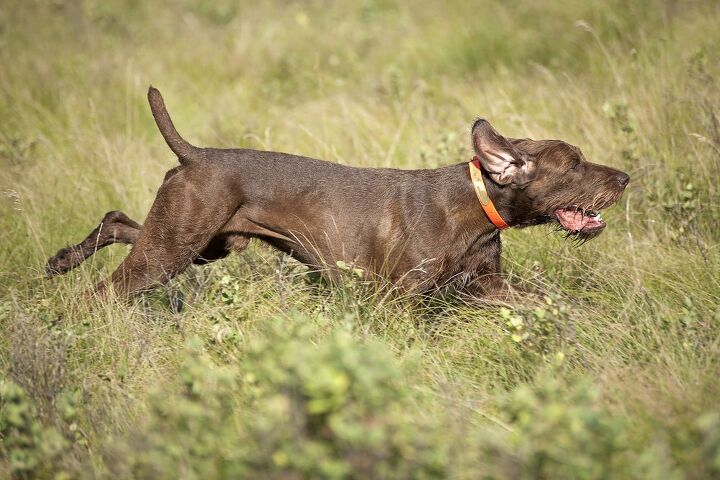
The Pudelpointer is a very intelligent and trainable breed that was developed specifically for hunting. This being the case, you should not expect your dog to act the same as the American poodles you may be used to. These dogs are enthusiastic and hard-working in the field and they can make pleasant companions at home, though hunting is their primary purpose. This breed is friendly and curious, as well as being easy to train and eager to please. They get along well with children and have a natural desire for affection so, as long as you have the time to spend with your dog, the Pudelpointer can make a good family pet.
Common Health Problems
The Pudelpointer is a generally healthy breed, though he may be prone to field injuries and ear infections due to his work. There are no inherited conditions known to affect the breed, but some of the health problems that could arise include things like hip dysplasia and bloat, simply due to the dog’s size.
Life Expectancy
The average lifespan for the Pudelpointer is thought to be about 11 to 14 years which is about average for a breed of its size. To maximize your dog’s lifespan, be sure to feed him a healthy, high-quality diet formulated for large-breed dogs or a formula for active breeds.
Exercise Requirements
As a hunting breed, the Pudelpointer is highly active and requires a great deal of exercise on a daily basis. These dogs need at least an hour of vigorous exercise each day and will also appreciate having a fenced yard in which to run. Training the dog for hunting and tracking is another great way to provide additional exercise, if you aren’t training him for hunting already.
The Pudelpointer has a natural eagerness to please.
Recognized Clubs
The Pudelpointer is not currently recognized by the AKC but he is part of the Foundation Stock Service (FSS) and is recognized by the FCI and the United Kennel Club. The FCI classifies him in Group 7 as a Continental Pointing Dog and the United Kennel Club as a Gundog.
Coat
Like most Pointers, the Pudelpointer has a dense coat of harsh, wiry fur. The coat is medium in length on most of the body with a dense undercoat with facial furnishings on the nose and lips. The Pudelpointer typically exhibits a dark brown color but it can range toward chestnut and lighter shades of liver or toward darker shades, almost black. The coat sheds very little, so only occasional grooming is needed.
Puppies
The average litter size for the Pudelpointer is 3 to 8 puppies, though larger litters are not uncommon for the breed. Because these dogs grow to more than 50 pounds at maturity, you should feed your puppy a large-breed puppy formula until he reaches about 80% of his expected adult size. At that point, switch to a large-breed adult or working breed formula to prevent him from growing too quickly. You should also start your Pudelpointer as early as possible with both socialization and training – these dogs tend to learn very quickly, so they can start from a young age.
Photo credit: Capture Light/Shutterstock; Barna Tanko/Shutterstock