Quaker Parakeet General Info
The Quaker Parakeet, or Monk parrot, as they are also known, is a cute and affectionate little parrot from South America. Amongst the most popular pet birds, these parakeets are quite the charmers. You too will quickly fall in love with their kind personality and goofy mimics. They have a lot of well-tempered traits that make them a perfect choice for a beginner’s pet parrot. They are very popular worldwide and easy to acquire from breeders and pet shops.
There are so many perfect, desirable traits that make Quaker Parakeets a highly popular pet bird.
Native Region/Natural Habitat
These parrots are native to the South American continent, mainly in the region of Argentina, Uruguay, and Brazil. They have a unique trait, being the only parrots that don’t nest in tree holes but instead create their nests out of twigs and branches. Unfortunately, this fact makes them more open to attacks from predators.
The Quaker Parakeets have introduced and feral populations all over the world. They can be seen in United States, Europe, Japan, etc.
Overall Description
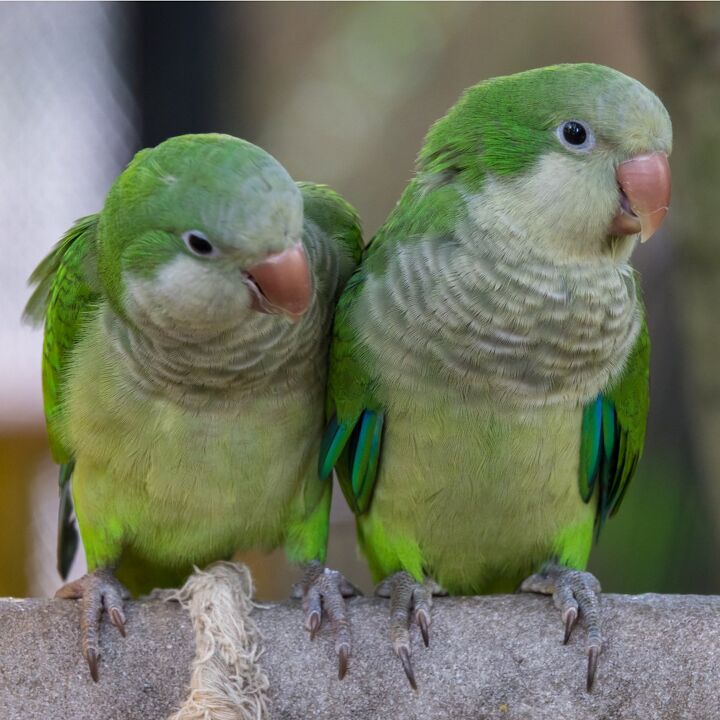
With a total size of 12 inches (30 centimeters), and a lot of it reserved for the tail, these parrots can be put in the small to medium category. On average, they weigh around 3.5 ounces (100 grams). These parakeets are zygodactylous. This means they have two little “fingers” facing forward and two facing back. This helps them grab food and hold it as they eat, but it’s also useful for climbing.
Speech and Sounds
Monk Parrots are full of mimics and goofs. They are quick to pick up common words and repeat them in a clear, distinct tone. These small birds can build up a small vocabulary of words they hear most often. Quaker Parakeets will also mimic human speech, similar to cockatoos – a hilarious mumbling conversation which they perform with all seriousness. While generally quiet and calm, the Quaker Parakeet will become noisy if neglected or frightened. Their call is loud and high pitched.
Colors
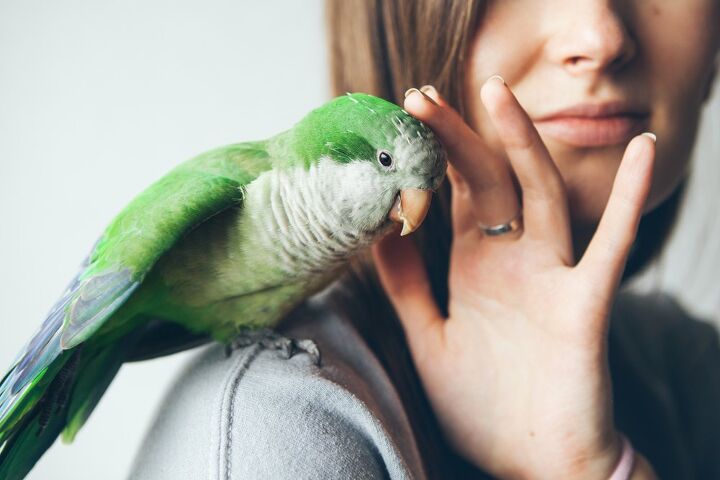
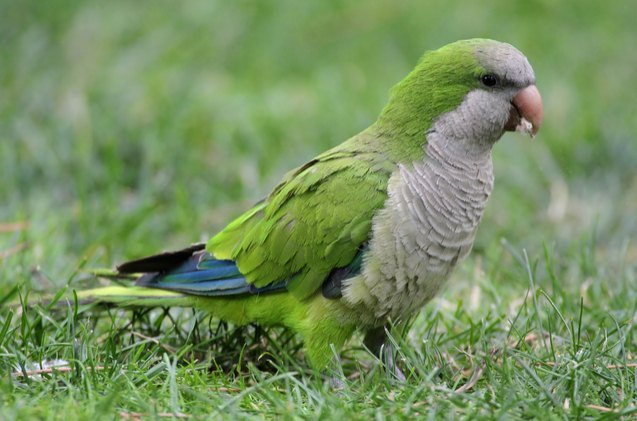
Their colors are lovely and toned down. Most of the body is light green, with slight yellow gradients in the abdomen. Their breast, belly, and face are light grey with subtle dark patterns. The flight feathers, on the underside of their wings, have a striking dark blue color. The overall combination of colors is soothing and evened out, making the Quaker Parakeet a pretty little parrot.
Quaker Parakeets are not exotic or too colorful. Instead, they boast a toned down mix of light colors.
Care and Feeding
There are a lot of varieties to consider when balancing your pet’s diet. For parakeets, the commercial store-bought seed and pellet mixes are the primary food choice. To even it out, regularly add fresh fruits and vegetables, almonds and walnuts, and cooked rice and chicken as well. To maintain good health, you’ll need to take care of your parrot’s hygiene. Offer them regular baths and bathing dishes. They will love them!
Health and Common Conditions:
These little parrots are quite hardy and enduring, with a remarkable ability to adapt to different conditions. To keep them in optimal health, you will want to pay particular attention to the conditions in your home. Avoid draft, cold or excessive heat. To satisfy their energetic behavior, a roomy cage is a must, as well as a lot of time outside of it, where they can play, goof around and enjoy all the cuddles they can get. To keep your parakeet in prime health, pay attention to their hygiene. If you neglect it, a lot can go wrong.
Good hygiene, plenty of room, and regular social interaction will make sure your Quaker Parakeet pet is happy and healthy.
Personality & Behavior
With plenty of perfect pet parrot traits, the Quaker Parakeets are the best beginner pet birds. They are usually calm and well tempered, with a cute and silly personality that will quickly knock you off your feet. Cuddling, playing, or learning new tricks are the favorite things for a Quaker Parakeet. While they are sociable and need a bit of interaction, they can also be satisfied playing on their own, with just a few toys or a perch in their cage. Their moderately long lifespan of around 20 years, as well as the ease of care, can make these parrots a perfect pet for seniors.
Photo credit: Mark Caunt/Shutterstock; LeQuangNhut/Shutterstock; Veera/Shutterstock