Anatolian Shepherd Dog Basics
Some folks like a dog that feels like a member of the family, others value the cuddliness of their canine companion above all else, and then there are those want want a dog who can go to work. A dog to help ease the burden off of their profession. It’s those latter prospective dog owners who will appreciate The Anatolian Shepherd Dog the most. This pooch is a hard worker. They are also amazing guard dogs, you’ll find that this breed is very loyal to its owner.
Easygoing and calm, the Anatolian loves kids and will happily spend hours playing with any youngsters around the house. This pup been known by many names: Anatolian Karabash Dog, the Kangal Dog, the Turkish Guard Dog, the Turkish Sheepdog, and the Karabash Dog. Even though the Anatolian is highly intelligent and obedient when trained, it is certainly not a dog for everyone. Training won’t exactly be a picnic for inexperienced owners and since this breed is powerful and has great endurance, it needs plenty of daily exercise. This dog needs owners who can keep up with his substantial needs in order to thrive.
The Anatolian Shepherd Dog needs a large home with lots of space, and loves to be outside. A wonderful companion, this dog has many qualities that make it a great pet. The only question is whether or not the Anatolian Sherpherd Dog is the right breed to bring home to your family? Fortunately, you’ve come to the right place to find out. Keep your eyes glued to this page and read on to learn everything that there is to know about this fascinating breed.
Easygoing and calm, the Anatolian loves kids and will happily spend hours playing with them.
Origin
Back in the day, the Anatolian Shepherd Dog was a combat dog, used to take down large game (Which included lions and horses. We’re talking serious game here.). In its homeland of Turkey, this breed was modified to livestock from predators. Thanks to its size, coat, and color, the Anatolian could blend in with the flock it protected, so that predators wouldn’t even know the dog was there. With its strong and independent nature, these dogs could manage and protect livestock without constant attention from owners. Able to live in both hot and cold climates, the Anatolian does well in practically any environment.
The Anatolian Shepherd Dog eventually made its way to North American with Lt. Robert Ballard of the US Navy, who had raised a pair of working shepherd puppies while he was stationed in Turkey in 1967. After bringing them back to America, the pair produced their first litter in 1970, which provided the backbone of the breed in the U.S. The popularity of the breed grew almost exponentially from there.
Pedigree
An ancient breed, the Anatolian Shepherd Dog originated in Turkey about 6,000 years ago. Dog experts recognize three types of original Turkish flock-guarding breeds: the Akbash in west Turkey, the Kangal in central Turkey, and Kars eastern Turkey. The American version of the Anatolian Shepherd is a result of mixing these flock-guarding dogs together. It is practically a superdog that combines the best qualities of all three breeds.
Food / Diet
Even though this is a big dog, the Anatolian Shepherd is a conservative eater. This breed doesn’t do well with commercial foods that are high in protein. In its native environment, the Anatolian Shepherd sticks to a mainly a vegetarian diet. But your dog will thrive quite well on a quality lamb/rice or chicken based diet. You may choose to go with a commercially produced holistic diet, or supplement a dry food diet with cooked chicken, cooked rice, yogurt and/or cottage cheese. As well, a Vitamin C supplement will offer additional health benefits to your Anatolian Shepherd Dog. This is not a particularly easy dog to feed given these very specific dietary requirements.
As always, if you are in any way concerned about either establishing or altering the diet of your Antolian Shepherd, it’s worth consulting with a veterinarian first. While pet blogs and dog food manufacturers may provide useful feeding guidelines, they are still merely guidelines and might not apply to every animal. After all, all dogs are different and each has their own needs. The only person qualified to accurately determine the specific dietary needs of your personal pooch is a vet. So always rely on their expertise before deciding what to put in your pup’s belly.
The Anatolian Shepherd Dog needs a large home with lots of space, and loves to be outside.
Training
Not for the first-time owner, Anatolian Shepherds need a confident leader who can easily establish themself as the alpha in the relationship. This breed is stubborn and dominant, but once this dog knows who is in charge (that should be you), training should go smoothly. Trainers need a strong and consistent hand to establish leadership. If not, don’t be surprised if your Anatolian takes over your household. That said, it’s still important to focus on positive reinforcement and rewards throughout training for the best results. Overly negative training is closer to abuse and won’t yield the proper results. This dog requires a firm, yet gentle hand during training. It’s a tricky balance and not all dog owners will be up to the task.
When it comes to a dog’s instincts, you can’t train it out of them. This holds true for the Anatolian Shepherd Dog’s innate sense to protect its family, which includes people and other animals in the household. You can train your dog to limit these behaviors, but don’t expect these habits to desist. Instead, you can use these protective instincts to protect your household and everyone in the family. Anatolians will be wary of strangers, so ensure that visitors to your home are introduced to the dog properly.
Weight
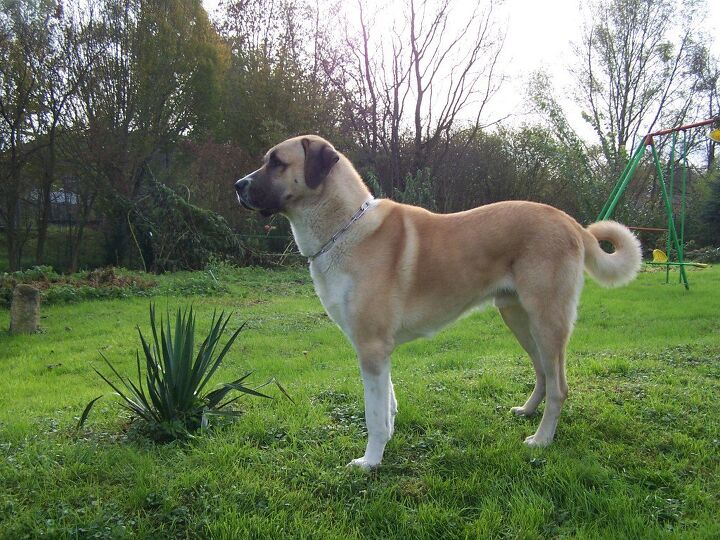
This is one big dog! The Anatolian Shepherd Dog varies in weight, tipping the scales anywhere from 80 to 150 pounds. Females average in with a weight of 100 pounds, while males average a weight of 130.
Temperament / Behavior
A working breed at heart, the Anatolian Shepherd Dog takes its duties as a guard dog seriously. You are now its flock and your Anatolian will alert you to danger with a loud and deep bark that resonates. Even though this breed is independent and stubborn, you’ll also notice how devoted it is to its family. Of course, this dog would do well for farmers as well, but if you think you can take on this huge dog, it will make a wonderful addition to your family. It just requires the right household that is capable of meeting the specific needs of an Anatolian Shepherd.
This guard dog is naturally suspicious of strangers – be sure that this trait doesn’t turn into an aggressive one. Start socialization early and introduce your Anatolian to new people and experiences as a puppy. An experienced handler with strong leadership skills will be able to keep aggression from developing. When bringing a new person into the home, instruct the visitor not to pet your Anatolian at first. Your dog will determine on its own if this is a safe person and needs the time to make that decision. The Anatolian Shepherd loves kids, but may see other children as a threat, so this breed should not be left alone when children bring their friends over to play. This breed’s sense of protection also relates to animals that aren’t a part of its family. If a dog it doesn’t know makes its way onto your property, the Anatolian may attack.
A guard dog is always on duty, so the Anatolian Shepherd Dog will bark at sounds in the night. Even if these noises are in the distance, this dog will alert you to the threat with a loud bark. This is a highly protective pup and needs a quiet environment without many strangers to thrive. In other words, don’t even think about raising one of these dogs in an apartment building.
You’ll need to mentally simulate your Anatolian Shepherd, otherwise, it may become destructive when bored. And with that powerful jaw, nothing is safe from a chewing – that includes furniture and drywall. You’ll need to give your Anatolian plenty of things to do while you’re out, or you may come home to a huge mess. This dog requires an owner who can keep up with some pretty substantial physical and mental demands. So, if you can’t dedicate a significant amount of time keeping your pooch mentally stimulated and physically active every day, don’t even consider bringing an Anatolian Shepherd into your home.
Common Health Problems
Generally, the Anatolian Shepherd Dog is a healthy breed. However, some health concerns include cancer, ear infections, entropion, hip dysplasia and hypothyroidism. It’s important to maintain regularly scheduled appointments with a vet (especially as your pooch ages into its senior years) to ensure that any potential health issues are identified and treated as soon as possible.
Life Expectancy
The Anatolian Shepherd Dog has an average lifespan of 10 to 13 years.
Exercise Requirements
Look at the size of the dog. Obviously, you can’t fit one of this powerful pups into a small apartment! Even though it doesn’t need as much exercise as other large breeds, owners will need to take their Anatolian Shepard for lots of walks and give it plenty of room to run around. This breed wants nothing to do with games of catch or fetch. It needs a challenge such as pulling a sled or cart, or tracking activities.
Because of its instinct to guard flocks, Anatolian Shepherd Dog works best on farms. If you have small children, this may not be the best breed for you, as the Anatolian may not get along with children it doesn’t know.
A working breed at heart, the Anatolian Shepherd Dog takes its duties as a guard dog seriously.
AKC
The American Kennel Association says this about the breed: “Large, rugged and powerful, the Anatolian Shepherd Dog is a working guard dog, possessing a superior ability to protect livestock. While not a “glamour” breed, the Anatolian’s loyalty, independence and hardiness is cherished by breeders and owners.” The AKC first recognized this breed in 1996.
Coat
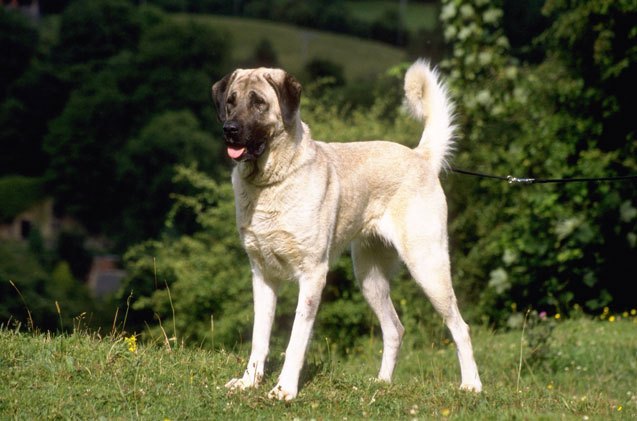
Outfitted with touchably soft fur, the Anatolian Shepherd Dog has a one-inch long coat, along with a thick undercoat. You may see some dogs feathering on the ears, legs, and tail. Expect to see the coat come in a range of colors, including pinto, white, and brindle, and fawn with a black mask.
When it comes to grooming, you’ll be pleased to know that Anatolian Shepherd Dog is low maintenance. Expect this dog’s short coat to shed throughout the year. You can keep on top of it by employing regular brushing habits. And since this breed doesn’t have a dog odor, you’ll only have to give your Anatolian Shepherd Dog a bath a few times a year.
Puppies
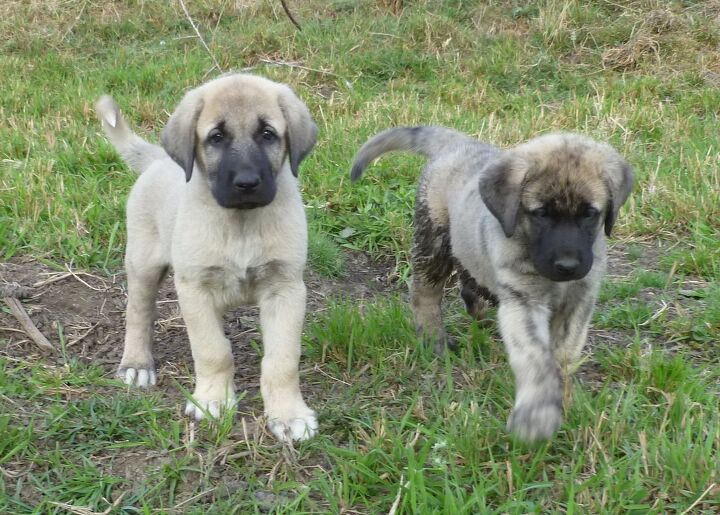
Anatolian Shepherd Dogs are wary of strangers, so as a puppy, you should introduce it to new people and situations as early as possible.
Photo credit: Gary Bernard Kent