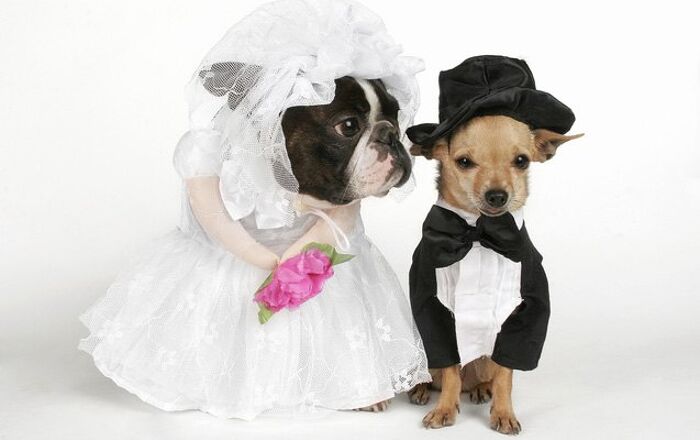
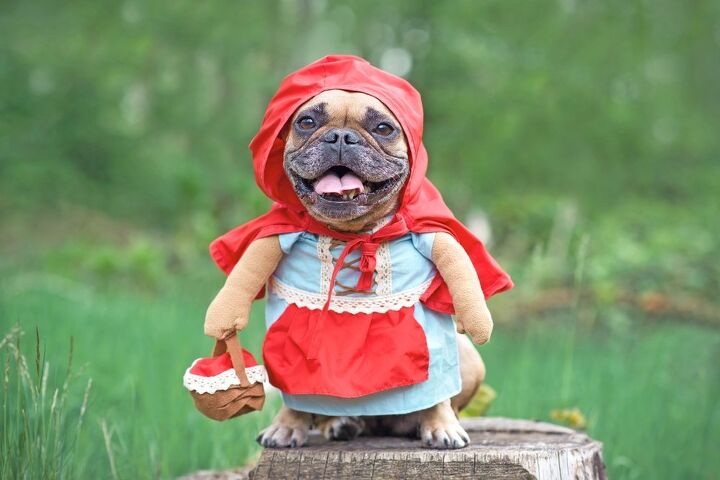
Pet clothing, including holiday costumes and everyday wear, is quite in vogue these days. And it can be a lot of fun to dress up your pet. But is it as fun for your dog as it is for you? How can you tell if your cat is on track for best dressed or seriously stressed when you break out the pet booties or pink tutu? You ask the animal communicator, of course!
Dear Shannon,
We are a multi-pet family – two dogs, one cat, one ferret and two seriously over-excited kiddos who are already planning our animals’ holiday costumes for this year. I let them dress up our older dog, Gracie, up last year and she was a good sport about it (thank goodness). But this year they also want to dress up our other dog, Maddie, our cat, Yonkers, and our ferret, Sultan. And I am worried our pets are going to be stressed and miserable. Is there any way to tell if the animals are okay with wearing costumes? If not, I need to come up with a plan B for my kids and fast.
Thanks,
Concerned Corinne
Shannon’s reply:
Hi Corinne,
First things first. THANK YOU for putting this question out there. As your own intuition is picking up, there can be a big difference between a pet who is being a good sport about wearing a costume and a pet who is really enjoying the experience. As you also highlight, there can be an equally huge gap between a pet who tolerates holiday costumes and a pet who outright hates dressing up.
The good news here is, there is definitely a way to tell how each one of your pets feels about costumes. And the easiest way is to simply ask them, which is exactly what I do as an animal communicator.
As I tune in with your animals, I do get that Gracie is willing to be a good sport again this year. Her heart for your family and especially your kids is so huge – the emotion she sends to me is one of a mother, so nurturing and protective and happy when they are happy. Since you didn’t say what kind of pet costumes your kids are planning (for example, just body attire or hats/facemasks, shoes/booties and capes/other accessories) I showed Gracie an array of options and she still gives me the same response. She will wear what “her” kids want her to wear and love it for their sake.
Maddie has a different vibe. When I tune in with her, I feel a wave of anxiety run through me. As I’m showing her the different costume options, the only one she is even willing to tolerate is body attire. No masks, no hats, no capes and definitely nothing on her feet. As an animal communicator, I tend to get a lot of physical sensations in my own body when I am tuned in with my pet clients. With Maddie, I feel myself getting physically overheated and then starting to feel itchy. This may be part of her stress response or may also indicate there is a literal concern she might overheat in a costume or that a costume may aggravate an underlying skin condition or allergy. I want to share all of this because when it comes to telling your kids why Maddie isn’t a great candidate for wearing a costume, it will help to have specific reasons.
Yonkers is surprisingly open to the idea of wearing a costume. His personality comes across as adventurous, playful, and honestly more dog-like in his behavior than most cats I talk with. Yonkers is not okay with one aspect of costume-wearing, however – shoes. He is very clear about this. He does not want anything on or around his feet!
Sultan was funny to talk with because he doesn’t seem to grasp the issue of costumes or no costumes. He repeatedly shows me images of him running through his narrow ferret tunnel, plunging into boxes of what looks like sports gear and toys and even trying to crawl into something that looks a lot like a tube attachment for an old-school vacuum (not sure what that might be?). If I had to sum up Sultan’s personality, I would put him in the “up for anything” category. So as long as your kids can manage to keep a costume on him, I would say Sultan doesn’t have a problem with their plan.
The one caveat to all of this is that body language – what we human animals call “nonverbal communication” – stays remarkably constant across species. So if your kids put a costume on any one of your pets and you see signs of extreme stress, constriction or discomfort, trust that and either try a different costume or forgo the plan with that pet. How can you tell if your animal’s body language is giving you the no-go sign? Imagine you are that pet and you are doing the same thing with your body or you have the same basic expression on your own face. This method uses your empathy pathway to tune in with how your pet is feeling in that moment.
I also strongly recommend getting your pets used to their costumes a little at a time. Even with Gracie who pretty much gives your kids the green light on anything they want her to wear, give her a chance to get used to her costume in advance. Also let each pet wear their costume in low light conditions as well as during the day. Try it on both indoors and outside. Do a trial run in costume at the actual venue or area both indoors and outdoors so your pets can log the sights and smells into their sensory database in advance.
I hope this helps, Corinne! You have some pretty great pets in your family who love your kids very much and are really willing to stretch outside their comfort zones to make them happy. On that note, I wish you a very happy (and very cute!) family holiday together.
From my heart,
Shannon