Drum Fish

Published A Few Days Ago
ADVERTISEMENT
fast facts

About Drum Fish

Aquarium Size
Large
Difficulty Of Care
Weekly
Group
Saltwater, Brackish
Size
Large, Extra-Large
Suitable Tank Mates
Non-Aggressive Species of Similar Size; No Small Fish that Might Become Prey
Swimming Region
All Ranges
Temperament
Community
Fish Water Condition
Warm, Slightly Alkaline Water with Moderate Hardness
ADVERTISEMENT

Drum Fish General Description

There are several species of fish that carry the “drum” name, though they are not all members of the same genus. The Black Drum and the Red Drum are the two main species of Drum Fish and they are both members of the family Sciaenidae. These fish are very large, with some specimens growing upwards of 90 pounds. Because these fish are carnivorous they should not be kept with fish that are small enough to be viewed as prey. They can, however, get along with other non-aggressive species of similar size.

There are several species of fish that carry the “drum” name, though they are not all members of the same genus of Drum Fish.

Origins

Different species of drum come from different areas but they generally inhabit the lower levels of the water column in brackish to saltwater environments.

Color

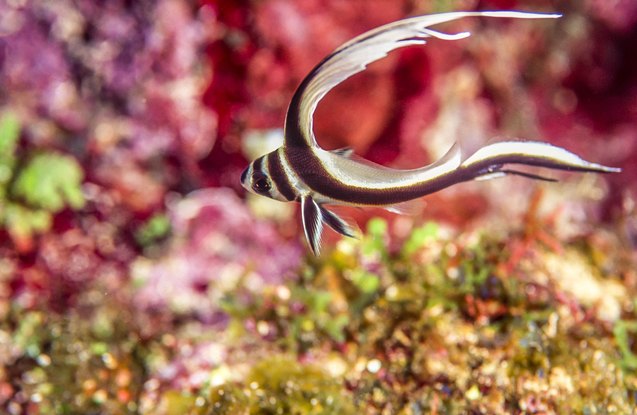
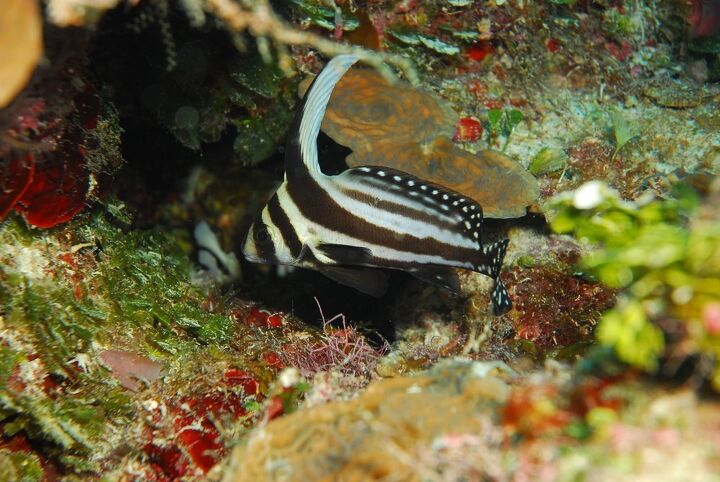
With more than 250 species of drums, these fish exhibit a wide range of colors and patterns. Many of the drum species which serve primarily as game fish are dull in coloration with few markings. Some of the popular aquarium species, however, like the Spotted Drum exhibit bold colorations such as thick black and white bars.

Maintenance and Care
ADVERTISEMENT

The aquarium requirements of drums varies from one species to another. For example, the Black Drum tends to inhabit brackish waters and should therefore be kept in this type of environment. The Spotted Drum, on the other hand, is a marine species that should be kept in warm waters (72°F to 78°F) with moderate hardness between 8 and 12 dKH with a slightly alkaline pH between 8.1 and 8.4. Most drums are benthic feeders so they need plenty of open space along the bottom of the tank but you can decorate sparsely with live rock.

With more than 250 species, drum fish exhibit a wide range of colors and patterns.

Feeding

Most drums are carnivorous fish, feeding on a variety of meaty foods like worms, shrimp, crustaceans, and small fish. In the home aquarium these fish should be offered a wide variety of meaty foods including fresh and frozen foods as well as mysis shrimp, brine shrimp, worms, and small fish.

Also read:

Setting a Schedule for Routine Tank Maintenance

Breeding Info

Drums are egg layers and they tend to spawn their eggs over sandy substrate. In most cases, drums do not exhibit any parental care.

Aquarium Varieties

There are roughly 275 species of fish belonging to the drum family Sciaenidae and they are divided among 70 different genera. Drums are primarily cultivated for food, though there are a few smaller species which can be kept in the home aquarium. Some of the most common species of drum include the following:

    Photo credit: johnanderson/Bigstock; Mike Bauer/Shutterstock

    ADVERTISEMENT

    ADVERTISEMENT

    You May Like

    Lawsuit Filed Against Purina Alleges Potentially Toxic Pet Food

    The lawsuit against Purina claims that thousands of dogs have been sickened or died from eating Beneful dog food. The heartbreak that accompanies the sudden…

    Icelandic Horse

    The Icelandic horse is adaptable, patient, and uncomplicated. It is one of a few horse breeds that can exhibit almost all possible colors.

    Cornish Rex

    The Cornish Rex is very much a people cat. They may look elegant, even aloof and dignified, but in reality they are active and affectionate.

    Siberian Rabbit

    The Siberian Rabbit has a beautiful, glossy, dense coat. Siberian Rabbits are known for being docile, smart, and easygoing.

    Northern Red-Bellied Turtle

    The Northern Red-Bellied Turtle is also referred to as the Northern Red-Bellied Cooter. These animals are generally shy and will hide when scared.

    The Emily Post Guide To Proper Dog Park Etiquette

    Even dogs need to learn manners! We serve up dog park etiquette that all refined pooches should bone up on. Emily Post is quoted as saying: “Whenever t…

    Should You Get a Kitten for Your Senior Cat?

    If you have a senior cat who seems bored or lonely, you might be thinking about adopting a kitten to give them a feline companion. But is this a good idea?

    Khao Manee

    Even when hearing impaired (an issue in white cats), the Khao Manee is a playful, active cat that loves attention. An excellent addition to a family.

    Egyptian Mau

    The Egyptian Mau cat''s intelligence and his unquestioned loyalty to his humans makes these irrepressible personable cats almost enchanting to be around.

    Parson Russell Terrier

    It may be similar to the Jack Russell Terrier, but the Parson Russell Terrier is a breed all its own.It was distinguished as its own breed in 2003.

    Are You Lazy Enough To Send Your Dog To Fat Camp?

    If your dog has too much weight and you have too much money, why not send him to fat camp? Pet obesity is on the rise and this is a troubling concern. As pet…

    Adoptable Dog Of The Week – Gabby

    Meet Gabby, our Adoptable Dog of the Week. Gabby is an adult Shih Tzu that lives in Lexington, KY. She is spayed, housetrained, and up to date with shots.

    Gluten-Free Carob Molasses Dog Treat Recipe

    This Gluten-Free Carob Molasses Dog Treat Recipe uses rice flour to keep the gluten out and the tasty in. I added an egg to help it keep its consistency.

    Camera-Shy Dogs Get The Puparazzi Treatment With BarkCam App

    You love taking pictures of your pooch. Now, how can you make that more fun? With the BarkCam app for iPhone! You''ll be addicted to posting hilarious pics!

    Adoptable Dog of the Week – Mia

    With a big heart and a playful attitude, this happy-go-lucky gal will brighten your every day! Our Adoptable Dog of the Week is Mia, a little over a year old Labrador Retriever mix from Conway, Arkansas.