Himalayan Breed History
The Himalayan breed is derived from the Persian, and is the result of efforts to create a colorpoint version of that breed. The selective cross breeding of Persians and Siamese was attempted in the U.S. and Great Britain as early as the 1920s, but was undertaken in earnest in the U.S. in the early 1950s. The offspring of these early pairings were then bred back to Persian cats to preserve the body conformation and long hair of that breed while keeping the color points of the Siamese. The name “Himalayan” was taken from the color patterns found on goats and rabbits that are common to the Himalayan Mountains and are similar to those seen with these cats.
Although playful and active, the Himalayan likes his lap time.
Breed Traits
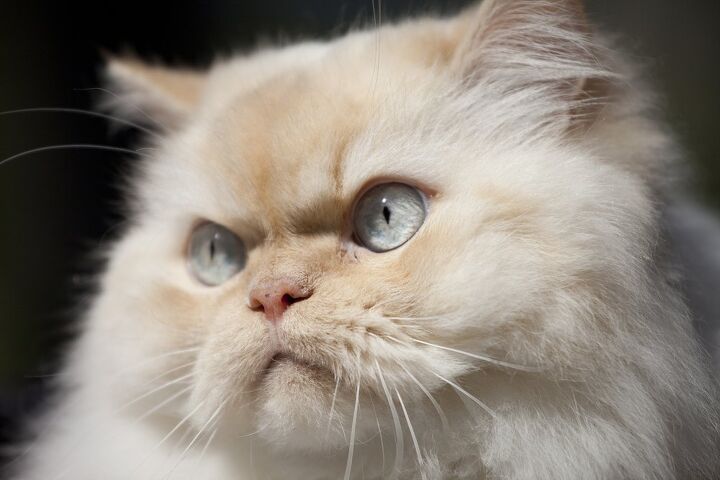
Although playful and active, the Himalayan likes his lap time. These are people oriented cats who offer their “help” regardless of what their humans are doing. They are talkative, but their voices are melodic and not rasping or annoying like the Siamese. Overall, they have easy going, gentle, quiet personalities, which accounts for the great popularity of the breed.
Overall Description
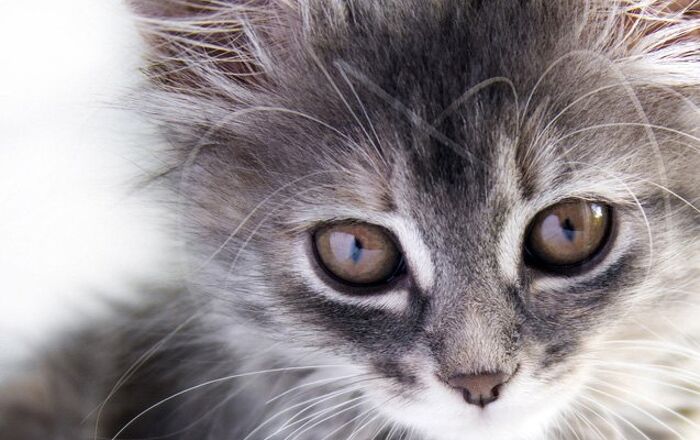
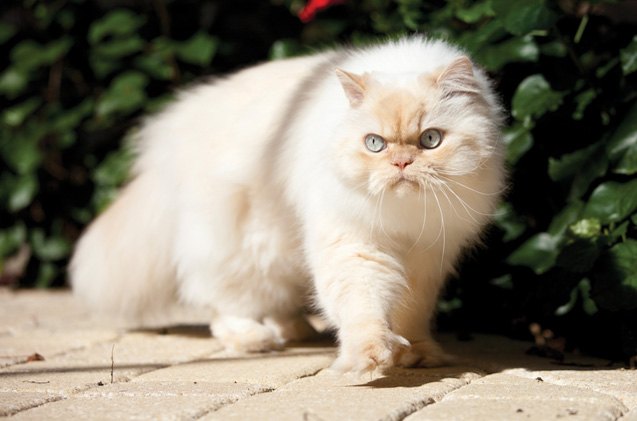
The Himalayan is similar to the Persian in that it is a medium to large cat with a cobby body type. With relatively short legs, and a broad, deep chest, the Himalayan is wide at the shoulder and hip. They have sweet faces, but intense blue eyes that can look angry in moments of interest or concentration. That is not the case, however, as the Himalayan is famous for its pleasing disposition and affection for humans. These cats have thick, long coats that are silky to the touch. Early generations of the breed were more Siamese in appearance, but as subsequent generations have evolved, that look has settled into the comfortable roundness of the Persian features, with just the Siamese color points remaining.
Colors
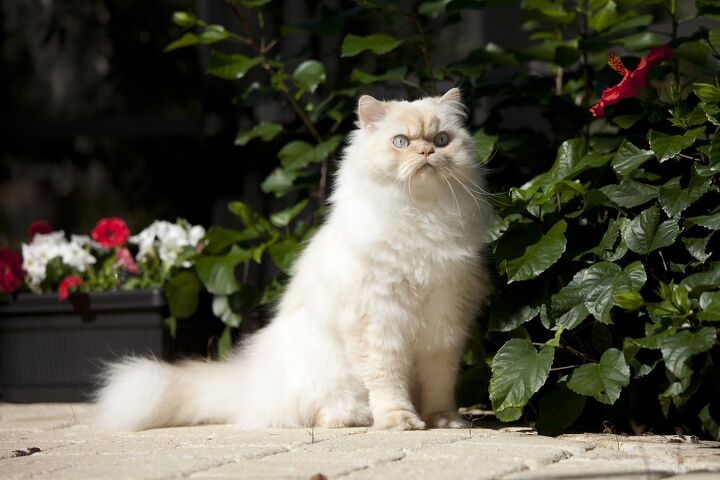
When the Himalayan was first recognized by the Cat Fancier’s Association, the accepted colors were seal, blue, chocolate, and lilac point. In 1964, flame and tortie points were added, followed by blue-cream points in 1972, and cream points in 1979, and lynx points in 1982. Today the most sought after cats are those with the tabby and lynx points.
Grooming Requirements
Although Himalayans are lovely, sweet pets, they are not low maintenance animals. Their hair can reach six to seven inches in length. Owners must spend a great deal of time on grooming, with an emphasis on daily brushing and combing to avoid matting. The Himalayan’s top coat is silky with a wooly undercoat. They are not as prone to matting as Persians, but the issue is still present. Both bristle brushes and wide tooth combs should be used. Bathing is sometimes required, and often Himalayan owners must have professional help to keep their animal’s coat consistently well groomed and healthy. Some show cats are bathed daily. Runny eyes can be a problem in this breed, causing staining and clumping near the bridge of the nose. Without question these are exclusively indoor cats.
Photo credit: John Wollwerth/Shutterstock