New Guinea Singing Dog Basics
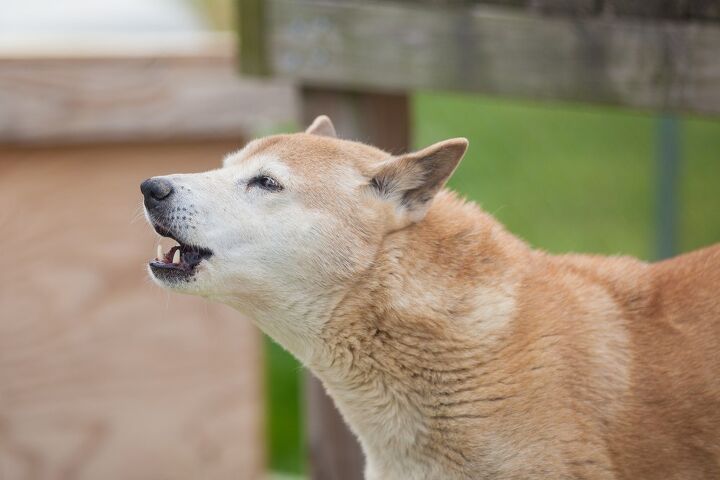
Also known as the New Guinea Dingo or the New Guinea Wild Dog, the New Guinea Singing Dog is a wild dog breed native to New Guinea. This breed is named for their unique form of vocalization – these dogs are able to vary the pitch of their howl in combination with various yips and whines which makes it sound like they are singing. These dogs are rare and closely related to wild dogs, so they are not a good choice a house pet. However, they are some in captivity – it takes a good deal of work to tame this breed but, once they are, they become closely attached to their human companions.
These dogs are able to vary the pitch of their howl in combination with various yips and whines which makes it sound like they are singing.
Origin
The New Guinea Singing Dog is native to the island of New Guinea where it was a breed of wild dog for many centuries. The first New Guinea Singing Dog to leave the island left in 1897 for study by naturalists – it was the only specimen available for study until 1954. In 1956 a live pair of New Guinea Singing Dogs was obtained by Albert Speer and J.P. Sinclair – the dogs were then sent to the Taronga Zoo in Australia for study. New Guinea Singing Dogs that are kept as pets have been captive-bred, though there are also conservation efforts in place aiming to preserve the breed in its native habitat.
Pedigree
There is a great deal of controversy regarding the taxonomic classification of this breed. In 1958, the specimens at the Taronga Zoo were studied in depth and classified as a distinct species, given the name Canis hallstomi. Since 1958 the breed has been reclassified several times, often as a variant of the wild dingo and the domestic dog. Most commonly, the New Guinea Singing Dog is classified as either a breed of domestic dog or as a separate species entirely. Other researchers have proven the New Guinea Singing Dog to be a genetic match with the Australian dingo.
Food/Diet
The New Guinea Singing Dog is a medium-sized dog but also a highly active breed. In the wild, this breed eats small to middle-sized marsupials, rodents, birds and fruits. In captivity, the New Guinea Singing Dog does well on a raw-based diet comprised of lean meats.
The New Guinea Singing Dog is native to the island of New Guinea where it was a breed of wild dog for many centuries.
Training
New Guinea Singing Dogs are a highly intelligent breed that can be trained. Because these dogs are closely related to wild dogs, however, they can be somewhat aloof around humans and tricky to tame. For this reason, early training and socialization is recommended. Positive reinforcement training methods are best and a firm and consistent hand in training is required.
Weight
The New Guinea Singing Dog stands between 12 and 18 inches tall and weighs between 18 and 30 lbs. at maturity.
Temperament/Behavior
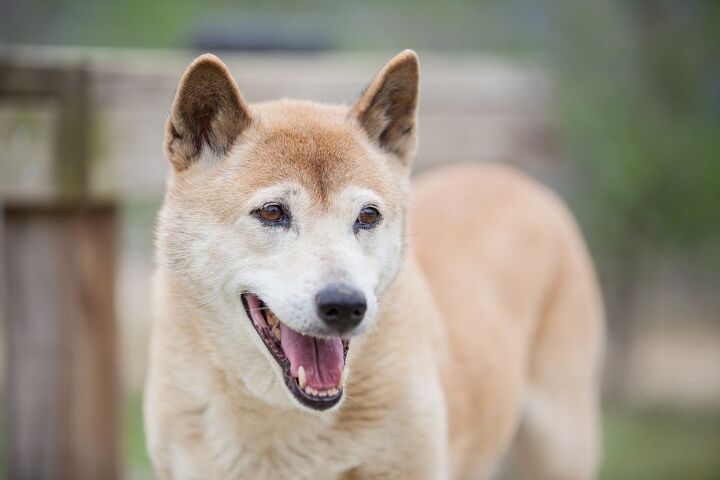
For the most part, New Guinea Singing Dogs are friendly with people though they can be a bit shy at first. These dogs are highly intelligent and it can be difficult to tame and train them. New Guinea Singing Dogs are known for being escape artists, able to climb and jump to escape an enclosure. Once tamed, these dogs do tend to bond closely with their human companions and they can become very affectionate. New Guinea Singing Dogs have a high prey drive and they can be somewhat aloof or even aggressive around strangers and other dogs.
Common Health Problems
The New Guinea Singing Dog is very closely related to wild dogs and, as such, is a hardy and healthy breed. This breed is genetically sounds and not prone to any severe inherited conditions. As is true for all breeds, responsible breeding practices and genetic testing can help reduce the risk for health problems. Being bred to canines rather than to their own kind has resulted in a “watering down” of the New Guinea Singing Dog gene pool to some extent.
Life Expectancy
The New Guinea Singing Dog is a fairly long-lived breed, having an average life expectancy of 15 to 20 years.
Exercise Requirements
The New Guinea Singing Dog is an active dog with a strong prey drive. Because this breed is so closely related to wild dogs it has high needs for exercise and may exhibit a tendency toward problem behaviors if not properly exercised. This breed is also highly intelligent so it requires a good deal of mental stimulation in addition to physical stimulation.
For the most part, New Guinea Singing Dogs are friendly with people though they can be a bit shy at first.
AKC
The New Guinea Singing Dog is not currently recognized by the AKC, largely because it is often considered a variant of the dingo or a wild version of the domestic dog. There are two organizations dedicated to the conservation of the New Guinea Singing Dog – the New Guinea Singing Dog Conservation Society (NGSDCS) and the New Guinea Singing Dog International (NGSDI). Both organizations are based in the United States.
Coat
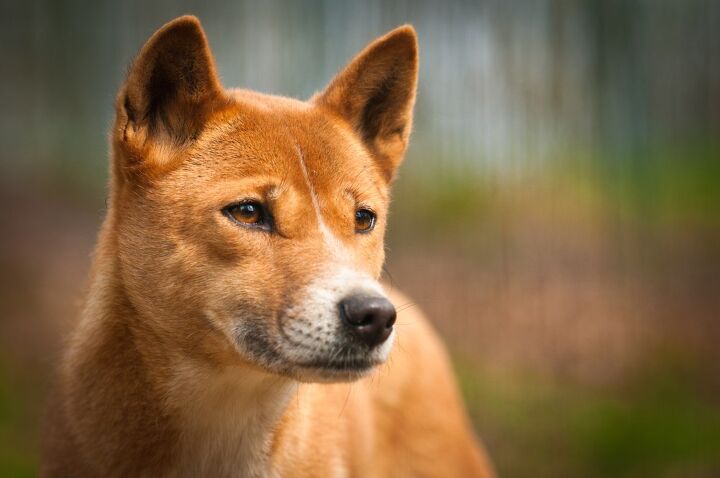
The New Guinea Singing Dog has a medium- to long, plush coat with a bushy tail. The most common colors for this breed include various shades of red, brown and tan with white points in adults of the breed. Most adults exhibit black or very dark guard hairs over the spine and back with a white tip to the tail. Many specimens exhibit black coloring on the muzzle which starts to turn gray after 7 years of age.
Puppies
New Guinea Singing Dog puppies are born with dark brown coats having a reddish tinge with gold flecks. As the puppy grows and ages, its coat lightens in color to a light brown by about 6 weeks of age. By four months of age the New Guinea Singing Dog takes on its adult coloration.
Photo credit: Tara Lynn and Co/Shutterstock; Dusan Vainer/Shutterstock