Norwegian Forest Cat Breed History
The Norwegian Forest Cat is a relative newcomer to the United States, but that doesn’t mean that these cats are new to the feline world of breeds. In fact, the breed is so ancient in Norway that these cats appear in the country’s illustrated folklore and mythology. In this Scandinavian country, the breed is called “skogkatt,” which translates literally to “forest cat” (hence the name it is now known by all over the world). This cat breed can boast being stuff of legends- literally- because Norwegian Forest Cat has been mentioned in legends and folktales of Norse fairy mythology. Some of the tales include talk of forest spirits that have taken the form of large cats, and others, such as myths about the Norse goddess of love (and cats!), Freya, mention large cats that pull the chariots the goddess rides.
However, it’s not only myths that these big kitties appear in. These cats not only have a history as stalwarts of the Norwegian countryside where they worked as mousers in barns and on farms, but the “skogkatt” also traveled with the Vikings to keep rats from infesting the ships. It is possible that the first Norwegian Forest Cat to reach the United States arrived with Leif Ericson in the late 900s, but there is no way to determine that with certainty. What we do know, for sure, is that the Norwegian Forest Cat was preserved as a breed through efforts in the 20th century. These cats were saved from near extinction after World War II by fanciers, and became a welcome addition to European show rings as well as being named the official cat of Norway. The cats were first exported to America in 1979 and were accepted for full championship status in 1993.
Although well adapted for life outside, the modern Norwegian Forest Cat is far from an outdoorsman of the feline world.
Breed Traits
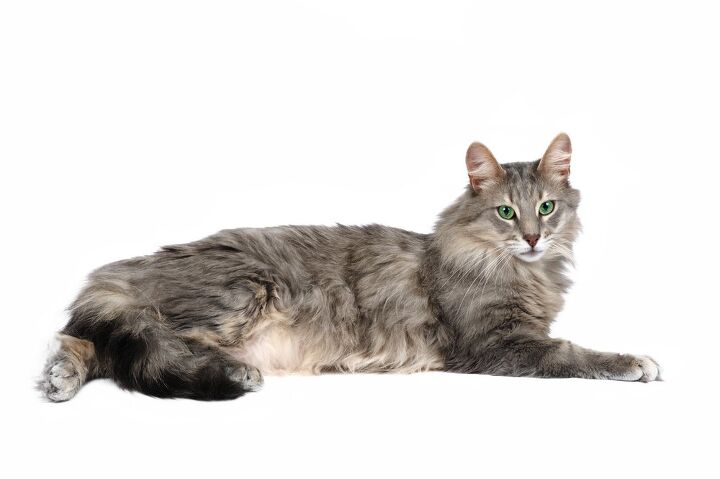
Although well adapted for life outside, the modern Norwegian Forest Cat is far from being considered an outdoorsman of the feline world. Despite its name and rugged looks, this cat likes to be at home with his “people,” and is even happier if there are other pets in the household. This is great news for those that have multiple pets already- or live in a household that has both a cat and a dog. Norweigan Forest Cat won’t mind company! However, just because the breed is considered generally friendly doesn’t mean that they are needy or clingy. A Norwegian Forest cat will be perfectly happy hanging around in the same room with you, and when you’re busy or away, this kitty will have no problem having fun on its own. They can just as well keep busy by themselves!
Even given their capacity for loyalty and affection, the relationship will always be on the cat’s terms, not yours. After all, they are still cats- and felines are as finicky as they come, so you have to play by their rules and not vice versa. In many cases, a Norwegian Forest Cat will choose to be near you rather than on your lap. Ear scratches and petting are just fine, but he probably won’t actively seek them out- this is a laid-back, independent kitty. Another thing to consider is that these are active cats, and they are given to incredible bursts of energy after which they’ll collapse for a deep snooze. A scratching post is essential with a Norwegian Forest Cat. They like to use their claws, and they are no respecters of furniture! Intelligent and sensitive, a Norwegian Forest Cat adapts well to changes in its environment, but on its own schedule.
Overall Description
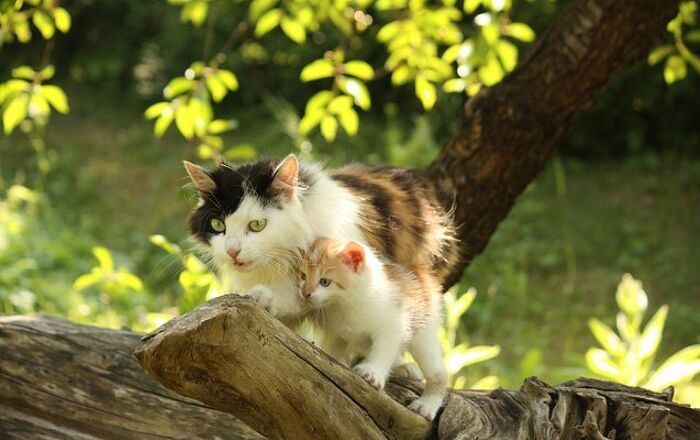
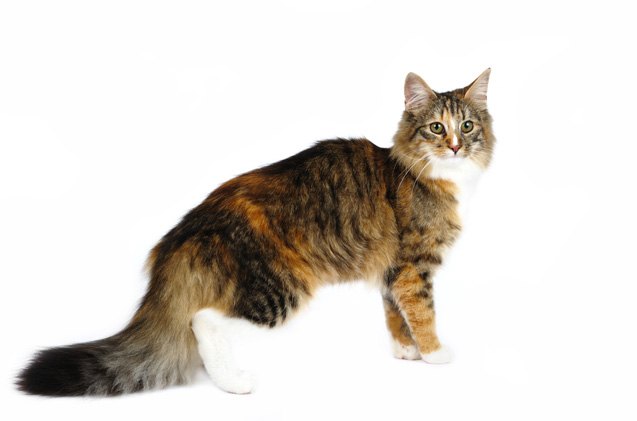
The first thing you will notice about these regal-looking cats is their imposing size. Similar to the Maine Coon, the Norwegian Forest Cat is a lot larger than your average domestic shorthair. However, their uniqueness is not only reserved for their size! The Norwegian Forest Cat has an unusual appearance due in part to its lovely almond eyes set obliquely in the triangular head. In profile, this cat’s features are straight from brow to nose tip. The tufted ears complete the triangular look, and overall the expression is sweet, but inquisitive. A full ruff in the front gives the Norwegian Forest Cat a somewhat burly chest. The tail and rear britches are bushy and prominent, and the paws are tufted, an adaptation for walking on snow. And, to be honest, they do give Norwegian Forest Cats a particularly cute appearance- the bushy tail of these gorgeous kitties is like a cherry on top of their overall unique physique!
Colors
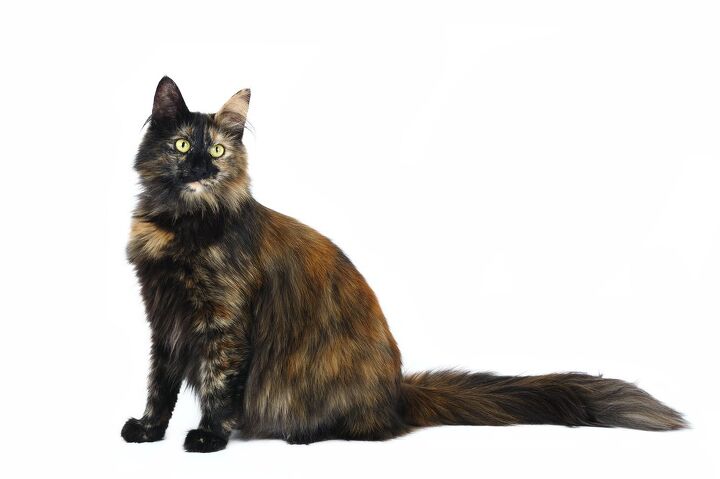
The Norwegian Forest Cat is known for having a brown tabby and white coat, but in truth, almost all colors are seen in this breed in the full range from snow white to coal black. All coat patterns are possible, including sepia and mink categories, but not color pointing. This means that Norwegian Forest Cats can be either solid colored, sport colors common for domestic cats such as ginger or tabby, be multi-colored such as calico, or have unusual smokey-colored coats. In other words, if you have any preference in terms of looks, you’ll be able to find a match within the breed: there’s a Norwegian Forest Cat for any pet owner out there!
Grooming Requirements
Nature has outfitted the Norwegian Forest Cat with a waterproof, insulated double coat. The dense undercoat is covered in more coarse guard hairs. Oddly enough, however, this cat requires far less grooming than most long-haired breeds. A weekly combing with more vigorous brushing during the spring shedding season will keep the cat’s coat free of dead hair and prevent matting and tangling.
Photo credit: Julia Remezova/Shutterstock