Golden Pyrenees Basics
One of the more majestic designer dogs to even enter the market, the Golden Pyrenees dog is a delightful and laid-back pooch. This doggo is as gentle as a Golden Retriever when it comes to playtime, yet as watchful as a Great Pyrenees taking care of his or her family (which is your family, children and all!). Friendly, loyal, pretty, and immensely hugable, it’s hard to even imagine a home that wouldn’t suit the Golden Pyrenees perfectly.
If you’re a fan of brushing your hair until its silky smooth (and don’t mind vacuuming the house a few times a week), you’ll love going at this dog’s dense coat until it shines bright like a diamond fury canine glory. While some dogs of this mixed breed love to lazy about and become couch potatoes, they have a lot of energy in them and do well with regular exercise and plenty of playtime.
So, is the Golden Pyrenees the right pup to bring home to join your fam? You’ve come to the right place to find out! Keep your eyes glued to this page and scroll away. We are about to reveal everything that you could possibly want to know about this glorious animal. By the end, you’ll either be rushing out to find your nearest Golden Pyrenees breeder or quietly contemplating another option. Read on!
The Golden Pyrenees dog is a delightful, laid-back pooch.
Origin
The Golden Pyrenees, also referred to as the Great Pytreiver, is a mix between a Golden Retriever and Great Pyrenees. Golden Retrievers are known to be ideal family pets, as they are both playful and affectionate with every member of the family. Great Pyrenees (often used as livestock watchdogs) are very good guardians, known to bark loudly should they see a stranger in their immediate area to alert their masters. Put them together and you have a dog that’s loyal, loving, and protective of its clan. Perfect for close knit families with plenty of space to share with their pets.
Pedigree
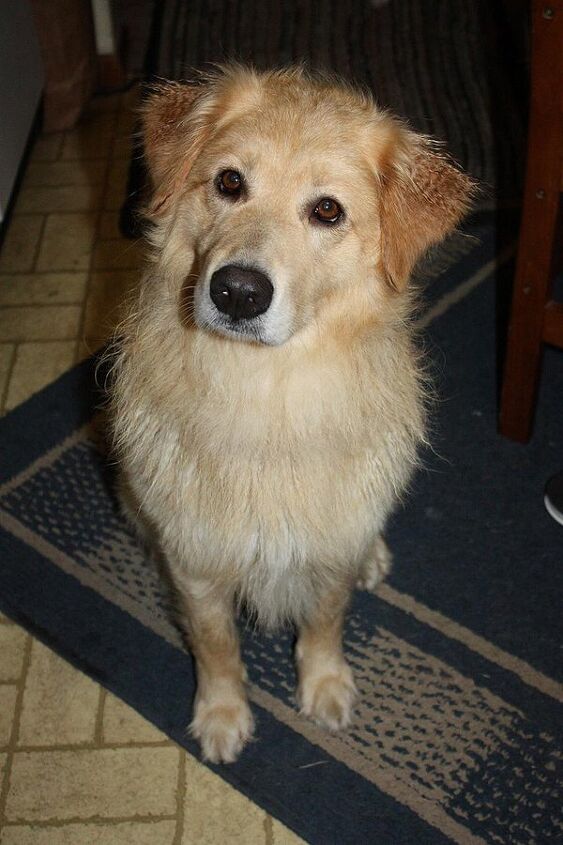
The Golden Pyrenees is a mix between a Golden Retriever and Great Pyrenees. Like many designer dogs, there’s very little information available about the history of this breed. Sadly, there simply hasn’t been much documentation kept about hybrid breeds since their explosion in popularity. Unfortunately, that means that the Golden Pyrenees is not recognized by the AKC and a breeder won’t be able to provide you with official papers for your pup. However, you can ask the the purebred parents’ papers and if your breeder is unwilling to provide those, then it’s sadly a sign that it isn’t a reputable breeder and they should not be trusted.
Food / Diet
This breed of dog is known as a “giant,” which also means they have a giant appetite. Four to five cups of daily dry kibble is best in order to keep this big dog’s health and teeth in good shape. Golden Retrievers are also known to gain weight rather easily, so it’s best to keep a good eye on exactly what and when they eat to avoid overfeeding.
As always, if you are ever concerned about establishing or altering the diet of your Golden Pyrenees then it is worth consulting with a veterinarian first. While pet food manufacturers and pet blogs do provide useful feeding guidelines that was worth referencing, they are still just guidelines and should not be treated as gospel. All dogs are different, each with their own needs. The only person qualified to determine the specific dietary needs of your personal pooch is a vet. So always rely on their expertise before making any major changes to what you put in your pup’s food bowl.
They are great watchdogs and are protective of their family, but they need to be trained by a firm, calm owner.
Training
Great Pyrenees dogs don’t take well to weak pack leaders; that is to say that training him may prove to be a difficult challenge in a breed that would embody half their traits, such as a Golden Pyrenees. They are great watchdogs and are protective of their family, but they need to be trained by a firm, calm owner, as they are extremely independent pooches. Should they try to be trained by someone who is inconsistent or does not train them properly, this designer breed could play one of the oldest tricks in the book by “playing deaf” and ignore all of your commands. If you’re a first-timer looking to train your Golden Pyrenees, a doggy obedience school is your best bet. Training will be a challenge, so do not take it on unless your are an experienced and prepared trainer. Establishing yourself as the clear alpha in the relationship with a firm, yet gentle hand can be a challenge. So only take it on if you know what you’re getting into. Otherwise, there is no shame in relying on the expertise of a professional.
Weight
An adult Golden Pyrenees can weight anywhere between 75 and 115 pounds.
Temperament / Behavior
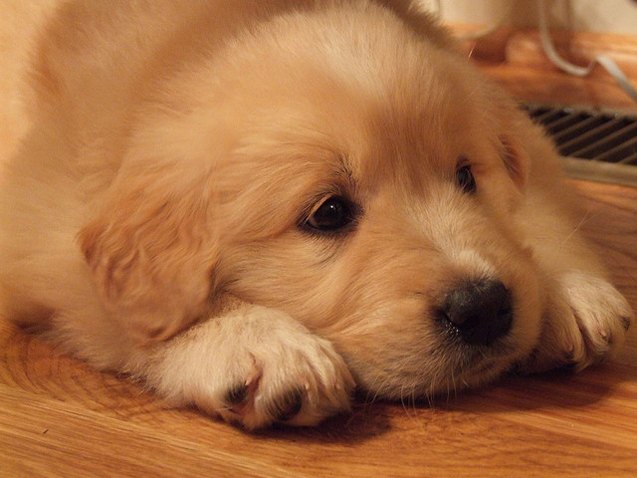
The Golden Pyrenees takes a lot of its personality from the Golden Retriever, a breed that is known for its gentle, loving nature. They love to play with others, be it adults, children, other dogs or even cats. Overall, they make excellent playmates because they retain their playful, gentle demeanor like most pups do. They can, however, be a little wary towards strangers and may issue a few barks to alert their owners. That’s why it’s important to begin socialization as early as possible. Don’t waste those impressionable puppy years. Get them used to strangers right away, if you want to raise and friendly and approachable pup.
While this breed of dog is active and affectionate, they can also show destructive behavior if not given the love and attention they so want and deserve. This could mean anything from urinating on walls to destroying slippers and even furniture. As mentioned earlier, the Golden Pyrenees also needs a firm owner to train him, else he can turn into a stubborn brat and not listen to any of your commands. This dog will also need to be well exercised everyday so that they don’t have excess energy to burn off in an unfortunate and mischievous manner.
Because of this dog’s sheer size and energy, they are not suitable for those living in apartment buildings, as they require lots of space to burn out their energy. For the same reason, they are also not a good choice for retirees or seniors who have limited mobility. They need an owner who is strong, firm, active and has enough time for daily outdoor exercise. The Golden Pyrenees should not have a problem fitting in should you have children or other animals who are also part of your big happy family.
Common Health Problems
Being a cross-bred designer dog means there is a chance of inheriting some health problems from either the Golden Retriever line or Great Pyrenees. The Great Pyrenees breed is prone to bloat, hip dysplasia, bone cancer and luxated patellas. Because their fur is so thick and dense, they also tend to have skin problems should it be hot or humid where they reside. A Golden Pyrenees may also take from Great Pyrenees by having double dew claws (similar to having a thumb, although it is sometimes not attached to a bone). While this isn’t a health problem per say, it is important to keep an eye on them, as they can sometimes be accidentally ripped off or irritated, in which case they should later be removed. Golden Retrievers often have problems such as cancer, congenital eye defects, hip dysplasia, Von Willebrand’s disease, heart as well as skin problems. They also tend to gain weight rather easily. It’s important to maintain regularly scheduled checkups with a veterinarian (especially as your dog ages into its senior years) to ensure that any potential health issues are identified and treated as early as possible.
Life Expectancy
A Golden Pyrenees is expected to live 10 to 13 years.
Exercise Requirements
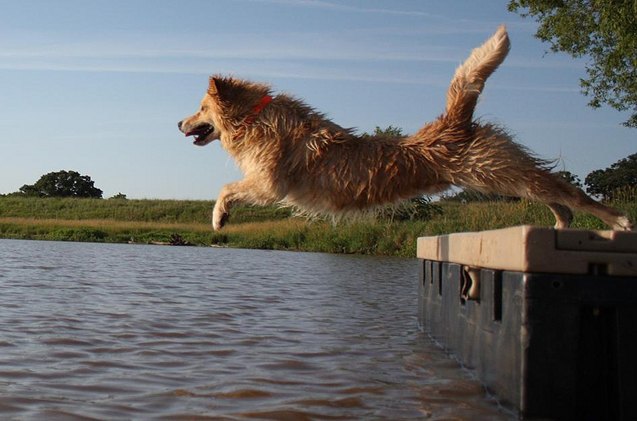
This designer breed requires regular exercise to keep it in shape, and thus will benefit from an owner who is active, fit, and loves to have long walks or runs in the neighborhood. Because the Golden Retriever is prone to gaining weight, one needs to be cautious with how much food they feed the Golden Pyrenees. Walking an hour or two daily, coupled with some indoor playtime, should be sufficient to burn out this giant breed’s energy.
The Golden Pyrenees takes a lot of its personality from the Golden Retriever, a breed that is known for its gentle, loving nature.
Recognized Clubs
The Golden Pyrenees designer breed is recognized by the American Canine Hybrid Club, the Designer Breed Registry, the Designer Dogs Kennel Club, the Dog Registry of America as well as the International Designer Canine Registry.
Coat
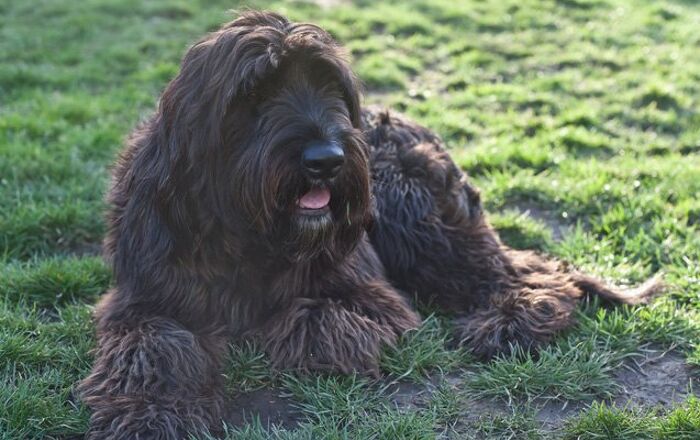
Depending on how much this dog takes from the Great Pyrenees, they may have a very thick, wool-like coat. This kind of coat requires extra attention to keep it from matting and getting covered in sticks and other debris during walks. Regular cleaning and brushing is required to maintain a soft, silky-smooth coat (not unlike your own hair!). Should the Golden Pyrenees dog take from the Golden Retriever, they still require a regular bathing and brushing routine, however their coat should not be as thick as a Great Pyrenees’s. Their fur can come in a variety of different colors including brown, black, golden, cream, gray, yellow and white, and has a tendency to shed regularly.
Puppies
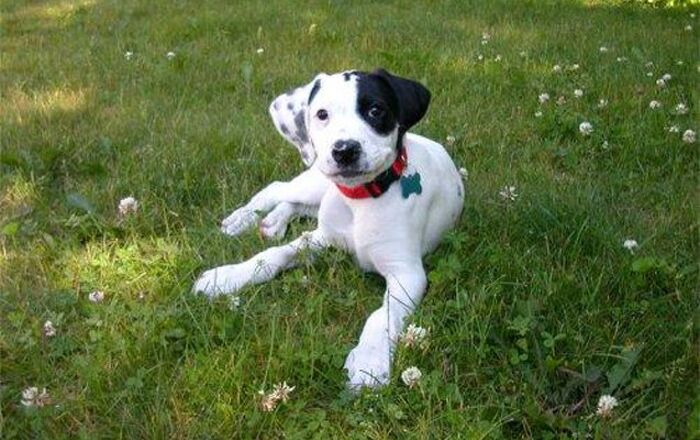
The Golden Pyrenees are gentle and playful even as puppies but as with any pup, they should not be left alone with children. At three months of age, these little guys would have grown to about 18 inches in height, so they grow relatively quickly!
Photo credit: aaron/Flickr; Brooke/Flickr