Mudi Basics
A medium-sized dog that was bred for herding, the Mudi is an exceptional companion as well as intelligent. Few people have even heard of the breed but that is for a good reason; this dog is a rare breed. There are actually less than a few thousand existing today. Fortunately, enthusiasts who love this breed are changing that.
The Mudi (pronounced Moody), is a hardworking herding dog. Because he considers his family his flock, he is rather aloof and watchful when strangers are introduced. This breed usually makes good watchdogs.
A medium-sized dog that was bred for herding, the Mudi is an exceptional companion as well as intelligent.
Origin
Originating in Hungary, the Mudi is believed to have been in existence since the 1800s. Classification of this breed began in 1936.
Pedigree
It is believed that the Mudi developed naturally and is the result of a variety of crosses between the Pumi, Puli and German Spitz style breeds. They were favored because of their great ability to herd both sheep and cows as well as be a watchful sentry for farm and home.
Food/Diet
Because the Mudi is an energetic and athletic dog, it is of the utmost importance that he be fed a high-quality diet of dry kibble. Dry food helps to maintain proper oral hygiene as it removes plaque and other debris caught between the dog’s teeth. It also prevents tooth decay and bad breath.
One of the great things about the Mudi is that he is easy to train.
Training
One of the great things about the Mudi is that he is easy to train. Training must be done in a positive way. Harsh training tactics do not work with this breed as they will quickly shy away from the training session. Treats work quite well and are an incentive for the dog to learn the behavior you are teaching. Housebreaking can be a problem so careful attention to the Mudi’s signals for needing to go outdoors is important.
Mudis excel in obedience work as well as in agility courses. Their intelligence and stamina also makes them great candidates for search and rescue work. Of course, they are perfect for herding trials too.
Weight
Generally, the Mudi should weigh between 17 and 29 pounds and stand 15 to 18 ½ inches tall at the shoulder. Although this is considered standard, the weight and height can vary as true Mudis from Hungary tend to be a bit different. This is because they are more concerned with the dog’s ability to herd and work than the adherence to this standard.
Temperament/Behavior
Although the Mudi loves to play with his family, he is quite reserved with strangers. This is usually the case with herding breeds. With proper introduction and several visits, the dog will readily accept the stranger and become friendly and affectionate with him. The Mudi is good with his family’s children as well as pets however; there have been occasions when the breed will attack other animals.
Mudis tend to be vigorous barkers. In early days, they were sentries for both houses and farms. Barking to alert their families is a natural instinct for them. It’s best to train them to be quiet on command however; this will not help if the breed will be left alone.
Another concern within the breed is digging. Mudis love to dig and they are good at what they love to do! This can be problematic especially if they dig under a fence and get out.
Common Health Problems
The Mudi is generally a very healthy breed of dog. There have been minimal incidences of hip dysplasia however; this can also be triggered because of the dog’s environment. Eye problems such as cataracts have been seen in the breed. Epilepsy has recently been listed as an issue within the breed.
Life Expectancy
Because of their general good health, the Mudi can live 12 to 14 years. Some have been reported to live far beyond that average.
Exercise Requirements
A bundle of energy and athleticism, the Mudi craves exercise just as he does food, water and air. He loves to play and is a great companion for those with active lifestyles. He will readily play ball and can quickly learn to play Frisbee. Of course, a nice jog through the park or hike in the woods would do the Mudi just fine.
The Mudi tends to be a jumper. This is why he excels in agility courses. An adequate fenced area is absolutely necessary with this breed. Although he is on the small side, a six foot fence is best to contain him.
Although the Mudi loves to play with his family, he is quite reserved with strangers.
AKC
The American Kennel Club approved the Mudi into the Herding Group in 2015.
Coat
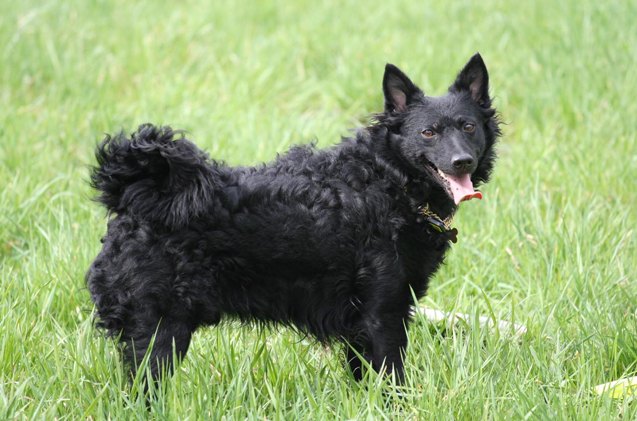
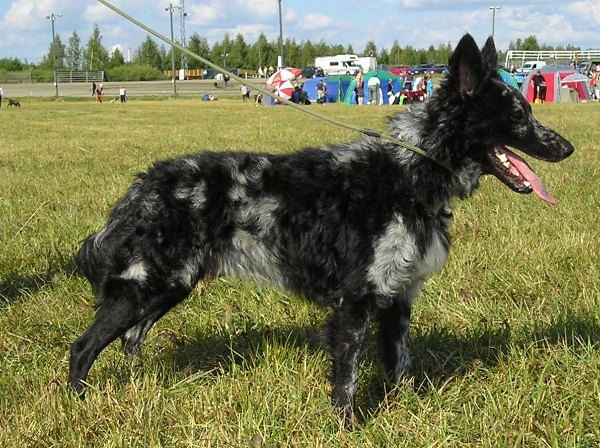
The Mudi has a coat that is easy to maintain. A weekly brushing and seasonal bath will keep the dog looking fresh and clean. The coat on the dog’s head and leg fronts is short while the remainder of the coat is wavy. This breed does not shed excessively.
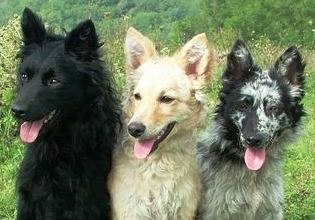
There are quite a few acceptable coat colors within the Mudi breed. The most frequently seen Mudi is black however; white, yellow, brown, gray and merle are also acceptable.
Puppies
Mudi puppies should begin being socialized as early as possible. Most breeders will have started this process for you. Early socialization will help to prevent shyness and aggression with strangers.
It is of the utmost importance that the puppy be started on housebreaking immediately. They tend to be slow in this area so you must closely watch the puppy for signs that he should go outside. Crating in the evening seems to be helpful with potty training the Mudi.