He’s all packed up and ready to canoe in Nova Scotia with his dogs (and hubby) in tow. Here’s what Kevin Roberts did on his Totally Canadian Canine Canoe Adventure!
Hitting the Water
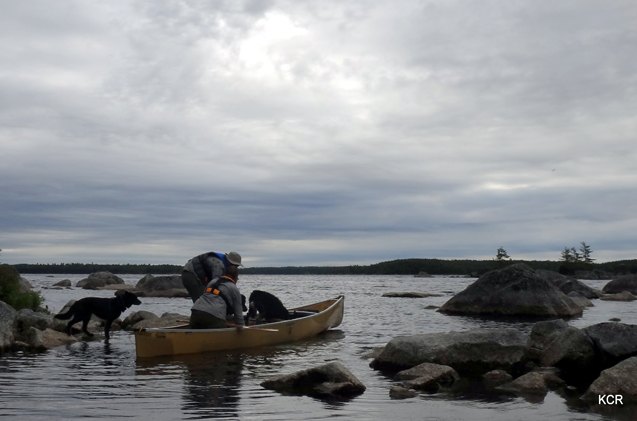
Our dogs love to be out on the water. We think that after a winter of hard work skijoring, our team likes to take it easy and be paddled around. Or maybe they just like to take in the sights and sounds of the wilderness. Either way, the dogs are always as eager as we are to hop in the boat.
On our first day out, the skies were overcast and there was just enough wind to keep the bugs at bay. In total, we paddled 20 kilometers (about 12.5 miles) the first day, and tackled three portages. As hard as it is to believe, I preferred the overcast weather – it’s perfect because the dogs didn’t get too warm, and the light breeze kept the black flies and mosquitoes at bay.
Related:Hot Dogs and Campfire Safety
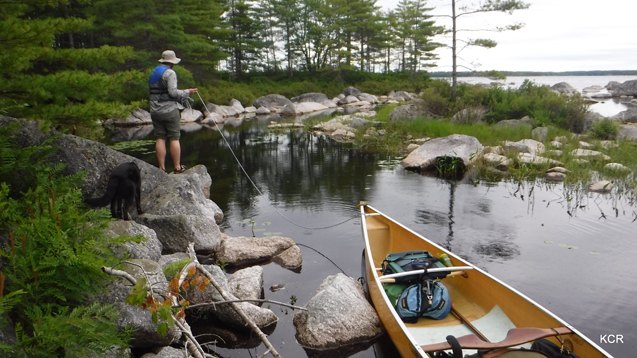
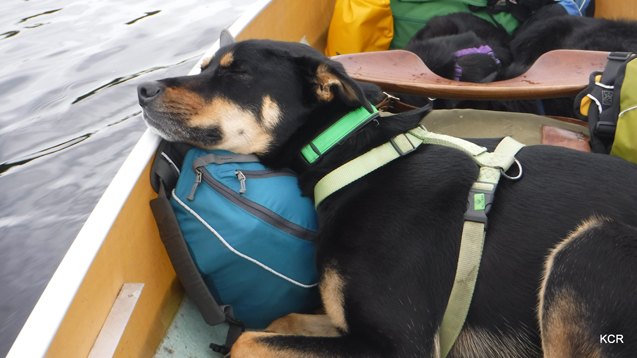
While in the canoe, I carry a small treat bag tucked up into my life jacket. The dogs are really calm in the boat, but if there happens to be something really interesting out on the water or on shore, I want to be able to quickly reward them for remaining calm. I only had occasion to use the treat bag once, when the dog scented a deer on shore. Belle has the easiest tell for when there is a deer; her ears perk up. So even from her position lying on the bottom of the canoe, I can tell that she is about to get excited. With a quick word from me, the dogs relax again and I reward them for listening and remaining calm. We watch as the deer scampers back off into the forest.
When we arrive at camp the first night, the dogs are tired! While lying in the bottom of the canoe seems relaxing, I think it must be a lot of mental work, taking in the new surrounding and scents. Not to mention the three portages, with a total of 7 kilometers we covered that first day. After we make camp and feed the dogs, it’s time for a quick walk and then off to bed so we can get up and do it all again the next day.
Day 2
Morning breaks with the sounds of birds in the tree canopy above the tent. It’s time to wake up and continue our adventure.
Part of the prep for the day includes getting everyone breakfast. The dogs eat their prepackaged meals after I soak them in water. I want to keep them hydrated for a long day in the sun as they carrying their packs across the portages. I also want to ensure that the water they are taking in is clean. While the water we will encounter is likely clean and free of pathogens, I give my dogs only filtered, UV treated water while in the back country (back in civilization, they get tap water just like the rest of us). But messing around with E. Coli or giardia out in the middle of nowhere is not something I am willing to chance.
Related:Mountainsmith K-9 Cube Product Review
We take a short walk around the site, allowing for the dogs to eliminate, picking up anything that may have been missed, and then we load up the canoe and off we go! The dogs are always happy to hop in the boat and settle in quickly.
The morning of day two passes quickly, each paddle stroke takes us deeper into the back country and closer to that evening’s campsite. Before we rest for the night, we have a lot of water to cover. In some areas, it’s not possible to paddle, so we portage. Efficient portaging is everything! A two kilometer portage isn’t bad, but if you find yourself having to make multiple trips, the mileage can really add up.
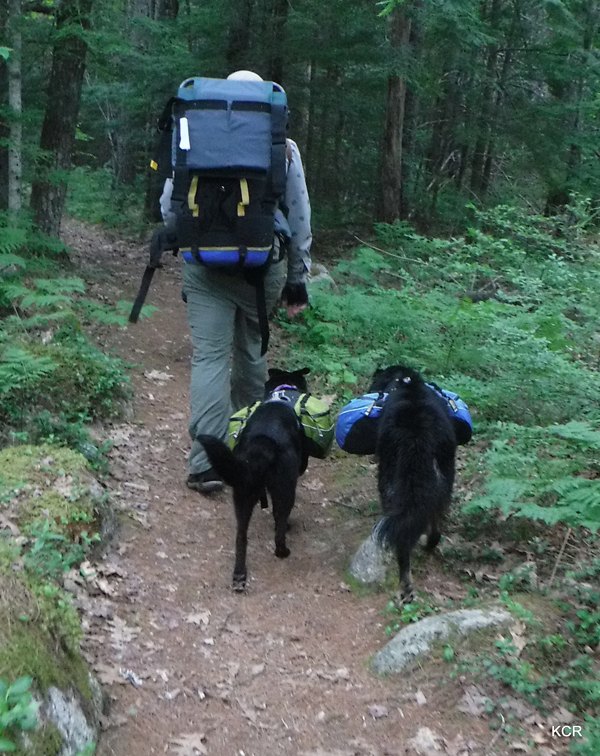
Our dogs carry their own gear on the portages. Their food and waste is double packed in water proof bags, and then sealed in their own dog packs. The dogs are happy to carry their own gear, and it means that we have that many fewer trips across the portage.
There is a strict no pulling while in your pack rule in our family. When you are carrying a backpack, another pack on your front and balancing a canoe on your head, the last thing you need is to be yanked off the trail by a dog chasing a squirrel! Packs on mean it’s time for serious work. At the end of each portage, we open each dog’s pack and give them a small snack. Everyone likes to be rewarded for hard work!
As the sun slowly travels across the sky, and our shadows grow longer, it’s time to make camp for the evening.
The dogs are always eager to jump in the tent. When camping in the back country we always bring a small tent: it’s warmer and leaves a smaller footprint. There is a little bit of a science involved to fitting our dogs in the tent, and everyone is allowed in, one at a time, to find their spot. The same mats that the dogs use in the bottom of the boat are used in the tent for the night. Everyone has their spot. While it’s crowded, we still make it work!
When we make camp, I always tie the leashes to a clothesline kind of contraption; it allows the dogs some freedom of movement without getting their legs tangled. When we get into the tent at night, I just untie one end and run that rope into the tent. I tie each dog’s leash to the end of the rope, and close the zipper on the rope. This allows me, should I need to, easily have all the dogs leashed and ready to go in the morning. Our tent isn’t all that big, and it’s easier to get up and dressed if the dogs are waiting outside for us.